Storage Tank Farms and Bulk Fuel Facilities at Tax Deed Auctions: EPA Liability, Title Traps, and the Risks Every Investor Must Evaluate Before Bidding
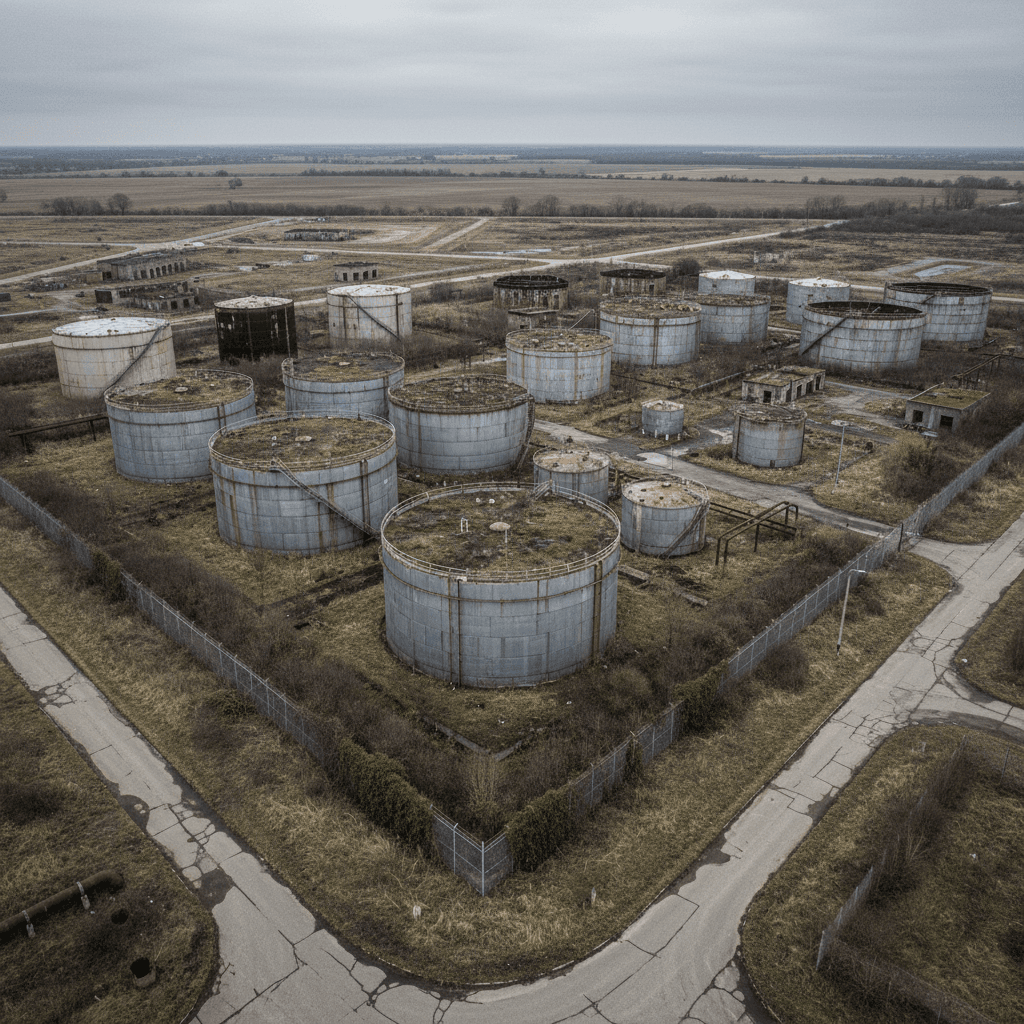
Bulk fuel terminals, storage tank farms, and petroleum distribution facilities are among the most hazardous assets that can surface at a county tax deed auction. The low opening bid can look attractive until you understand that the EPA, state environmental agencies, and multiple layers of surviving liens may already have claims that far exceed the property's market value. Evaluating every risk layer before you bid is not optional — it is the only way to avoid acquiring a liability instead of an asset.
What Puts These Properties at Auction in the First Place
Bulk fuel facilities and storage tank farms fall into tax delinquency for predictable reasons. Operators may go bankrupt after remediation orders arrive from a state environmental agency, leaving the property tax unpaid while legal battles drag on. Corporate owners may dissolve, transferring no one with clear authority to pay the bill. In other cases, an aging facility becomes operationally uneconomical — lease revenue dries up, and the carrying costs, including the property tax, go unpaid. By the time the county schedules a tax deed sale, the delinquency may span several years, compounding the accrued fees alongside the environmental clock.
The appearance of these properties at auction does not mean the environmental and regulatory obligations disappear. A tax deed conveys the county's interest in the parcel, but the EPA, state environmental agencies, and cleanup cost obligations are entirely separate legal frameworks. Understanding exactly why the prior operator walked away is one of the most important pre-bid questions you can ask.
- Bankruptcy or corporate dissolution leaving no responsible party
- Remediation orders making the property economically unviable
- Idle facilities with expired operating permits and no buyer
- Multi-year delinquency compounding fees and regulatory violations
CERCLA Liability: The Risk That Can Outlast Any Tax Deed
The Comprehensive Environmental Response, Compensation, and Liability Act — commonly known as CERCLA or Superfund — is the single largest legal threat to any investor who acquires a contaminated property. CERCLA imposes strict, joint, and several liability on current owners of a contaminated site, regardless of when the contamination occurred or who caused it. This means that if you acquire a storage tank farm at a tax deed auction and petroleum hydrocarbons have already migrated into the soil or groundwater, you may become a potentially responsible party the moment your deed is recorded.
Unlike many other risks in tax deed investing, CERCLA liability is not extinguished by the tax sale process. The tax deed conveys the parcel; it does not cleanse the federal environmental obligation attached to the land itself. Cleanup costs at petroleum-contaminated sites can reach into the hundreds of thousands or even millions of dollars depending on the depth and spread of the plume, the aquifer sensitivity, and the proximity to regulated drinking water sources. Before bidding on any property with above-ground or underground storage infrastructure, check federal and state databases for existing enforcement actions or Superfund listings.
- CERCLA imposes strict liability on current landowners regardless of fault
- Tax deed sale does not eliminate federal environmental obligations
- Phase I and Phase II Environmental Site Assessments are essential pre-bid steps
- State voluntary cleanup programs may offer some liability protections — verify eligibility before bidding
Underground and Above-Ground Storage Tank Regulations
Storage tank farms almost always involve regulated storage equipment governed by the EPA's Underground Storage Tank program and parallel state programs. Tanks holding petroleum products or hazardous substances above certain size thresholds must be registered, tested for integrity, and equipped with leak detection systems. When a facility goes delinquent and operators abandon it, tank registration lapses, testing stops, and the county or state environmental agency may already have documented violations on record.
As a new owner, you would inherit a facility that likely cannot be legally operated without first bringing it into compliance — including potential tank upgrades, secondary containment retrofits, and spill prevention controls. Even if you plan to demolish the facility and redevelop the land, tank removal under state guidelines is a regulated process that requires licensed contractors, manifested disposal of contaminated soil, and confirmation sampling to verify that the excavation meets closure standards. All of that happens at the owner's expense. Run the county and state environmental agency's tank registration database before you place a bid.
- Confirm current tank registration status with the state UST program
- Check for open compliance orders or notices of violation
- Identify whether tank integrity testing has lapsed
- Budget for regulated closure if redevelopment or demolition is planned
Surviving Liens and Priority Claims That Attach to the Property
Beyond environmental liability, storage tank farms carry a dense stack of potential surviving liens. Federal tax liens filed by the IRS survive a tax deed sale unless the IRS received proper notice and declined to exercise its 120-day right of redemption — a right it holds when a federal tax lien exists on the property. If the prior corporate owner had unpaid federal payroll taxes or income taxes with a lien filed against the parcel, that lien does not automatically disappear at the auction.
State environmental agencies in many jurisdictions can file environmental liens, also called superliens in states that grant them super-priority status over even first mortgages. These liens cover cleanup costs already expended by the state before the sale. Mechanic's liens from contractors who performed abortive remediation work, and municipal liens for unpaid utility connections or code enforcement actions, are also common on abandoned industrial properties. A thorough title search must include the federal lien index at the county recorder, the state environmental lien register, and the municipal code enforcement docket — not just the standard chain of title.
- IRS federal tax liens: 120-day redemption right if lien was properly perfected
- State environmental superliens: may survive the tax deed in superlien states
- Mechanic's and materialman's liens from prior remediation contractors
- Municipal liens for unpaid water, sewer, or code enforcement orders
Zoning, Permit Transfer, and Operational Reuse Barriers
Even if the environmental and lien picture were clean — which is rarely the case — reusing or redeveloping a bulk fuel facility presents significant regulatory hurdles. Zoning classifications for petroleum distribution, tank farm operations, and bulk storage are typically heavy industrial designations that restrict neighboring uses and may require buffer distances from residential areas, schools, or water supply wells. If you envision converting the site to a less intensive use such as warehousing, light manufacturing, or even demolishing it for residential redevelopment, a rezoning process can take years and is never guaranteed.
Operating permits for fuel terminals are issued to specific entities, not to the land. A new owner cannot simply inherit the prior operator's permits. You would need to apply as a new operator, satisfy all current code requirements including updated fire suppression, secondary containment, vapor recovery, and stormwater management systems, and obtain approvals from multiple agencies including the fire marshal, environmental agency, and potentially the state public utilities commission. Obtain a full permit history from the county and state before bidding, and consider whether the property is fundamentally reusable at a price that makes economic sense.
- Confirm current zoning classification and allowable uses
- Check whether rezoning to lighter industrial or non-industrial use is feasible
- Operating permits are entity-specific and do not transfer with the deed
- Fire marshal, environmental agency, and utility approvals required for reoperation
How to Evaluate These Properties Before the Auction
Because storage tank farms and bulk fuel facilities sit at the intersection of environmental law, industrial permitting, and complex lien stacks, pre-bid due diligence must go deeper than a standard title search. Start with a Phase I Environmental Site Assessment conducted by a licensed environmental professional. If the Phase I identifies recognized environmental conditions — which it almost certainly will on a former fuel terminal — commission a Phase II to understand the actual subsurface contamination before you place a bid. The cost of that assessment is real, but it is a fraction of what a cleanup order could cost you after the fact.
Cross-reference the property against EPA's ECHO database, the state environmental agency's enforcement database, and the state UST registry. Pull the full municipal code enforcement history. Obtain a tax lien search through a qualified title abstractor who understands industrial property chains. Run the federal lien index at the county recorder and the PACER federal court database for any pending CERCLA enforcement actions naming the property address or prior owner. If the risk picture that emerges is unclear, consult a licensed environmental attorney and a commercial real estate attorney before bidding — not after. Tools like TaxDeedIQ can help surface risk flags and score properties so you understand what you are stepping into, but professional verification remains essential for a property class with this level of legal complexity.
- Phase I ESA as a minimum pre-bid step; Phase II if recognized environmental conditions are found
- Search EPA ECHO, state environmental enforcement database, and UST registry
- Run federal lien index and PACER for pending enforcement actions
- Consult environmental and real estate attorneys before bidding, not after
Don't buy someone else's debt
See exactly what can survive a tax deed, before your money is on the block. Every auction, scored 0–100.
Score my first auction, freeStorage Tank Farms and Bulk Fuel Facilities at Tax Deed Auctions FAQ
Does a tax deed sale wipe out EPA or state environmental cleanup obligations?
No. CERCLA and state environmental laws impose liability on current property owners regardless of how title was acquired. A tax deed conveys the county's interest in the parcel but does not extinguish federal or state environmental obligations already attached to the land. You can become a potentially responsible party the moment you record the deed.
What is an environmental superlien and how does it affect a tax deed buyer?
Several states allow their environmental agencies to file superliens that have priority over all other encumbrances, including mortgages and sometimes even property tax liens. These liens cover costs the state already spent on remediation. In superlien states, a tax deed buyer may acquire a property that already has an environmental lien senior to the deed itself, meaning the state can foreclose to recover its cleanup costs even after the tax sale.
Can I inspect a storage tank farm before bidding at a tax deed auction?
Counties rarely allow interior inspections of properties offered at tax deed auctions, and former operators or current occupants may deny access entirely. However, you can inspect publicly accessible portions of the site, review aerial imagery, check state and federal environmental databases, and hire an environmental professional to perform a Phase I assessment using records review and a site reconnaissance from publicly accessible vantage points. Bidding on an industrial property with this level of risk without any environmental review is extremely high-stakes.
What databases should I check before bidding on a bulk fuel or tank farm property?
At minimum, check EPA's ECHO enforcement database, the state environmental agency's remediation and UST registry databases, the federal lien index at the county recorder's office, PACER for federal court enforcement actions, the municipal code enforcement docket, and the standard chain of title through a qualified title abstractor. Each database addresses a different layer of risk and no single source is complete on its own.
Why would an investor consider a property like this at all?
Some sophisticated investors with environmental remediation expertise or relationships with Brownfields grant programs do acquire contaminated industrial properties deliberately, using EPA Brownfields funding, state voluntary cleanup program liability protections, and federal tax incentives to make redevelopment viable. But those strategies require deep expertise, pre-arranged financing, and legal protections secured before the bid. Without those elements in place, the liability exposure on a contaminated fuel facility almost always exceeds the apparent discount at auction.
More guides
- Tax Deed vs Tax Lien: What's the Difference? (2026 Guide)
- Is Tax Deed Investing Safe? 6 Risks to Check Before You Bid
- Tax Deed Surplus Funds: How Overbid Recovery Works
- Redeemable Deed States Explained (Georgia, Texas & More)
- Nightclubs and Bars at Tax Deed Auctions: Liquor License Gaps, Code Violations, and the Risks Every Investor Must Evaluate Before Bidding
- nope
Informational only, not legal or investment advice. Confirm rules with the county and consult a licensed professional before bidding.