Nightclubs and Bars at Tax Deed Auctions: Liquor License Gaps, Code Violations, and the Risks Every Investor Must Evaluate Before Bidding
A nightclub or bar hitting the tax deed auction block can look like a turnkey entertainment investment, but the real risk stack begins where the county's deed ends. Liquor licenses don't transfer with the property, equipment is routinely encumbered by UCC financing statements, and years of deferred code compliance can make the building legally unusable the day you take title. Evaluate every layer before you bid — the gap between winning price and actual investable asset is wider here than almost anywhere else in the tax deed universe.
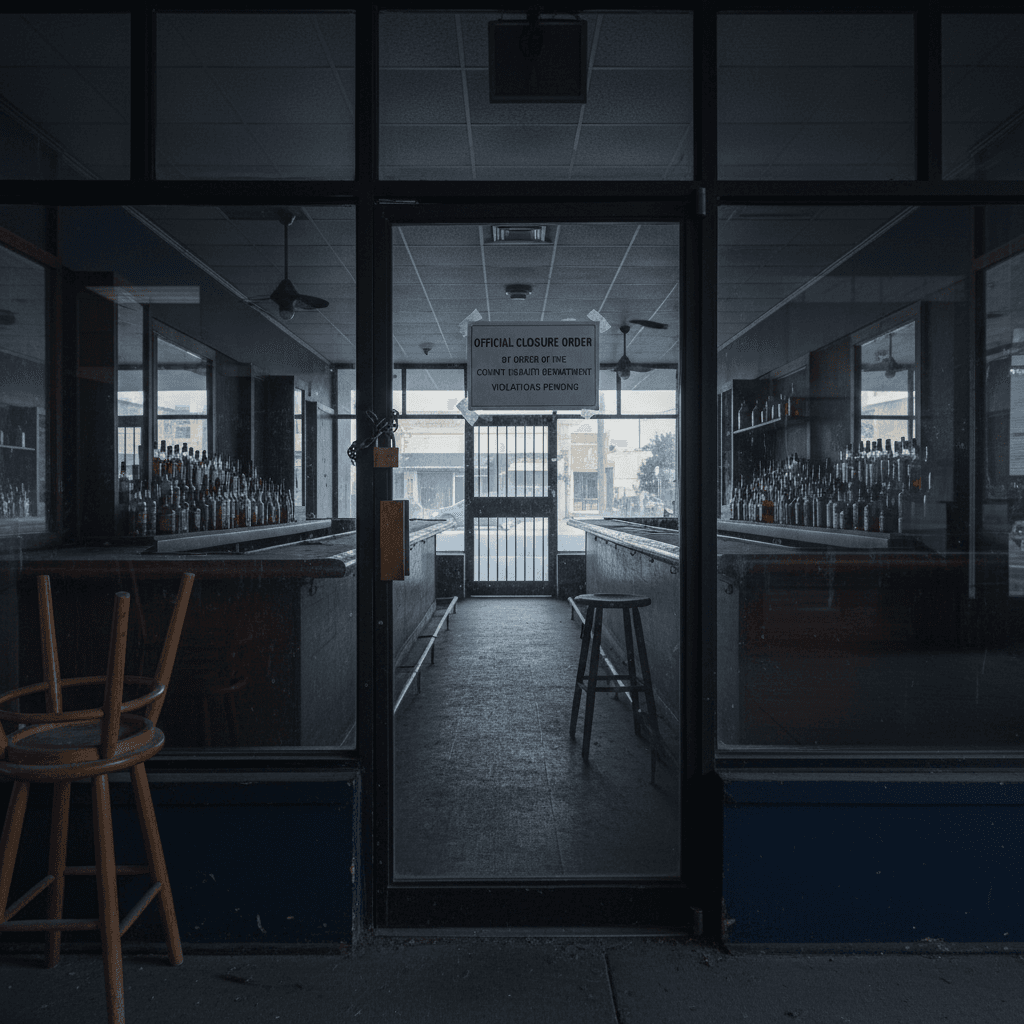
Why Bars and Nightclubs End Up at Tax Deed Auctions
Hospitality and entertainment businesses fail at a higher rate than most commercial sectors, and the financial spiral that sends a bar to the tax auction is rarely clean. When cash flow collapses, property tax payments are among the first obligations to fall behind. Owners may also face layered debts: unpaid sales tax remittances, back payroll taxes, merchant cash advance defaults, and equipment financing arrears. By the time the county schedules the tax deed sale, the property has frequently gone dark for months or even years, meaning deferred maintenance compounds every other risk. Understanding why these assets fail helps you frame how deep the due diligence hole actually is.
The delinquency period before a tax deed auction varies by state — some states require only a year or two of unpaid taxes before the county can proceed, while others mandate a much longer window. During that entire period, liens, judgments, and code violations continue to accumulate. A bar that stopped paying taxes likely also stopped paying its equipment lender, its landlord on a ground lease, and its local municipality for outstanding health and fire inspections. Each of those delinquencies can leave a financial or legal footprint that attaches to the real estate itself.
- Short operating cash flows divert property tax payments first
- Equipment loans and merchant cash advances generate UCC filings against fixtures
- Health, fire, and noise code violations accrue during dormancy
- Ground lease or leasehold interest may complicate what the deed actually conveys
The Liquor License Problem: Why It Doesn't Transfer With the Deed
This is the most misunderstood risk in bar and nightclub tax deed purchases. A liquor license — whether an on-premises consumption license, a tavern license, a late-night entertainment permit, or a combined beer-wine-spirits license — is a personal privilege issued by a state Alcohol Beverage Control (ABC) authority or its equivalent. It is granted to a person or legal entity, not to the real estate. When you acquire the property through a tax deed, you acquire no rights whatsoever in the prior owner's license.
More critically, the prior license may have already been suspended, revoked, or allowed to lapse before the tax deed sale even occurred. ABC agencies independently investigate licensees for violations ranging from serving minors to operating past permitted hours to failing to pay state excise taxes. A revocation or repeated violation history on a specific address can signal to the ABC that the location itself carries an enforcement pattern — which may weigh against a new application from an incoming buyer. Some jurisdictions cap the total number of on-premises licenses in a given area or census tract, meaning no new license may be available even if the prior one is gone. Verifying license status, violation history at the address, and local quota rules with the relevant ABC agency before you bid is not optional — it determines whether the core business use of the building is even viable.
- Liquor licenses are personal privileges, not property rights
- Tax deed conveyance transfers zero interest in a prior license
- Revocation history at an address can affect new applications
- Geographic quotas may block new license issuance entirely
- State excise tax arrears may create a separate lien outside the tax deed process
Equipment Liens, UCC Filings, and What the Tax Deed Does Not Extinguish
Walk through any operational bar before an auction and you'll see assets that feel like they come with the building: draft beer systems, walk-in coolers, back-bar refrigeration units, commercial dishwashers, POS terminals, sound systems, and DJ booths. The critical legal question is whether those items are legally fixtures — attached permanently to the real estate — or personal property financed separately and subject to a UCC Article 9 security interest.
Lenders and equipment finance companies routinely file UCC-1 financing statements in the state's central filing office to perfect their security interest in bar equipment. If the equipment qualifies as fixtures under applicable state law, the lender may also file a fixture filing in the county land records. A tax deed typically extinguishes junior liens on the real property, but the interplay between real property law and personal property security interests is not always clean. Courts in various states have reached different conclusions about when a financed commercial kitchen hood or a walk-in cooler becomes a fixture versus remaining personal property. The practical result: an equipment lender may have a valid right to repossess the item you just walked through and planned to use. Conduct a thorough UCC search at the state level and check county fixture filings before bidding, and get a fixture analysis from a licensed attorney familiar with the state's law.
Sound and entertainment systems — mixers, amplifiers, theatrical lighting rigs — are almost never permanently affixed and are therefore almost certainly personal property. Do not assume they will be there after you close.
- Search UCC filings at the state secretary of state before bidding
- Review county land records for fixture filings by equipment lenders
- Walk-in coolers, draft systems, and HVAC may be financed and subject to repossession
- Entertainment and AV equipment is typically personal property, not a fixture
- Confirm fixture status with a licensed attorney before bidding
Building Code, Fire Code, and ADA Violations That Accumulate During Closure
Nightclubs and bars operate under a dense matrix of regulatory requirements: occupancy limits set by the fire marshal, emergency egress standards, ADA accessibility mandates, ventilation and exhaust requirements for commercial cooking, noise ordinances and soundproofing standards, sprinkler system mandates for assembly occupancies, and health department certifications for food service areas. Meeting all of these requirements simultaneously is expensive even for a healthy operating business. For a property that has been dark for months or years before appearing at a tax deed auction, deferred maintenance can render the building non-compliant across multiple codes at once.
Before the property can legally reopen under any entertainment or food-and-beverage use, the new owner must typically pass a Certificate of Occupancy inspection, a fire marshal review, and in many jurisdictions a separate health department inspection. Each of these inspections can generate a correction notice requiring costly remediation — and the work must be performed by licensed contractors under permits, adding both time and expense. ADA retrofit costs in older entertainment venues can be substantial; think accessible restrooms, path-of-travel requirements, and accessible service counters. Obtain the building's full code violation and inspection history from the municipality before bidding. Many of these violations are on file and publicly available — but investors who skip this step discover them only after they own the asset.
- Request full code enforcement and fire marshal violation history from the municipality
- Assembly occupancies carry stricter fire suppression and egress requirements
- ADA retrofits in older bar buildings can be extensive and costly
- Health department permits do not transfer and require a fresh inspection
- Certificate of Occupancy must be re-issued before the building can legally reopen for public assembly
Surviving Liens, Ground Leases, and the IRS Redemption Window
Tax deed auctions extinguish many junior encumbrances, but the list of what survives varies meaningfully by state. In some states, municipal code enforcement liens survive. In others, special assessment districts for street lighting or stormwater run with the land regardless of the tax deed sale. If the prior owner had federal tax liabilities, the IRS holds a 120-day right of redemption after a tax deed sale — meaning the federal government can step in, pay you your purchase price plus a statutory rate of interest, and reclaim the property. Any property with a known federal tax lien in the title chain warrants careful analysis before you bid.
Ground lease situations deserve special attention. Some entertainment venues sit on leased land, with the building owned separately from the soil beneath it. If the tax deed covers only the building's leasehold interest and the ground lease has been terminated or is in default, you may be acquiring a structure with no right to occupy the land it sits on. Confirm in the chain of title whether fee simple ownership of the land is included in what the county is deeding to you. Additionally, state ABC laws in some jurisdictions tie liquor license eligibility to ownership or long-term lease control of the licensed premises — another reason to verify the full ownership picture before bidding.
A platform that assigns a risk score to individual tax deed parcels and surfaces which liens and encumbrances have been identified — such as federal tax liens, municipal liens, flood zone designations, and homestead flags — gives investors a faster starting point for the due diligence stack. But no automated tool replaces a title search, a UCC search, a licensed attorney's fixture analysis, and direct inquiry to the ABC authority and local building department.
- Confirm whether the county is deeding fee simple land or only a leasehold interest
- Check for federal tax liens that trigger the IRS 120-day redemption right
- Verify surviving municipal liens, special assessments, and code enforcement orders
- Review ABC eligibility requirements for the specific license type you intend to pursue
- Use risk-scoring tools as a starting framework, then verify every flag independently
Score every auction before you bid
TaxDeedIQ gives every US tax deed & tax lien auction a 0–100 safety score, surviving liens, IRS redemption, flood, homestead.
Start my free trialNightclubs and Bars at Tax Deed Auctions FAQ
Does winning a tax deed on a bar property give me the right to operate it as a bar?
No. The tax deed conveys real estate ownership only. To operate as a bar or nightclub, you must independently obtain all required liquor licenses, entertainment permits, health department certifications, and a valid Certificate of Occupancy. The prior owner's licenses do not transfer, and in some states or localities a new license may be difficult or impossible to obtain due to quota caps or violation history at the address. Confirm license availability with the relevant ABC authority before you bid, not after.
What happens to the bar equipment inside the building when I buy the tax deed?
It depends on how the equipment is classified under applicable state law. Equipment that qualifies as a fixture — permanently attached to the real estate — may pass with the deed. Equipment financed under a UCC security interest and classified as personal property may be subject to repossession by the lender regardless of your ownership of the building. Conduct a UCC search at the state level, check county land records for fixture filings, and have a licensed attorney analyze fixture status before bidding. Assume that entertainment and AV equipment is personal property and may not be present at closing.
Can the IRS take the property back after I buy it at a tax deed auction?
If the prior owner had a recorded federal tax lien, the IRS holds a statutory 120-day right of redemption after the tax deed sale. During that window, the IRS can redeem the property by paying you your purchase price plus a statutory rate of interest. If this right is exercised, you lose the property. Search the federal tax lien index at the county recorder and the IRS federal tax lien database before bidding on any property where federal liens may exist in the chain of title.
What code compliance issues should I expect when buying a closed nightclub at a tax deed auction?
Expect deferred maintenance across fire suppression systems, emergency egress, ADA accessibility, ventilation, and health department-required areas. Assembly occupancies like nightclubs face stricter fire code requirements than most commercial uses. The building will typically need a fresh Certificate of Occupancy inspection before it can legally reopen, and correction notices can generate significant remediation costs. Request the full code enforcement history from the local building department and fire marshal before you bid, and budget conservatively for required upgrades.
More guides
- Tax Deed vs Tax Lien: What's the Difference? (2026 Guide)
- Is Tax Deed Investing Safe? 6 Risks to Check Before You Bid
- Tax Deed Surplus Funds: How Overbid Recovery Works
- Redeemable Deed States Explained (Georgia, Texas & More)
- nope
- Tattoo Parlors and Body Art Studios at Tax Deed Auctions: Health Code Liability, Equipment Liens, and the Risks Every Investor Must Evaluate Before Bidding
Informational only, not legal or investment advice. Confirm rules with the county and consult a licensed professional before bidding.