How to Buy Tax Liens in Alaska: Borough Auctions, Interest Rates, and the Risks Investors Must Evaluate First
Alaska operates one of the most unusual property-tax environments in the United States — no statewide property tax, no income tax, and a patchwork of boroughs and unified municipalities that each set their own collection rules. That decentralization creates opportunity for disciplined investors, but it also means the due-diligence work you'd do in a uniform state like Florida or Colorado barely scratches the surface here. Before you place a single bid, you need to understand the mechanics, the timeline, and — most critically — the risks that can quietly erase any projected return.
- State
- AK
- Sale
- Tax deed
- Redemption
- —
- Rate
- —
No redemption period after the sale, which does not clear the liens that survive.
See all 50 state rules →How Alaska's Property Tax System Is Structured
Unlike the lower 48 states, Alaska has no statewide property tax and no state-run tax sale program. Property taxes are levied exclusively at the local government level — by organized boroughs, unified home-rule municipalities, and a handful of cities that operate independently of any surrounding borough. Outside organized areas, there is no local property tax at all, which means large swaths of Alaska's land mass never appear at a tax auction.
The practical consequence for investors is that you are not dealing with one unified system. The Anchorage Municipal Assessor's office operates differently from the Fairbanks North Star Borough, which operates differently from the Kenai Peninsula Borough or the Matanuska-Susitna Borough. Each jurisdiction sets its own penalty schedule, auction calendar, and notice requirements within the broad framework of Alaska state statutes. You must research the specific local code for every auction you plan to attend.
- Organized boroughs with property tax authority: Anchorage, Fairbanks North Star, Kenai Peninsula, Matanuska-Susitna, Kodiak Island, Ketchikan Gateway, and others
- Second-class boroughs and cities may have separate taxing authority
- Unorganized Borough covers roughly half the state's land area — no property tax, no auction
The Alaska Tax Foreclosure and Sale Process
When a property owner falls delinquent on property taxes, Alaska statutes give the local government the authority to initiate foreclosure proceedings. The typical path begins with a delinquency notice, followed by the filing of a foreclosure action in superior court if the debt is not resolved. Alaska uses a judicial foreclosure model for tax debts — meaning the government must obtain a court judgment before the property can be sold at auction. This process is slower and more procedurally intensive than administrative tax deed states, which adds time between delinquency and the public sale.
After a judgment of foreclosure is entered, the borough or municipality may acquire title to the property and subsequently offer it at a public auction. In many Alaskan jurisdictions the government actually takes title first, then resells — functioning more like a tax deed system than a lien certificate system. The auction may be conducted in person at the borough seat or, increasingly, through online auction platforms. Winning bidders receive a deed from the local government, but the quality of title you receive and what encumbrances survive will depend on the specifics of the foreclosure and the jurisdiction.
- Delinquency notice issued to owner
- Judicial foreclosure action filed in superior court
- Court judgment obtained; government acquires or prepares to convey title
- Public auction conducted by borough or municipality
- Deed issued to winning bidder
Interest Rates, Penalties, and Redemption Periods
Alaska statutes authorize local governments to charge interest and penalties on delinquent property taxes, but the specific rates are set locally — there is no single statewide rate that applies to every jurisdiction. Some boroughs charge a flat penalty at the point of delinquency followed by a monthly interest accrual; others structure it differently. Investors who are accustomed to states advertising a headline interest rate — say 18% in Florida or 36% in Illinois — will need to verify the exact penalty and interest schedule directly with each borough's finance or treasury department before calculating any projected return.
Redemption rights are another critical variable. Alaska generally provides the delinquent owner an opportunity to redeem the property by paying all delinquent taxes, penalties, interest, and costs up until the point the court confirms the sale or the deed is transferred. The precise deadline varies by jurisdiction and by the stage of the foreclosure proceeding. If you are purchasing at a borough resale auction after the government has already taken title, the original owner's redemption right may have already been extinguished — but you must confirm this in writing with the jurisdiction, not assume it.
Title Quality and Liens That May Survive
One of the most important questions to answer before bidding on any Alaskan tax-foreclosed property is: what encumbrances survive the sale? The answer is not uniform. In a properly conducted judicial tax foreclosure, junior liens — including mortgages, judgment liens, and most mechanic's liens recorded after the tax lien — are typically extinguished by the foreclosure. However, certain obligations can survive or re-attach regardless of the sale.
Federal tax liens held by the IRS are a particular concern. Under federal law, the IRS retains a 120-day right of redemption after a tax sale even when its lien would otherwise be extinguished. If the IRS had a recorded lien on the property, they can step into your shoes as purchaser within that window by reimbursing what you paid. Always search federal lien records through the IRS and PACER before bidding. Beyond IRS liens, watch for: special assessments levied by local improvement districts that run with the land, municipal utility arrears that some jurisdictions treat as superior to the tax sale deed, environmental contamination liabilities (especially relevant for industrial and remote parcels in Alaska), and federal or state easements that may not appear in a standard title search.
- IRS 120-day redemption right — always search federal lien registry
- Special assessments and local improvement district charges
- Municipal water, sewer, and utility arrears
- Environmental liens and CERCLA liability on contaminated parcels
- Federal land-use restrictions, easements, and rights-of-way
- Alaska Native Claims Settlement Act (ANCSA) land status — some parcels near or within ANCSA selections carry complex title issues
Alaska-Specific Risks Investors Must Evaluate
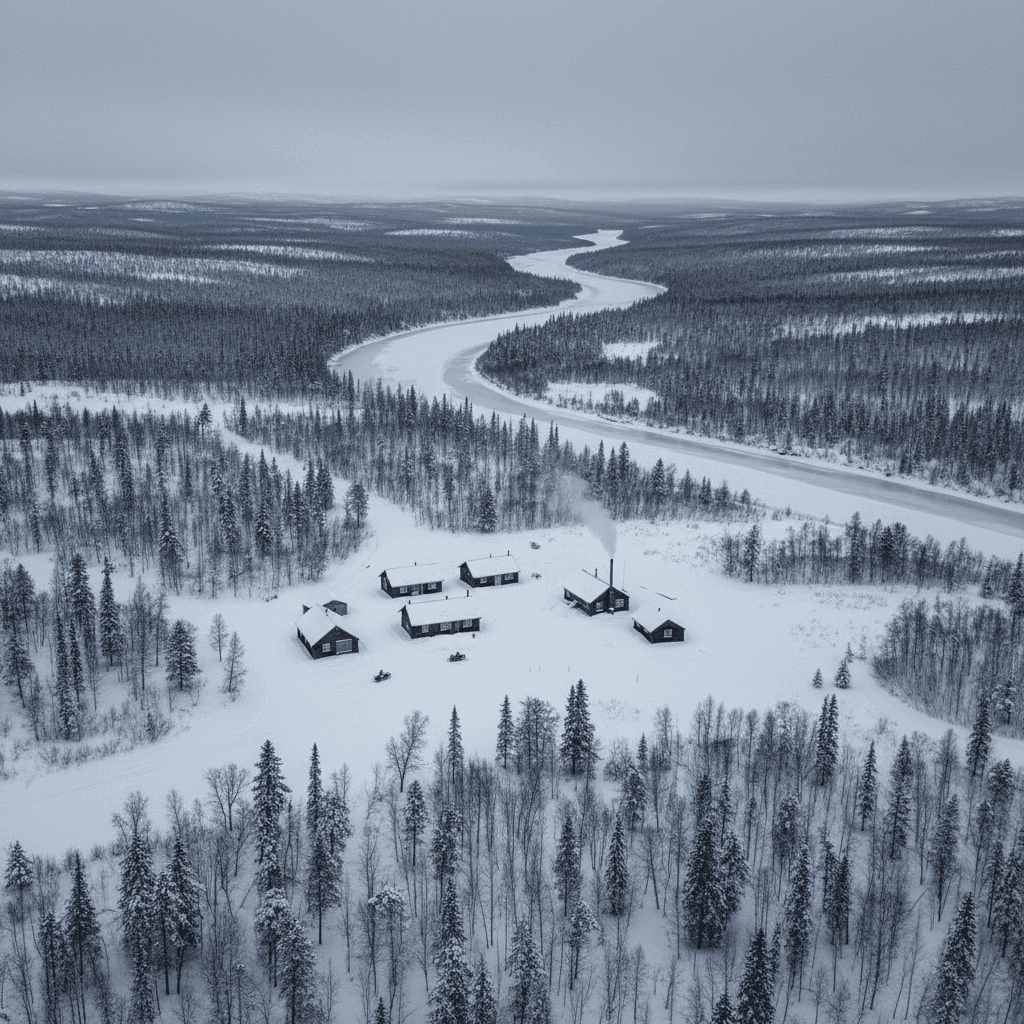
Beyond the standard tax sale risks that apply in every state, Alaska presents a set of location-specific hazards that deserve dedicated due diligence. First, physical access to the property is not guaranteed. Many Alaskan parcels are accessible only by small plane, boat, or snowmobile. A parcel that looks inexpensive on paper may have no road access whatsoever, making it functionally unusable for any conventional purpose and difficult or impossible to resell.
Second, Alaska Native land status is a genuine title complication. Properties situated adjacent to or intermingled with ANCSA corporation lands or Alaska Native allotments can carry encumbrances, access restrictions, or unresolved survey disputes that a standard title search will not reveal. Engage a title company with Alaska-specific expertise before bidding on any parcel outside an established urban area. Third, environmental and geological hazards are above-average in Alaska — permafrost, seismic risk, flood zones, and coastal erosion affect the buildability and insurable value of many parcels. A FEMA flood zone check is a minimum; for remote parcels, a geotechnical assessment may be warranted. Finally, the thin resale market outside Anchorage, Fairbanks, and a few other population centers means your exit strategy needs to be clear before you bid, not after.
- No road access — verify physical accessibility for every parcel
- ANCSA land status and Native allotment complications
- Permafrost and seismic zone designations affecting buildability
- FEMA flood zones and coastal erosion risk
- Thin buyer pool outside major population centers — exit strategy is critical
How to Find Auctions and Do the Work Before You Bid
Alaska borough and municipal tax sales are not aggregated in a single state database. You will need to monitor each jurisdiction's official website and contact the borough finance or treasury department directly to get on auction notification lists. Anchorage, Fairbanks North Star, and the Kenai Peninsula Borough are the largest and most active jurisdictions; smaller boroughs may hold auctions infrequently or only when a sufficient number of delinquent properties accumulate.
Before bidding, pull the parcel's tax history from the borough assessor, obtain a preliminary title report from a local title company, confirm road and utility access, check for federal and state liens, and verify the precise redemption deadline with the jurisdiction in writing. Tools like TaxDeedIQ can help you organize risk factors and score properties before committing capital, but they supplement — not replace — verification with the county, a local title professional, and where the stakes are high, a licensed Alaska real estate attorney. The cost of pre-bid due diligence is small compared to the cost of winning a parcel you cannot use, sell, or insure.
- Monitor each borough's official website for auction notices
- Contact borough finance/treasury to join notification lists
- Order a preliminary title report from an Alaska-licensed title company
- Confirm road access via borough GIS or direct site visit
- Verify federal lien status through IRS centralized lien unit and PACER
- Check FEMA flood map and Alaska seismic/permafrost maps
- Consult an Alaska real estate attorney for remote or complex parcels
It's the 3% that bankrupts beginners
95% of tax liens get paid. TaxDeedIQ finds the risky ones, the junk land, the surviving IRS lien, before you bid.
Try it free for 7 daysHow to Buy Tax Liens in Alaska FAQ
Does Alaska have a statewide tax lien or tax deed sale program?
No. Alaska has no statewide property tax and therefore no state-run tax sale program. Auctions are conducted individually by organized boroughs and municipalities, each under its own local ordinances and procedures. You must research and register with each jurisdiction separately.
What interest rate will I earn on an Alaska tax lien?
There is no single statewide rate. Each borough or municipality sets its own penalty and interest schedule under the authority granted by Alaska statutes. You must contact the specific jurisdiction — its finance or treasury department — to get the exact figures before projecting any return. Do not rely on unofficial estimates.
Can the IRS redeem a property I buy at an Alaska tax auction?
Yes. Under federal law, the IRS retains a 120-day right of redemption after a tax sale on any property where it held a recorded federal tax lien, regardless of state law. Always search the IRS centralized lien registry and federal court records (PACER) before bidding to determine whether a federal lien exists on the parcel.
Are there unique title risks for remote Alaskan parcels?
Yes, several. Alaska Native Claims Settlement Act land status, unresolved boundary surveys near Native allotments, lack of road access, and environmental issues like permafrost or contamination can all create title complications that a standard search will not fully reveal. For any parcel outside an organized urban area, engage a title company with specific Alaska experience and consider consulting a local real estate attorney before bidding.
How do I find upcoming tax sales in Alaska boroughs?
There is no centralized state listing. Monitor the official websites of organized boroughs such as Anchorage, Fairbanks North Star, Kenai Peninsula, and Matanuska-Susitna, and contact each borough's finance or treasury office to be added to their notification list. Auction frequency varies widely — some boroughs hold sales annually, others less frequently.
More guides
- Tax Deed vs Tax Lien: What's the Difference? (2026 Guide)
- Is Tax Deed Investing Safe? 6 Risks to Check Before You Bid
- Tax Deed Surplus Funds: How Overbid Recovery Works
- Redeemable Deed States Explained (Georgia, Texas & More)
- Flood Zones, FEMA Maps, and Natural Hazard Risk at Tax Deed Auctions: What Every Investor Must Evaluate Before Bidding
- The IRS 120-Day Redemption Right: What Every Tax Deed Investor Must Know Before Bidding on a Property With a Federal Tax Lien
Informational only, not legal or investment advice. Confirm rules with the county and consult a licensed professional before bidding.