Environmental Liens and Contamination Risk at Tax Deed Auctions: What Every Investor Must Know Before Bidding
Most tax deed investors obsess over mortgages and HOA liens — but environmental contamination and federal CERCLA liens can dwarf every other encumbrance on a parcel. Unlike a delinquent mortgage that a tax deed sale typically extinguishes, federal environmental liens carry a statutory priority that can survive the auction gavel. Understanding this risk before you bid is not optional; it is the difference between a solid return and inheriting a six-figure cleanup obligation.
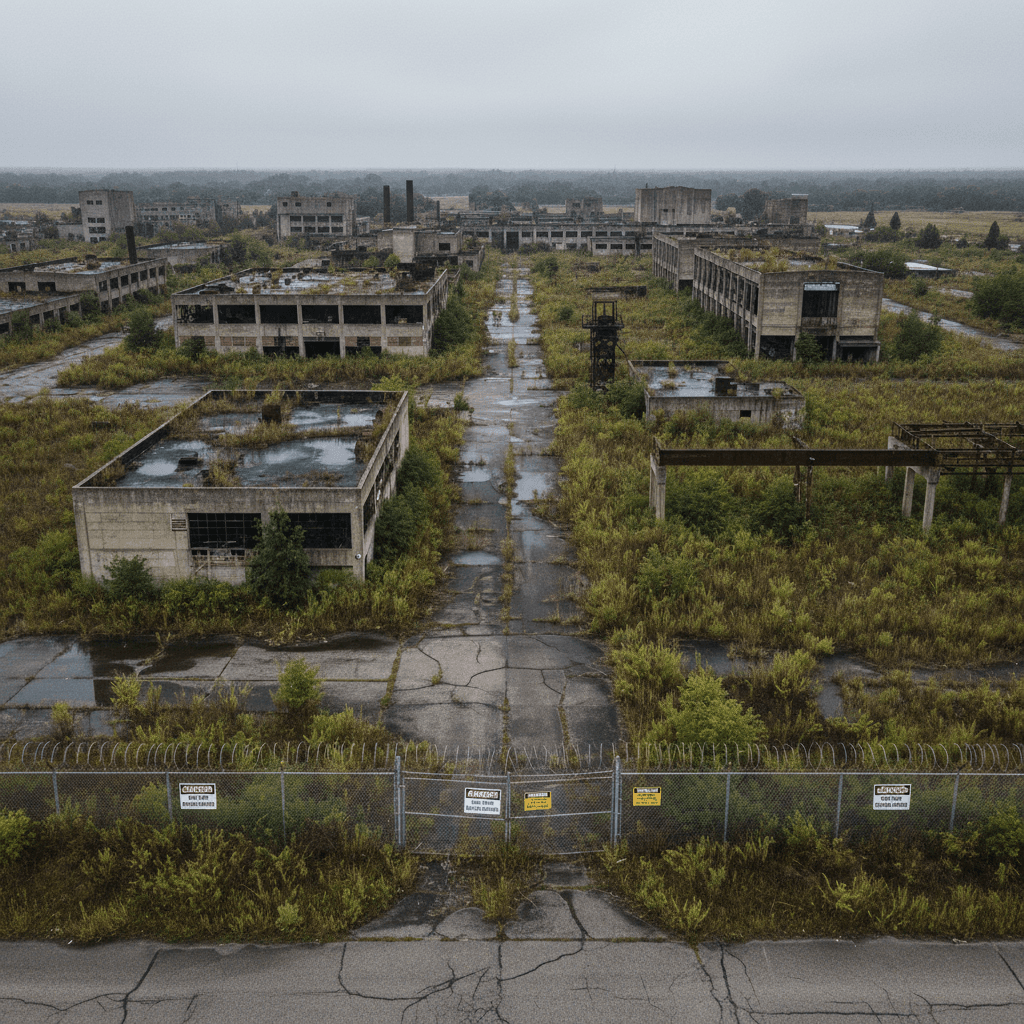
Why Environmental Risk Belongs in Every Tax Deed Due Diligence Checklist
Tax deed auctions attract distressed properties — abandoned industrial sites, neglected commercial parcels, rural land that sat idle for decades. These are precisely the property types most likely to carry environmental baggage. A seller who stopped paying property taxes often stopped maintaining the property in every other respect as well, including proper storage of chemicals, underground storage tanks, or waste disposal. When you buy at a tax deed auction, you are buying the physical dirt, and in most jurisdictions you inherit the liability attached to that dirt.
Environmental due diligence is not a step reserved for sophisticated commercial investors. Even a small residential parcel can sit above a dry-cleaning solvent plume or adjacent to a leaking underground storage tank. The cost to remediate such contamination can easily exceed the value of the land, turning what looked like a bargain into a liability that follows you until cleanup is complete.
- Abandoned gas stations, dry cleaners, and auto shops are high-risk property types that frequently appear at tax sales.
- Rural parcels may have unpermitted waste dumps that are invisible from the road but detectable with a Phase I ESA.
- Industrial corridors often have legacy contamination from prior owners that predates the current delinquent taxpayer.
How Federal CERCLA Liens Work and Why They Survive a Tax Deed
The Comprehensive Environmental Response, Compensation, and Liability Act — commonly called CERCLA or Superfund — gives the federal government a lien against property when the EPA spends money cleaning up contamination at or near that site. This lien is codified in federal law and is not a garden-variety judgment lien that a state tax deed sale can extinguish.
The critical distinction for investors is lien priority. A CERCLA lien is a federal statutory lien. Federal law governs whether a state tax deed proceeding can wipe it out, and federal courts have generally held that state tax sales do not automatically extinguish federal liens unless the United States received proper notice and an opportunity to redeem. In practice, many county tax deed procedures do not provide the specific notice required to bind the federal government, which means the EPA's cleanup lien can remain attached to the property after you take the deed.
The dollar amounts at Superfund sites are not trivial. Federal cleanup actions are measured in remediation cost-share agreements that can run into the hundreds of thousands or millions of dollars, depending on the size and nature of the contamination. Before bidding on any property that was ever used for industrial, commercial, or agricultural purposes, verify whether the EPA or any state environmental agency has recorded a lien in the county deed records.
- Search EPA's Superfund Site Search and the ECHO database for the parcel address and surrounding properties.
- Run a title search specifically looking for federal and state environmental liens — not just mortgage and judgment liens.
- Check the state environmental agency's brownfield and underground storage tank databases; many are searchable online at no cost.
State Environmental Liens: A Parallel Threat
Beyond CERCLA, every state has its own environmental cleanup statute that can generate state-level environmental liens. These vary significantly. Some states record environmental liens in the same grantor-grantee index as mortgages, making them relatively easy to find in a standard title search. Others maintain separate databases administered by the state environmental agency that a standard county title search will miss entirely.
State environmental liens occupy a gray area in tax deed priority analysis. Some state statutes explicitly declare that environmental liens survive a tax deed sale as a matter of public policy. Others are silent, leaving the outcome to litigation. A few states have case law holding that a completed tax deed sale extinguishes even state environmental liens, but relying on that interpretation without confirming it with a local attorney is exactly the kind of assumption that produces expensive surprises.
The safest practice is to treat any unresolved environmental lien — federal or state — as a liability that will survive your tax deed until a licensed environmental attorney tells you otherwise in writing.
- Contact the state environmental agency directly to request a lien status check on the parcel's APN or legal description.
- Ask your title company whether their standard search covers state environmental agency databases or only the county recorder.
- In some states, a Phase I Environmental Site Assessment (ESA) conducted by a licensed professional can qualify you for innocent landowner protections under CERCLA — but only if completed before you purchase.
Phase I and Phase II Environmental Site Assessments: When to Order Them
A Phase I ESA is a non-invasive review of records, historical uses, and a site walk-through performed by a licensed environmental professional. It identifies Recognized Environmental Conditions — areas where hazardous substances may have been released or could be released. A Phase I does not involve soil or groundwater sampling; it is a paper and visual review.
A Phase II ESA goes further, collecting soil, groundwater, or building material samples to confirm or rule out contamination. Phase II work is more expensive and more time-consuming than Phase I, but it is the only way to quantify what you are actually dealing with.
For tax deed bidders, the timing challenge is real. Auctions often give you days or weeks, not months, to complete due diligence. A full Phase II may be impractical before the sale. The more realistic approach is to complete a Phase I before bidding on any property with industrial or commercial history, review any existing Phase I reports that may already be in county files or prior sale documents, and factor the cost and risk of unknown contamination into your maximum bid calculation. If a Phase I surfaces red flags and you cannot get a Phase II completed before the auction, the most prudent move is to pass on that property.
- Order a Phase I for any former commercial or industrial parcel, any property adjacent to a dry cleaner or gas station, and any rural land where aerial photo history shows prior structures.
- Check whether the county or a prior owner already commissioned a Phase I or Phase II — these are sometimes on file with the county assessor or environmental agency.
- Build the estimated cost of potential remediation into your bid ceiling, not just the cost of the assessment itself.
Underground Storage Tanks: The Buried Risk That Appears at Residential Auctions
Underground storage tanks (USTs) are not limited to gas stations. Older residential properties frequently have heating oil tanks buried in the yard that were abandoned in place when the owner switched to natural gas decades ago. Agricultural properties may have fuel tanks that serviced farm equipment. Even a single leaking residential UST can contaminate soil and groundwater to a degree that triggers state cleanup requirements and associated costs that far exceed the property's value.
State UST databases are among the most accessible environmental records available. Most state environmental agencies maintain searchable online registries of registered and reported USTs. Searching these databases before bidding costs nothing but time. A UST that has already been investigated and closed out with no further action required is a very different risk profile from one that has an open cleanup case or was never properly decommissioned.
When a UST record shows an open case or unknown status, request the full file from the state environmental agency. These files are typically public records and can reveal how extensive the contamination is and how far the regulatory process has progressed. An open UST case with active remediation can mean years of monitoring obligations and ongoing costs that attach to whoever holds title.
- Search your state's UST database by address and by surrounding parcels — plumes migrate and can affect neighboring properties.
- Look for tank closure records: a properly closed tank with a no-further-action letter is far less risky than an unregistered or abandoned tank.
- Factor ongoing monitoring costs into your holding cost projections if an open UST case is discovered.
How TaxDeedIQ Helps You Flag Environmental Risk Before the Auction
Manually cross-referencing EPA databases, state environmental agency records, UST registries, and county deed indexes for every parcel you are considering is time-consuming. TaxDeedIQ's Safety Score incorporates risk signals — including environmental flags — alongside lien survival analysis, flood zone data, IRS redemption exposure, and homestead considerations, giving you a structured starting point for evaluating whether a parcel deserves deeper due diligence before you bid.
The platform does not replace a Phase I ESA or a licensed environmental attorney, and no automated tool can substitute for professional investigation when contamination is a genuine possibility. What it does is help you triage your deal flow — identifying the parcels that warrant a closer look versus those that can be passed on quickly — so you spend your due diligence budget where it actually matters. Evaluate the risk before you bid; that principle applies nowhere more forcefully than when the risk is buried underground.
Don't buy someone else's debt
See exactly what can survive a tax deed, before your money is on the block. Every auction, scored 0–100.
Score my first auction, freeEnvironmental Liens and Contamination Risk at Tax Deed Auctions FAQ
Can a federal CERCLA lien really survive a tax deed sale?
Yes, in most circumstances. Federal statutory liens are governed by federal law, not state tax deed statutes. Unless the United States received proper legal notice and an opportunity to redeem — a requirement that many county tax deed procedures do not satisfy — a CERCLA lien can remain attached to the property after the tax deed is issued. Always conduct a title search specifically for federal and state environmental liens before bidding on any property with industrial or commercial history, and confirm the lien status with a licensed attorney.
How do I find out if a property has an open environmental case before bidding?
Start with free public databases: EPA's Superfund Site Search, the ECHO compliance database, and your state environmental agency's brownfield and UST registries. Search by the parcel address and also by surrounding addresses, since contamination plumes migrate. Request the full file for any open case — these are generally public records. For commercial or industrial parcels, a Phase I Environmental Site Assessment conducted by a licensed environmental professional is the standard of care and may qualify you for innocent landowner protections under CERCLA if completed before you take title.
What is an innocent landowner defense and does it apply to tax deed buyers?
CERCLA includes an innocent landowner defense that can shield a buyer from cleanup liability if they conducted appropriate due diligence — generally a Phase I ESA — before acquiring the property and had no knowledge of the contamination. The key is that the assessment must be completed before the purchase. If you buy at a tax deed auction without conducting a Phase I and contamination is later discovered, the innocent landowner defense is typically unavailable. This is one of the strongest arguments for ordering a Phase I on any commercial or industrial parcel before you bid, not after.
Do state environmental liens always survive a tax deed sale?
Not universally — the outcome depends on the specific state statute and case law. Some states explicitly preserve environmental liens through a tax deed sale as a matter of public policy. Others are silent on the issue, and the answer may depend on litigation. A few states have case law suggesting that a completed tax deed extinguishes even state environmental liens, but you should not rely on any general rule without confirming the current legal standard in your specific state with a licensed real estate or environmental attorney.
Is a Phase I ESA practical within a typical tax deed auction timeline?
A Phase I ESA typically takes one to three weeks to complete, depending on record availability and the environmental professional's schedule. Many tax deed auctions provide sufficient lead time if you identify your target properties early. For properties that surface as high-risk during preliminary research, ordering the Phase I immediately after identifying the parcel is the practical approach. If a Phase I cannot be completed before auction day and the property has significant industrial or commercial history, the prudent decision for most investors is to pass rather than bid blind on potential contamination liability.
More guides
- Tax Deed vs Tax Lien: What's the Difference? (2026 Guide)
- Is Tax Deed Investing Safe? 6 Risks to Check Before You Bid
- Tax Deed Surplus Funds: How Overbid Recovery Works
- Redeemable Deed States Explained (Georgia, Texas & More)
- Property Condition Risk at Tax Deed Auctions: Inspections, Hidden Defects, and What You Can't See Before You Bid
- Partial Interest and Undivided Ownership at Tax Deed Auctions: The Hidden Risk That Can Lock Up Your Investment
Informational only, not legal or investment advice. Confirm rules with the county and consult a licensed professional before bidding.