Property Condition Risk at Tax Deed Auctions: Inspections, Hidden Defects, and What You Can't See Before You Bid
Tax deed auctions hand you the deed but not the keys — and in most states, you cannot set foot inside the property until after you win. Bidding on a structure you cannot inspect is one of the most underappreciated risks in tax deed investing, and it costs unprepared investors far more than a missed lien ever would. Understanding how to evaluate condition risk from the outside is an essential skill before you place a single dollar at auction.
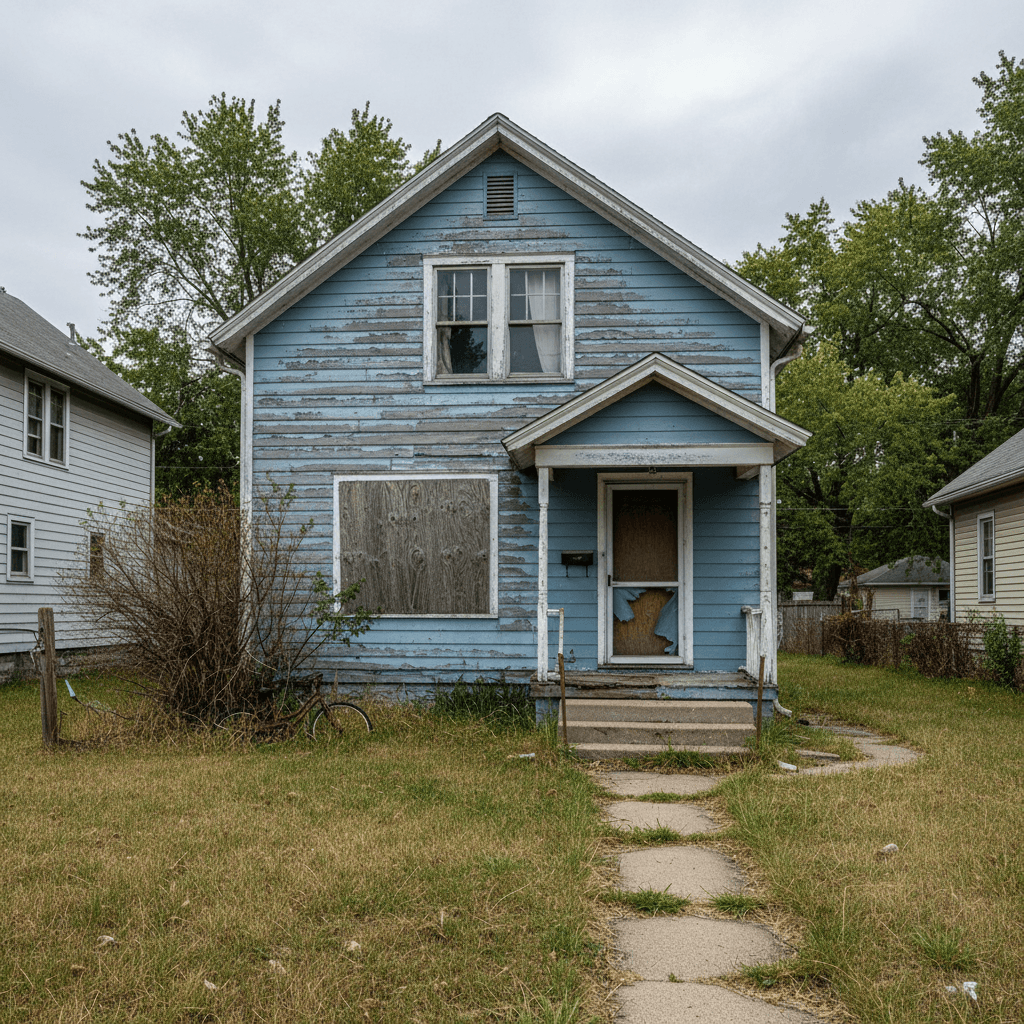
Why Tax Deed Properties Sell Absolutely As-Is
When a county conveys a tax deed, it is transferring only whatever interest the delinquent owner had in the property — nothing more. The county makes no representations about title quality, structural soundness, environmental condition, or whether the building even matches what the assessor's records describe. This is not fine print; it is the foundation of every tax deed transaction in every state.
Unlike a conventional real estate purchase, there is no seller's disclosure, no inspection contingency, and no opportunity to negotiate repairs. If the roof is collapsed, the foundation is cracked, or the interior was gutted by the previous owner, you own all of that the moment the gavel falls. The as-is nature of these sales is what creates opportunity for informed investors — and financial disaster for unprepared ones.
- No seller disclosure statements are provided
- County deeds typically contain broad disclaimers of warranty
- Winning bidder assumes all physical condition risk immediately
- No post-sale recourse against the county for undisclosed defects
The Inspection Problem: What You Can and Cannot Do Before the Sale
In a conventional transaction, a buyer hires a licensed inspector and walks through every room. At most tax deed auctions, that is simply not available to you. The property may be occupied by a former owner, a tenant, a squatter, or no one at all — and none of those situations give you a legal right to enter and inspect before winning the bid.
What you can legally do in almost every jurisdiction is conduct an exterior inspection. Drive the property, walk the perimeter where accessible, photograph what you can see from the public right-of-way, and talk to neighbors. An experienced investor can learn a great deal from an exterior walk: roofline sag, foundation cracks, boarded windows, water staining on siding, evidence of fire damage, or signs of long-term vacancy like overgrown vegetation and deteriorated paint. These observations do not replace an interior inspection, but they dramatically improve your bid calibration relative to investors who only look at the address on a screen.
Some investors hire a general contractor or home inspector to accompany them on the exterior review. A professional eye can spot structural warning signs that a layperson misses — things like bowing masonry, improper downspout drainage, or evidence of an addition that may not have been permitted.
- Exterior walk-through from public property is generally permitted
- Hire a contractor for a professional exterior condition assessment
- Photograph all visible damage and note the date
- Check for utility shutoff notices posted on the property
- Look for evidence of fire, flood, or storm damage
Code Violations, Permits, and Municipal Liens That Follow the Property
Deferred maintenance often comes with a paper trail. Many municipalities maintain public databases of open code violations, building permits, and orders to repair or demolish. These records are searchable before you bid and represent some of the most valuable pre-auction research you can conduct.
An open code violation does not disappear when the property changes hands through a tax deed sale. The new owner — you — becomes responsible for correcting whatever the municipality cited. In severe cases, a property may be under a demolition order or a public nuisance declaration that obligates you to tear down the structure within a defined timeframe at your own expense. Buying what appears to be a valuable lot only to discover you are required to demolish a structure and haul away the debris can transform a seeming bargain into a significant loss.
Permit history is equally telling. A property with multiple open permits for work that was started and never inspected may require a licensed contractor to open walls, demonstrate code-compliant installation, and obtain final sign-offs before the work is legally complete. That cost falls entirely on the new owner. Check the county or municipal building department's online portal — most jurisdictions now publish this data — and request a code compliance search where available.
- Search the municipal code enforcement database before bidding
- Open violations transfer to the new owner after the tax deed sale
- Demolition orders can obligate you to raze a structure at your expense
- Unpermitted work may require costly remediation to pass inspection
- Some jurisdictions charge ongoing daily fines for unresolved violations
Vacancy, Vandalism, and the Compounding Cost of Neglect
Properties that accumulate enough delinquent taxes to reach auction have typically been neglected for years. In most states, the tax delinquency process takes multiple years from the first missed payment to the actual sale date. During that entire period, the owner had little financial incentive to maintain a property they were losing.
Vacant properties deteriorate faster than occupied ones. A house without climate control develops moisture problems. Roof leaks that go unaddressed lead to rot, mold, and eventual structural failure. Broken windows invite wildlife and weather. In some markets, vacant properties are systematically stripped of copper plumbing, electrical wiring, HVAC equipment, and appliances — sometimes by the departing owner, sometimes by third parties after vacancy. A property listed in county records as a three-bedroom house with central air may arrive at auction as an empty shell with no mechanicals at all.
This compounding deterioration is difficult to price without access to the interior, which is exactly why exterior research and comparable sales analysis matter so much. Look at what recently renovated properties in the same neighborhood are selling for, estimate the realistic rehabilitation cost using conservative figures, and work backward to determine your maximum defensible bid. Underestimating rehabilitation costs is one of the most common and expensive mistakes in tax deed investing.
- Assume mechanicals may be missing or non-functional in long-vacant properties
- Budget conservatively for full rehabilitation before setting a maximum bid
- Factor in holding costs during the renovation period
- Check county records for water and sewer shutoff dates as a vacancy indicator
How to Build a Pre-Auction Property Condition Checklist
Serious tax deed investors approach every auction with a systematic pre-bid process rather than ad hoc research. A written checklist ensures you evaluate every property against the same criteria and do not skip steps under auction pressure. The checklist should draw from multiple public data sources and your own physical observation.
Start with the county assessor's record: note the year built, square footage, reported condition grade, and the last date the property was physically reviewed by an assessor. A property whose condition was last assessed many years ago may have deteriorated significantly since that record was created. Pull the building permit history from the municipal portal. Search the code enforcement database. Run the address through FEMA's flood map service to identify if the structure sits in a Special Flood Hazard Area, which affects both rehabilitation cost and future insurability.
Then visit the property in person. An address on a screen cannot tell you that the neighboring parcel is a commercial facility with active truck traffic, that the property backs to a drainage ditch, or that the structure appears to be settling unevenly. Combine your physical observation with your public records research, assign a rehabilitation cost range, and only then calculate the maximum bid you are willing to place. Tools like TaxDeedIQ are designed to support exactly this kind of pre-auction risk evaluation by surfacing the factors that can affect the value and marketability of a property before you commit capital.
- Review assessor records for year built, square footage, and last physical inspection date
- Pull full permit history from the building department portal
- Search code enforcement for open violations or demolition orders
- Visit the property in person for an exterior assessment
- Check FEMA flood maps and confirm current insurance availability
- Calculate rehabilitation cost range and maximum bid before the auction date
Don't buy someone else's debt
See exactly what can survive a tax deed, before your money is on the block. Every auction, scored 0–100.
Score my first auction, freeProperty Condition Risk at Tax Deed Auctions FAQ
Can I inspect the inside of a tax deed property before I bid?
In most cases, no. If the property is occupied, you have no right of entry before winning the deed. If it is vacant, entering without permission could constitute trespassing. The practical approach is a thorough exterior inspection, a review of all public records, and hiring a contractor to assess what is visible from the outside. Budget conservatively for the possibility that interior conditions are worse than the exterior suggests.
Who is responsible for open code violations after a tax deed sale?
The new owner is responsible for resolving any open code violations, regardless of when they were issued or who caused them. A tax deed does not extinguish municipal code obligations. Before bidding, always search the local code enforcement database and building department portal to understand what obligations transfer with the property.
How do I estimate rehabilitation costs when I cannot get inside the property?
Start with the exterior condition assessment and document every visible defect. Use the permit history and code violation records to infer what work may be needed. Then apply conservative per-square-foot rehabilitation estimates based on the level of work the property appears to require — cosmetic, moderate, or full gut renovation. Get a contractor's opinion from the exterior walk if possible. Build in a contingency buffer for unknown interior conditions, and calculate your maximum bid only after those costs are fully factored in.
What does 'as-is' really mean on a tax deed sale?
It means the county conveys whatever interest it has in the property without any representations about physical condition, title quality beyond what the statutory process provides, or the presence of defects. There is no recourse against the county after the sale if you discover structural damage, missing mechanicals, contamination, or any other condition issue. The entire burden of due diligence rests with the bidder before the auction.
Does a tax deed sale eliminate a demolition order?
No. A municipal demolition or unsafe structure order attaches to the property itself, not to the prior owner. Winning a tax deed on a property subject to a demolition order means you inherit the obligation to comply with that order, which may require you to demolish the structure and dispose of the debris at your own cost. Always check with the local building or code enforcement department before bidding on a property that shows signs of severe deterioration.
More guides
- Tax Deed vs Tax Lien: What's the Difference? (2026 Guide)
- Is Tax Deed Investing Safe? 6 Risks to Check Before You Bid
- Tax Deed Surplus Funds: How Overbid Recovery Works
- Redeemable Deed States Explained (Georgia, Texas & More)
- Partial Interest and Undivided Ownership at Tax Deed Auctions: The Hidden Risk That Can Lock Up Your Investment
- How to Buy Tax Deeds in West Virginia: Sheriff Sales, Redemption Rights, and the Risks Investors Must Evaluate First
Informational only, not legal or investment advice. Confirm rules with the county and consult a licensed professional before bidding.