Veterinary Clinics and Medical Office Properties at Tax Deed Auctions: Licensing Gaps, Biohazard Liability, and the Risks Every Investor Must Evaluate Before Bidding
Veterinary clinics and medical office properties look attractive at tax deed auctions — they often sit in high-traffic locations and appear move-in ready. But beneath the exam tables and waiting room chairs lies a category of risk most investors never see coming. From regulated medical waste liability to collapsed licensing structures, these properties demand a deeper layer of due diligence than a standard residential or even general commercial purchase.
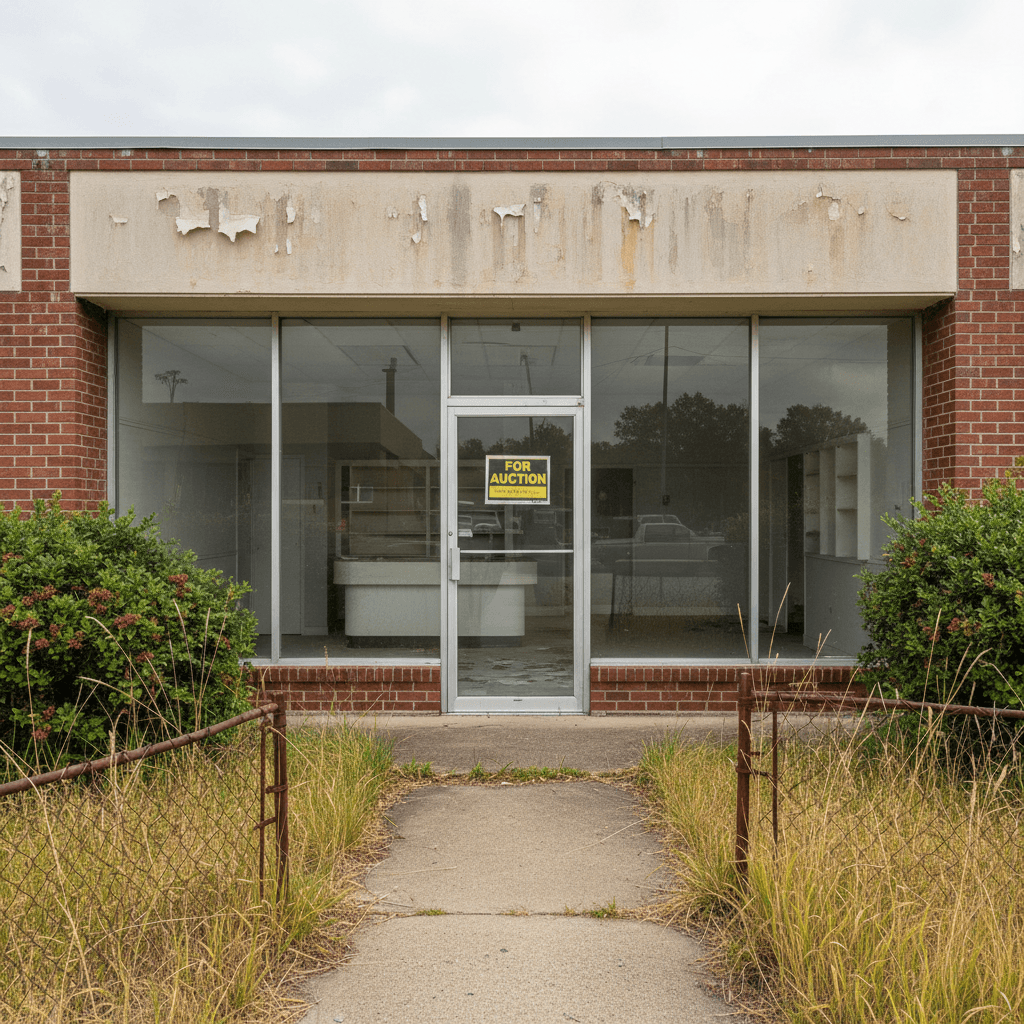
Why Veterinary Clinics and Medical Offices End Up at Tax Deed Auctions
Healthcare-related businesses fail for many of the same reasons other commercial enterprises do: the owner retires, a practice partnership dissolves, revenue declines, or a practitioner loses their license and the business collapses with it. When the underlying real estate falls into tax delinquency alongside the business failure, it enters the same tax foreclosure pipeline as any other property — eventually landing on a county auction list. What the auction notice rarely tells you is why the business failed or what was left behind when the doors closed.
The gap between a property's appearance and its actual condition is especially wide in healthcare settings. Equipment may have been removed, leased, or abandoned. Hazardous materials may still be present. Lease agreements with co-tenants or facility-sharing practitioners may still be in effect. Investors who treat these properties as simple commercial acquisitions often discover layers of liability only after the hammer falls.
- Practice dissolution leaving behind fixtures and equipment with separate ownership claims
- Regulatory violations that triggered license revocation and contributed to tax default
- Outstanding medical waste disposal contracts or unfulfilled remediation obligations
- Abandoned or expired leases from subletting practitioners or diagnostic labs
Biohazard and Medical Waste Liability: The Risk That Doesn't Transfer Away
One of the most significant and underappreciated risks in this property category is regulated medical waste. Veterinary clinics generate sharps, biological specimens, pharmaceutical waste including controlled substances, and potentially radiological materials from X-ray equipment. Medical offices generate similar waste streams. Under federal and state environmental regulations, the liability for improper storage or disposal of these materials attaches to the property and to whoever controls it — which, after a tax deed auction, means you.
Even if the prior owner abandoned the property years before the tax deed sale, a new owner can be required to properly remediate and dispose of any remaining regulated waste at their own expense. State environmental agencies and the EPA do not typically care about the chain of ownership when issuing cleanup orders. Before bidding on any clinic or medical office property, a physical inspection — to the extent access is permitted — combined with a review of any regulatory correspondence filed against the property address is critical. Environmental databases and state health department records can reveal prior violations or open compliance orders that are searchable before auction day.
Radiological equipment deserves its own due diligence lane. X-ray machines and fluoroscopy units require licensing from state radiation control programs. If equipment was abandoned on-site and its license was not properly surrendered, the new property owner may face regulatory scrutiny simply by taking title.
- Sharps, biologicals, and pharmaceutical waste are regulated at both federal and state levels
- Controlled substance inventories require DEA handling protocols regardless of property ownership
- Abandoned X-ray or imaging equipment may carry unresolved radiation control licensing obligations
- Environmental liability for on-site waste does not extinguish through a tax deed sale
Licensing, Zoning, and Use Restrictions That Shape Your Exit Strategy
A veterinary clinic or medical office is a legally defined use under most municipal zoning codes. The property may be zoned for medical or professional office use, which is typically a benefit — but it can also carry restrictions that limit conversion to other commercial uses without a formal rezoning process. Before bidding, pull the current zoning designation from the county or municipal planning office and confirm what uses are permitted by right versus what requires a conditional use permit or variance.
Healthcare facilities also frequently operate under specific state-issued facility licenses that are separate from the practitioner's individual license. A veterinary hospital, for example, may hold a facility permit issued by the state veterinary medical board or department of agriculture. These facility licenses do not transfer with the property and expire with the operating entity. If you intend to re-open or re-tenant the property for a similar use, the incoming operator must obtain fresh licensing — a process that can take months and may require facility upgrades to meet current standards.
Americans with Disabilities Act compliance is another use-specific consideration. Healthcare facilities serving the public are held to strict ADA accessibility standards. If the prior operator deferred accessibility upgrades, those obligations carry forward to the next owner who opens the space to the public. A pre-bid code compliance review with the local building department can reveal whether any open permits, failed inspections, or accessibility violations are on record.
- Zoning confirmation: medical/professional office use versus general commercial
- Facility license status with state veterinary, medical, or health licensing boards
- Open building permits or code violations on file with the municipal building department
- ADA accessibility compliance history and any deferred remediation orders
Equipment Liens, Leased Assets, and Personal Property Left Behind
Medical and veterinary equipment is expensive, and a significant portion of it is typically financed or leased rather than owned outright. Dental chairs, surgical suites, autoclave sterilizers, digital X-ray systems, anesthesia machines, and laboratory analyzers are commonly subject to UCC financing statements filed against the prior owner. A tax deed auction conveys real property — it does not convey personal property, and it does not extinguish UCC liens on equipment.
This distinction matters because when you take title to a former clinic, you may find expensive-looking equipment on the premises that you have no legal right to keep. The financing company or lessor may arrive with a valid UCC claim and demand return of the asset. Attempting to sell, discard, or repurpose leased equipment can expose you to conversion claims. Conversely, equipment that is genuinely abandoned and has no active UCC filing attached may become part of your acquisition — but distinguishing one situation from the other requires a UCC search in the state filing system before you bid.
Pharmacy cabinetry, compounding equipment, controlled substance safes, and medical gas systems present additional complexity. Controlled substance storage infrastructure may need to be surrendered to DEA or verified as properly decommissioned. Medical gas lines and oxygen delivery systems require inspection and certification before any new occupant can use them safely.
- UCC search in the state filing system to identify equipment financing statements
- Identify any lease agreements for diagnostic or surgical equipment
- Controlled substance storage: verify DEA decommissioning status
- Medical gas systems: check for current safety certifications or outstanding service orders
Surviving Liens, Redemption Rights, and Pre-Bid Risk Scoring
Beyond the property-specific risks described above, veterinary clinic and medical office properties carry the same general tax deed risks that apply to every auction: liens that may survive the sale, redemption windows that can unwind your ownership, and title clouds that make resale or refinancing difficult. In many states, municipal code enforcement liens, water and sewer liens, and certain special assessment liens survive a tax deed sale regardless of the auction result. An IRS federal tax lien on the prior owner's estate can trigger a 120-day redemption window during which the federal government can reclaim the property.
Evaluating all of these risk layers simultaneously — environmental, licensing, equipment, zoning, title, lien survival — is what separates profitable tax deed investing from expensive mistakes. Tools that aggregate risk signals into a single property-level score can help investors prioritize which properties warrant deep due diligence before auction and which should be passed over entirely. A platform like TaxDeedIQ is designed to surface these layered risks in a structured format, giving bidders a clearer picture of what they are actually buying before the auction clock runs out.
Always verify findings with the county assessor, the state environmental and licensing agencies, and a licensed real estate attorney familiar with your target state's foreclosure law before committing capital. The cost of pre-bid due diligence is always lower than the cost of post-auction surprises.
- Check for surviving municipal liens: code enforcement, water, sewer, special assessments
- Research federal tax liens and the IRS 120-day redemption right
- Confirm redemption period under state law and its effect on your ability to immediately resell or refinance
- Obtain a title commitment or attorney opinion on chain of title before bidding if the property is high-value
It's the 3% that bankrupts beginners
95% of tax liens get paid. TaxDeedIQ finds the risky ones, the junk land, the surviving IRS lien, before you bid.
Try it free for 7 daysVeterinary Clinics and Medical Office Properties at Tax Deed Auctions FAQ
Does a tax deed sale wipe out medical waste liability on a former clinic property?
No. Environmental and regulatory liability for medical waste, hazardous materials, and radiological equipment is generally not extinguished by a tax deed sale. A new owner who takes title to a property with regulated waste on-site may be required to remediate at their own expense under state and federal environmental law. Always investigate the site's waste disposal history before bidding.
Can I reopen a veterinary clinic or medical office in a property I buy at a tax deed auction?
Potentially, but not automatically. The prior operator's facility license does not transfer with the deed. A new operator must apply for fresh state licensing, which may require physical inspections and upgrades to meet current standards. Confirm zoning permits the intended use by right, verify ADA compliance status, and consult the relevant state licensing board before assuming the space is ready to operate.
What happens to the medical equipment left inside a property I win at auction?
Equipment on the premises may be owned by the prior operator, subject to a UCC financing lien held by a lender, or leased from a third party. A tax deed conveys real property only — it does not convey personal property or extinguish UCC claims. Run a UCC search in the state filing system before bidding to identify what equipment has active financing or lease claims against it, and consult an attorney before removing or disposing of anything on-site.
Are there redemption rights I need to worry about after buying a medical office at a tax deed sale?
Yes, the same redemption rights that apply to any tax deed property apply here. Depending on the state, the prior owner or certain lienholders may have a statutory right to redeem the property for a set period after the sale by paying the purchase price plus allowable costs. Additionally, if the prior owner owed federal taxes, the IRS has a separate 120-day right of redemption. Confirm the applicable redemption period under your state's law before bidding.
More guides
- Tax Deed vs Tax Lien: What's the Difference? (2026 Guide)
- Is Tax Deed Investing Safe? 6 Risks to Check Before You Bid
- Tax Deed Surplus Funds: How Overbid Recovery Works
- Redeemable Deed States Explained (Georgia, Texas & More)
- Tattoo Parlors and Body Art Studios at Tax Deed Auctions: Health Code Liability, Equipment Liens, and the Risks Every Investor Must Evaluate Before Bidding
- Vehicle Auction Lots and Used Car Dealerships at Tax Deed Auctions: Floor Plan Liens, Franchise Termination, and the Risks Every Investor Must Evaluate Before Bidding
Informational only, not legal or investment advice. Confirm rules with the county and consult a licensed professional before bidding.