Vacant Land at Tax Deed Auctions: Subdivision Restrictions, Platting Requirements, and the Risks Every Investor Must Evaluate Before Bidding
Vacant lots and raw acreage often draw the most aggressive bids at tax deed auctions—no tenant, no structure, and what looks like a blank canvas for development or resale. But unimproved land carries a distinct and frequently underestimated category of risk that experienced investors know to dissect before the auction opens. Understanding those risks before you bid is the only way to avoid turning an apparently cheap parcel into an expensive legal problem.
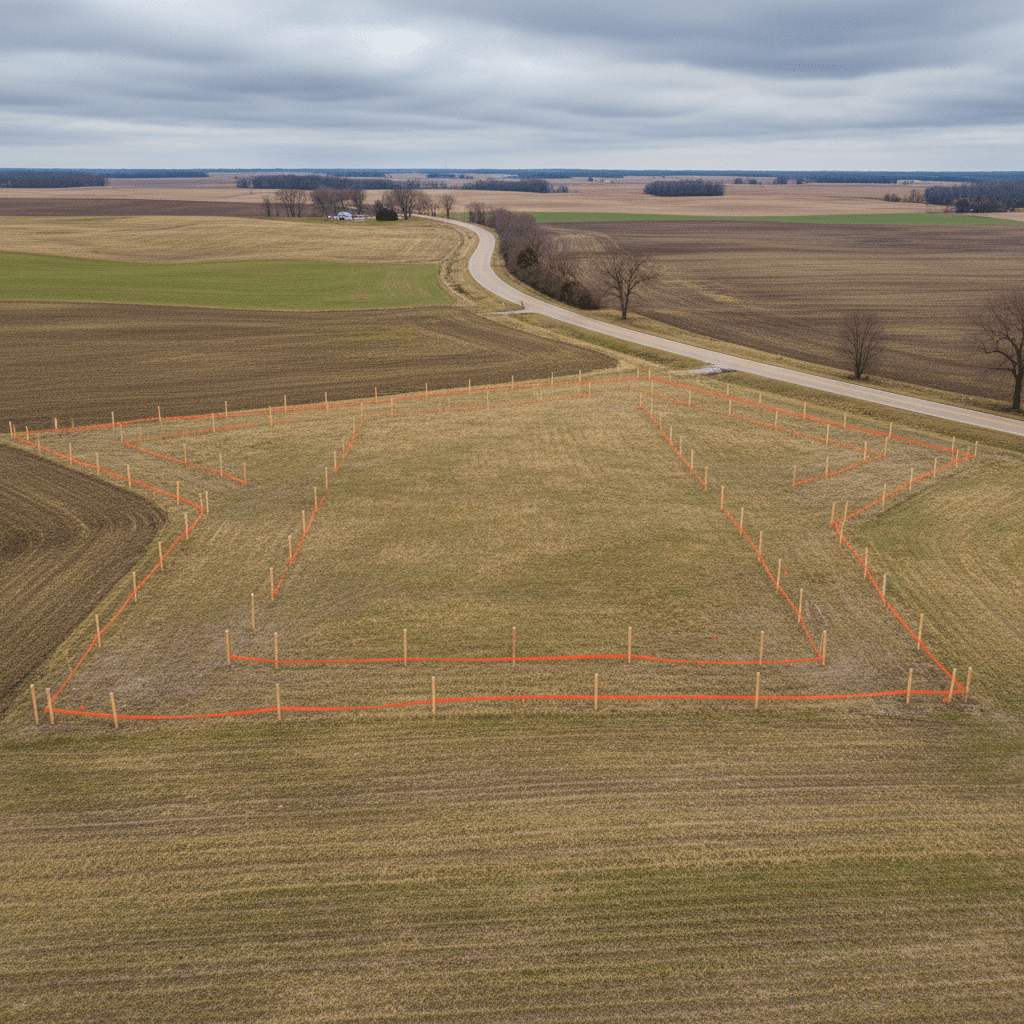
Why Vacant Land Feels Low-Risk—and Why That Feeling Is Dangerous
Many investors assume that a parcel with no building on it is somehow less complicated than a house or commercial property. There is no structure to repair, no occupant to evict, and the county deed appears to convey clean ownership. That assumption routinely leads to losses that dwarf the original bid price.
Raw land can carry the same categories of title defects as improved property—surviving liens, notice deficiencies, IRS redemption windows—while simultaneously adding a layer of regulatory risk that improved-property buyers rarely encounter. Zoning classifications for vacant parcels can prohibit any residential or commercial development whatsoever, leaving you with an asset you can neither build on, sell easily, nor lease productively. Before you bid on any vacant parcel, you need to understand not just what the land is, but what the law currently permits you to do with it.
A platform like TaxDeedIQ assigns a Safety Score to auctioned properties and flags risk categories visible before you bid, giving you a structured starting point for deeper due diligence—but the property-level research into zoning, platting, and subdivision status must be verified directly with the relevant county and municipal offices.
Platting Status: The Invisible Barrier to Development and Resale
One of the most commonly overlooked issues with vacant land is whether the parcel has ever been legally platted—formally surveyed, mapped, and recorded as part of an approved subdivision or stand-alone lot. In many jurisdictions, a parcel that was historically used as a large tract of farmland or open space was never subdivided and recorded in a way that makes it independently buildable under current rules.
When a county forecloses on unpaid property taxes and later conveys a tax deed, the new owner receives whatever legal status the parcel had before the tax sale. If the parcel was never platted, or if a previous owner subdivided it informally without county approval, the tax deed buyer inherits an unplatted lot. Many municipalities will not issue building permits on unplatted land and will not approve utility connections. Getting a parcel replatted or formally subdivided after the fact can require surveys, engineering reports, public hearings, and approval timelines that stretch over a year or more.
Before bidding, pull the parcel's plat map from the county recorder and confirm whether the lot of record matches the county's current subdivision ordinance requirements. A mismatch between the recorded plat and current minimum lot size rules can render the parcel non-conforming—meaning it may be legal to own but not legal to build on under current code.
- Check the county recorder for the recorded plat and legal description
- Confirm whether the parcel is a lot of record under current ordinance
- Identify minimum lot size, frontage, and setback requirements in the applicable zoning district
- Ask the planning department whether a variance or replatting would be required before a building permit could be issued
Zoning Restrictions and Permitted Uses
Zoning is the regulatory framework that determines what you are legally allowed to do with a parcel. On vacant land, the stakes are especially high because you have no existing use generating income while you hold the property. If the zoning classification permits only agricultural use, or if the land sits in a conservation district, overlay zone, or flood-plain development restriction area, your options for monetizing the parcel may be severely limited.
Some vacant parcels at tax deed auctions are located in areas zoned exclusively for single-family residential development but lack the minimum lot size required to build even one home under current code. Others sit in commercial corridors where development is theoretically permitted but where the parcel itself is too small or oddly shaped to meet setback and parking requirements. Agricultural zoning in rural counties can restrict subdivision and prohibit non-farm structures entirely, making the land difficult to resell to anyone other than an adjacent farmer.
Overlay districts add another layer. Wellhead protection zones, historic preservation overlays, airport influence areas, and coastal management zones can all restrict what is otherwise permissible under base zoning. None of these overlays are wiped out by a tax deed sale. Verify the zoning classification and any overlay designations with the county or municipal planning department before bidding, not after.
- Request the current zoning map and verify the exact classification of the parcel
- Ask whether any overlay districts, special designations, or development restrictions apply
- Confirm whether the parcel meets minimum dimensional standards for the permitted uses in that zone
- Determine whether a variance, conditional use permit, or rezoning would be necessary for your intended use
Access, Utilities, and the Infrastructure Gap
Vacant land that appears accessible on a map may be landlocked in practice. A separate post in this series covers landlocked parcels in depth, but the issue is acute enough for vacant land that it warrants emphasis here as well. If the parcel has no legal easement providing vehicular access to a public road, you cannot build on it in most jurisdictions, and you will have serious difficulty selling it to any buyer who wants to develop it.
Beyond access, you need to assess whether the parcel can realistically be served by utilities. A parcel located in a rural area without water or sewer service may require a septic system and well, and soil conditions—particularly in areas with shallow bedrock, clay-heavy soils, or high water tables—can make those installations impractical or very expensive. Even where municipal utilities exist, extension fees and tap-in charges for vacant parcels can represent a cost that rivals or exceeds the bid price at auction.
Power access matters too, particularly for parcels in exurban or rural counties where overhead lines may not run along the frontage. Asking the utility provider about service availability and extension costs before you bid can reveal whether a parcel priced attractively at auction actually pencils out for any realistic use.
- Confirm legal access to a public road through a recorded easement or direct frontage
- Contact the county or municipality to determine availability of water, sewer, and power
- Investigate soil suitability if a septic system would be required
- Estimate utility extension and tap-in costs as part of your total acquisition budget
Liens, Back Taxes, and Surviving Encumbrances on Vacant Parcels
A common misconception is that vacant land has fewer lien risks because there are no contractors, tenants, or prior mortgagees actively asserting claims. In practice, vacant parcels often accumulate years of delinquent property taxes before the county finally forecloses, and in some states, assessments from drainage districts, levee districts, or special utility districts are structured as liens that survive the tax deed sale—separate from the property tax delinquency that triggered the foreclosure.
Some vacant parcels in rural areas fall within the boundaries of drainage improvement districts or water management districts that levy annual assessments. These assessments are sometimes listed separately from general property taxes and may not be included in the amount satisfied by the tax deed foreclosure. The result is that a buyer at the tax deed auction takes title subject to an ongoing annual obligation—and may owe back assessments that accumulated during the delinquency period.
Boundary disputes are also more common with vacant land than with improved parcels, because there is often no physical structure demarcating where one owner's parcel ends and a neighbor's begins. An adverse possession claim or disputed fence line on vacant acreage may not surface until you attempt to develop or sell the property. A current survey—combined with a thorough title search—is the only reliable way to understand the parcel's actual boundaries and any encumbrances on them.
- Search for special district assessments, drainage district levies, and utility district liens separately from county property tax records
- Determine whether any liens from state or municipal agencies survive the tax deed in your jurisdiction
- Review the deed chain for easements, restrictions, or other recorded encumbrances that run with the land
- Consider commissioning a boundary survey if the parcel is large, rural, or adjacent to a disputed boundary
Exit Strategy Risk: Resale, Development, and Holding Costs
Every risk on vacant land is ultimately an exit strategy risk. Unlike a single-family house, which has a broad pool of retail buyers regardless of minor title clouds, vacant land has a narrow buyer pool—developers, builders, adjacent landowners, or investors—and all of them will scrutinize zoning, platting, access, and utilities more carefully than a typical homebuyer would. A title defect that might be papered over on a residential resale can make vacant land essentially unsaleable to anyone who needs financing, because lenders typically require a clear, insurable title.
Holding costs on vacant land can be deceptively high. Property taxes continue to accrue from the moment you take the deed. Maintenance obligations—mowing, pest control, liability management—apply even on an empty lot in many municipalities. If the land has any structures, even abandoned ones, code enforcement obligations may attach. And if your intended exit is resale to a developer, you may find that entitlement risk—the uncertainty of whether approvals will be granted—keeps the market thin for years.
Taking the time to evaluate zoning, platting, access, utilities, liens, and title quality before you bid is not optional caution. It is the core discipline that separates profitable vacant land acquisitions from expensive mistakes. Use every tool available—county records, planning department contacts, title searchers, and risk-screening platforms—to understand what you are actually buying before the auction clock runs out.
Free: the 50-State Tax-Sale Rules
Redemption periods, lien vs. deed, interest rates, every state. Plus a 0–100 risk score on every auction.
Get started freeVacant Land at Tax Deed Auctions FAQ
Does a tax deed wipe out zoning restrictions and subdivision rules on vacant land?
No. Zoning classifications, subdivision ordinances, and platting requirements are regulatory frameworks imposed by the state and municipality. They are not liens or encumbrances that a tax deed foreclosure eliminates. A buyer at a tax deed auction takes the parcel subject to all applicable zoning and land-use regulations, exactly as any other buyer would.
Can I build on a vacant lot I purchase at a tax deed auction without additional approvals?
That depends entirely on the parcel's zoning classification, platting status, lot dimensions, and whether it has legal access and utility availability. Many vacant parcels acquired at tax deed auctions require additional regulatory steps—rezoning, replatting, variance applications, or easement creation—before a building permit can be issued. You should confirm these requirements with the county or municipal planning department before bidding, not after.
What liens on vacant land can survive a tax deed sale?
The types of liens that survive vary by state. In many jurisdictions, special district assessments—drainage district levies, water management district fees, and similar charges—are separate from general property taxes and may not be extinguished by the tax deed foreclosure. State and federal environmental liens, IRS federal tax liens (subject to the IRS's 120-day redemption right), and certain municipal utility charges can also survive. A thorough title search conducted before the auction is the only reliable way to identify what encumbrances will attach to the deed you receive.
Is vacant land harder to get title insurance on after a tax deed sale?
Generally, yes. Title insurers are cautious about any property acquired through a tax deed sale because the foreclosure process can be challenged on due process grounds. Vacant land adds an additional layer of complexity because survey issues, boundary disputes, and access easement questions are harder to resolve without a professional survey and title examination. Many investors who acquire vacant land at tax deed sales ultimately need to complete a quiet title action before a title insurer will issue a standard owner's policy.
How do I know if a vacant parcel has access to a public road?
Review the recorded plat, legal description, and deed chain for any access easements or deeded road frontage. Then verify that any easement is still valid, correctly described, and not disputed. If no easement appears in the records, the parcel may be landlocked. You can also review aerial maps and contact the county planning or public works department, but those sources do not substitute for a thorough title search that traces the chain of access rights.
More guides
- Tax Deed vs Tax Lien: What's the Difference? (2026 Guide)
- Is Tax Deed Investing Safe? 6 Risks to Check Before You Bid
- Tax Deed Surplus Funds: How Overbid Recovery Works
- Redeemable Deed States Explained (Georgia, Texas & More)
- Tattoo Parlors and Body Art Studios at Tax Deed Auctions: Health Code Liability, Equipment Liens, and the Risks Every Investor Must Evaluate Before Bidding
- Vehicle Auction Lots and Used Car Dealerships at Tax Deed Auctions: Floor Plan Liens, Franchise Termination, and the Risks Every Investor Must Evaluate Before Bidding
Informational only, not legal or investment advice. Confirm rules with the county and consult a licensed professional before bidding.