Underground Storage Tanks, Brownfields, and Contaminated Sites at Tax Deed Auctions: What Every Investor Must Evaluate Before Bidding
Bidding on a tax deed auction parcel without screening for environmental contamination is one of the costliest mistakes an investor can make. Unlike most title defects, environmental liability can follow the new owner regardless of how clean the chain of title looks on paper. Before you raise your paddle, you need to understand how contamination risk is created, how it attaches to property ownership, and what red flags to look for in public records before the sale.
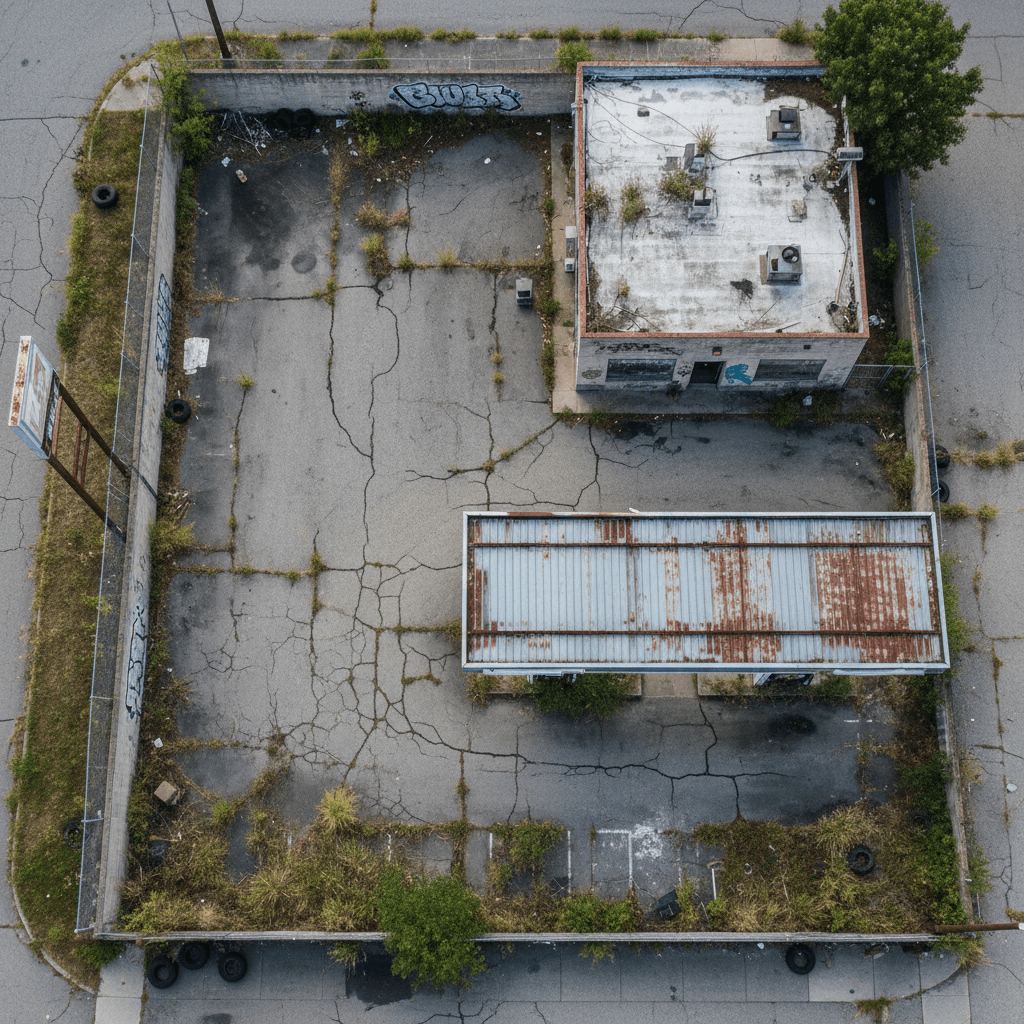
Why Contamination Risk Is Different From Every Other Tax Deed Hazard
Most risks investors encounter at tax deed auctions—surviving liens, redemption rights, clouded title—are financial and legal in nature. Environmental liability is categorically different because it is tied to the physical condition of the land itself, not to any document recorded in the courthouse. Federal and state environmental statutes can impose cleanup obligations on current property owners even when those owners had nothing to do with creating the contamination. This is not a hypothetical edge case; it is the explicit design of laws like the federal Comprehensive Environmental Response, Compensation, and Liability Act (CERCLA), which establishes a framework of strict, joint, and several liability that can reach innocent purchasers under certain circumstances.
The practical consequence for tax deed investors is stark: acquiring a parcel at auction does not insulate you from the contamination underneath it. If a prior owner operated a dry cleaner, a gas station, a commercial printer, or any number of other businesses that used hazardous substances, residual contamination may remain in the soil or groundwater. The new deed holder can find themselves named in enforcement actions by the Environmental Protection Agency or a state environmental agency, required to fund or participate in a remediation that can cost far more than the property is worth. Evaluating this risk before you bid is not optional—it is foundational.
- CERCLA imposes strict liability on current owners, not just those who caused the contamination
- State mini-Superfund statutes often impose even broader liability than federal law
- Cleanup costs for a modest commercial site can reach six or seven figures
- Environmental liens filed by regulatory agencies can survive a tax deed sale
Underground Storage Tanks: The Most Common Contamination Source at Distressed Properties
Underground storage tanks (USTs) are among the single most prevalent sources of subsurface contamination on distressed real estate. Any property that once housed a gas station, auto repair shop, fleet maintenance facility, or bulk fuel storage operation is likely to have had one or more USTs installed at some point. Tanks installed before modern regulatory requirements often lacked corrosion protection and leak detection systems, meaning releases of petroleum products may have occurred for years before anyone knew.
The EPA's UST program, administered cooperatively with state environmental agencies, maintains databases of known or suspected UST locations and confirmed releases. Many states publish this data through online lookup tools tied to parcel addresses or geographic coordinates. A search of these databases should be a standard step in every tax deed due diligence workflow before you bid. But the absence of a state database entry does not guarantee the absence of a UST: older tanks were sometimes installed without permits, and small heating oil tanks on residential properties are frequently unregistered. Physical indicators—old vent pipes, fill caps, pavement patches, or an unusual depression in the yard—can suggest subsurface infrastructure that no record will reveal.
When a confirmed UST release is associated with a property, the state environmental agency typically assigns it a case number and tracks remediation progress. Active cases mean ongoing liability. Closed cases may or may not mean clean soil, depending on the standards applied at closure. Asking the county or reviewing state environmental records to understand case status is an important pre-bid step. A licensed environmental professional can assist in interpreting these records.
- Search EPA's UST Finder and your state agency's release database by address before bidding
- Active remediation cases signal ongoing regulatory involvement that may transfer to the new owner
- Closed cases should be reviewed for institutional controls or deed restrictions that limit land use
- Physical site indicators of buried tanks are not always captured in any public database
Brownfields, CERCLA Sites, and the National Priorities List
The term 'brownfield' refers broadly to properties where real or perceived contamination complicates redevelopment. Thousands of brownfield sites exist across the United States, and a meaningful share of them cycle through tax delinquency and eventually appear at auction. Many former industrial parcels, commercial sites, and even some residential properties carry brownfield designations.
At the most serious end of the contamination spectrum sits the EPA's National Priorities List (NPL), which identifies sites eligible for federally funded Superfund cleanup. Properties at or near an NPL site carry heightened scrutiny because contamination can migrate via groundwater across property boundaries. Even a parcel that is not itself listed can be affected if a neighboring plume reaches it. The EPA's CERCLIS database and its successor, the SEMS database, allow investors to search for sites by address, zip code, or geographic area. Reviewing these resources costs nothing and takes minutes.
State-level equivalents of the NPL—sometimes called state Superfund lists or priority contaminated site lists—cover an even larger universe of properties. These lists are maintained by each state's environmental agency and are generally searchable online. Cross-referencing a tax deed parcel against both federal and state databases should be standard practice, not an optional upgrade. The presence of a listing does not automatically mean you cannot acquire or use the property, but it does mean the risk profile demands professional evaluation before you commit capital.
- EPA SEMS database (formerly CERCLIS) is publicly searchable by address
- State priority site lists often cover far more properties than the federal NPL
- Groundwater plumes can affect parcels that are not themselves listed
- Brownfield status may enable grant funding for cleanup but adds regulatory complexity
Environmental Liens and How They Survive a Tax Deed Sale
One of the most dangerous misconceptions in tax deed investing is that the sale extinguishes all prior encumbrances. As covered in depth in our piece on environmental liens and contamination risk, federal environmental cleanup liens recorded under CERCLA Section 107(l) enjoy a priority and survival mechanism that is largely independent of state tax lien foreclosure procedures. If the EPA has expended funds cleaning up a site, it can assert a lien against the property to recover those costs, and that lien may survive a tax deed sale depending on how and when it was perfected relative to state law.
State environmental agencies also have authority to file liens for remediation costs they have incurred. The interaction between these liens and a tax deed foreclosure is not uniform: it depends on when the lien was recorded, whether proper notice was given during the foreclosure proceeding, and the specific priority rules of the state where the property sits. Because these questions are genuinely complex and fact-specific, verifying lien survival risk with a local real estate attorney before bidding is not merely good practice—it is essential.
Even without a recorded lien, the mere fact of contamination creates an in-rem obligation that can constrain what you are allowed to do with the property, require institutional controls like deed restrictions on groundwater use or soil disturbance, and mandate notification to future buyers. These restrictions can destroy the exit strategies you were counting on when you bid.
- Federal CERCLA liens can survive a tax deed sale in certain circumstances
- State environmental agency cleanup cost liens follow state-specific priority rules
- Institutional controls recorded against a property restrict future use and must be disclosed to buyers
- An environmental consultant's Phase I site assessment is the standard tool for initial screening
How to Screen for Environmental Risk Before the Auction
A systematic pre-bid environmental screen does not require a full Phase I Environmental Site Assessment on every parcel, but it does require deliberate research using publicly available tools. The goal at this stage is to quickly separate low-risk from elevated-risk parcels so you can focus professional resources where they are most needed.
Start by reviewing the parcel's historical land use. County assessor records, aerial photo archives through services like Google Earth's historical imagery, and Sanborn fire insurance maps (available through many public library systems) can reveal what sat on a property decades ago. A parcel shown as a gas station in a 1970s Sanborn map is a materially different risk proposition than one shown as a single-family residence. Next, cross-reference the address or parcel coordinates against EPA databases (SEMS, UST Finder, FRS), your state environmental agency's searchable databases, and the ECHO compliance database. Note any open enforcement actions, confirmed releases, or regulatory correspondence.
For parcels where elevated risk is suggested by any of these searches, a Phase I Environmental Site Assessment conducted by a licensed environmental professional provides the recognized environmental condition review that anchors the 'innocent landowner' defense under CERCLA. This defense requires, among other things, that you conducted all appropriate inquiry before acquisition. If Phase I reveals recognized environmental conditions, a Phase II investigation involving soil and groundwater sampling may be warranted—and that is almost certainly a property you should not bid on without a clear picture of remediation scope and cost. Tools like TaxDeedIQ's Safety Score system are designed to surface these red flags early, so you are not discovering them for the first time on auction day.
- Review historical land use via Sanborn maps, aerial archives, and assessor records
- Search EPA SEMS, UST Finder, ECHO, and your state environmental agency databases
- A Phase I ESA supports the innocent landowner defense and is the standard pre-acquisition tool
- If Phase I reveals recognized environmental conditions, pause—Phase II data is essential before bidding
- Factor potential remediation costs into your maximum bid calculation, not as an afterthought
Score every auction before you bid
TaxDeedIQ gives every US tax deed & tax lien auction a 0–100 safety score, surviving liens, IRS redemption, flood, homestead.
Start my free trialUnderground Storage Tanks, Brownfields, and Contaminated Sites at Tax Deed Auctions FAQ
Can I be held responsible for cleanup costs on a property I bought at a tax deed auction even though I didn't cause the contamination?
Yes. Under CERCLA and most state environmental statutes, liability for cleanup can attach to current property owners regardless of whether they caused or contributed to the contamination. The 'innocent landowner' defense exists but requires that you conducted all appropriate inquiry before acquisition—meaning a proper Phase I ESA. Simply winning a tax deed does not insulate you from environmental enforcement.
Do environmental liens survive a tax deed sale the same way other liens do?
Not necessarily the same way, but they can survive. Federal CERCLA cleanup cost liens and state environmental remediation liens have their own recording and priority rules that may allow them to survive a tax deed foreclosure depending on when and how they were perfected. This is a highly fact-specific question that requires review by a local real estate attorney familiar with both environmental and property law before you bid.
What is the fastest way to check if a parcel has known contamination before an auction?
The fastest starting point is a search of publicly available databases: EPA's SEMS (formerly CERCLIS), the EPA UST Finder, your state environmental agency's release and cleanup site database, and the EPA ECHO enforcement database. Cross-referencing the parcel address against all of these takes roughly fifteen to thirty minutes and can quickly surface confirmed releases, active enforcement cases, or NPL listings. This is a screening step, not a substitute for professional due diligence on elevated-risk parcels.
Does a 'closed' UST release case mean the soil is clean?
Not necessarily. Closure standards have evolved over time, and some older cases were closed under less stringent criteria than those applied today. A closed case may also involve institutional controls—deed restrictions or groundwater use limitations—that remain in effect and restrict what you can do with the property. Reviewing the actual closure documentation from the state environmental agency is the only way to understand what 'closed' means for a specific site.
How does environmental risk affect the exit strategy for a tax deed property?
Significantly. If contamination is confirmed or suspected, you may be unable to obtain title insurance, which limits your ability to sell to a buyer using conventional financing. Deed restrictions or institutional controls can preclude residential use or restrict groundwater access. Disclosure obligations to future buyers exist in most states. And if remediation is required, the cost can easily exceed the value of the property. All of these factors should be evaluated and priced into your bid before the auction, not discovered afterward.
More guides
- Tax Deed vs Tax Lien: What's the Difference? (2026 Guide)
- Is Tax Deed Investing Safe? 6 Risks to Check Before You Bid
- Tax Deed Surplus Funds: How Overbid Recovery Works
- Redeemable Deed States Explained (Georgia, Texas & More)
- Former Government-Owned Properties at Tax Deed Auctions: Reversionary Clauses, Deed Restrictions, and Hidden Title Risks Every Investor Must Evaluate Before Bidding
- Probate Estates, Heir Disputes, and Ownership Gaps at Tax Deed Auctions: What Every Investor Must Evaluate Before Bidding
Informational only, not legal or investment advice. Confirm rules with the county and consult a licensed professional before bidding.