Print Shops, Textile Facilities, and Sign-Making Studios at Tax Deed Auctions: Equipment Liens, Chemical Waste, and the Risks Every Investor Must Evaluate Before Bidding
Print shops, textile finishing facilities, and sign-making studios look like straightforward commercial real estate at tax deed auctions — four walls, some equipment, a usable footprint. But behind that facade sits a layered stack of equipment financing liens, solvent-laden waste issues, and zoning constraints that can turn a low opening bid into an expensive lesson. If you plan to bid on any property in this category, understanding every risk layer before the auction gavel drops is not optional — it is the difference between a workable acquisition and a liability you cannot exit.
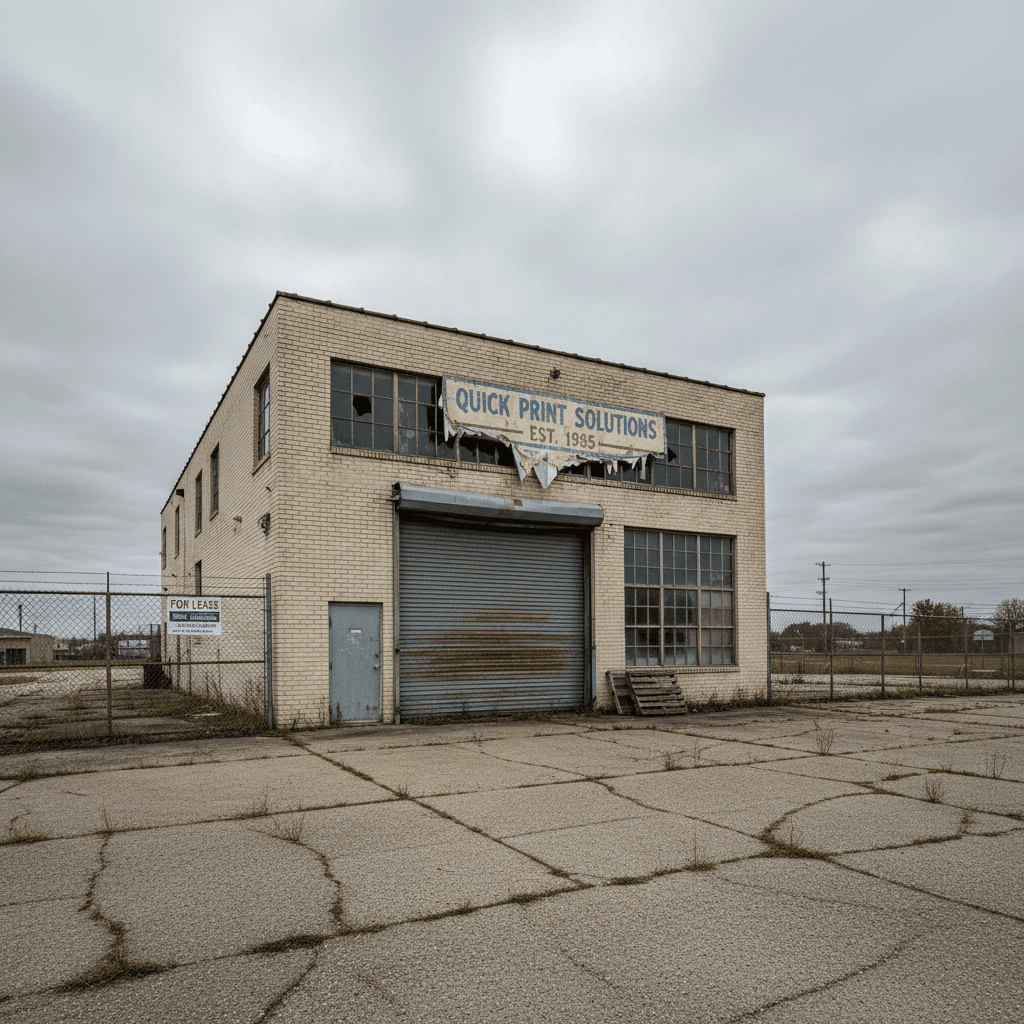
Why These Property Types Appear at Tax Deed Auctions
Print shops, textile operations, and sign studios are capital-intensive businesses with thin margins. When cash flow deteriorates — from lost contracts, supply chain disruptions, or rising lease costs — property tax payments are often among the first obligations to lapse. Owners may keep the lights on while the tax bill quietly accumulates, triggering the delinquency cycle that eventually produces a tax deed or tax lien foreclosure proceeding.
The result is that investors frequently encounter properties where the previous owner financed equipment aggressively, operated with chemicals on-site, and left without conducting any formal closure or cleanup. The building itself may be structurally sound, but the history of operations creates a risk profile that goes well beyond a standard commercial acquisition.
These categories of property also tend to appear in industrial or light-industrial zones that carry their own compliance history, permitting requirements, and environmental oversight. That context matters enormously when you are evaluating what you can actually do with the property after you take title.
Equipment Liens: The Debt That Often Outlasts the Business
Commercial printing presses, digital wide-format plotters, embroidery and textile machinery, vinyl cutting systems, and large-format UV printers are expensive. Business owners routinely finance this equipment through equipment lenders or lease it under agreements with security interests filed as UCC-1 financing statements with the state secretary of state.
The critical question for any auction bidder is whether those UCC-1 liens were satisfied when the business closed — or whether they remain attached to the equipment sitting inside the building. In many states, a tax deed sale extinguishes most junior liens on the real property, but it does not automatically extinguish a properly perfected personal property security interest in equipment that happens to be located on the premises. If the press or plotter is collateral under an active UCC filing, the secured lender may have the right to repossess it even after you take title to the building.
This creates an immediate practical problem. If you purchase the property expecting to lease it to another print or sign shop, the new tenant may walk in to find equipment that legally belongs to a third party. If you purchase expecting the equipment to add value to your resale price, that value may evaporate when the lienholder arrives with a repossession order. Before you bid, search the state's UCC database for active financing statements tied to the property address or the prior owner's legal name, and confirm whether any liens were satisfied or released.
- Search the secretary of state's UCC database by debtor name and property address before the auction.
- Determine whether equipment is owned free and clear or subject to an active financing statement.
- Confirm whether any equipment is subject to an operating lease rather than a financed purchase — leased equipment typically remains the lessor's property regardless of the real estate sale.
- Factor in that equipment with an active lien or lease adds zero value to your acquisition and may require legal action to remove.
Solvent and Chemical Waste: The Hidden Environmental Exposure
Print shops use inks, solvents, plate developers, screen-printing chemicals, and cleaning agents. Textile facilities may use dyes, bleaching agents, and finishing compounds. Sign shops use vinyl adhesives, solvent-based inks, and chemical cleaning solutions. These substances, when improperly stored, spilled, or disposed of over years of operation, can contaminate soil and groundwater beneath the building.
Unlike a gas station with underground storage tanks — a category investors now recognize as a red flag — the contamination at a print or textile facility is less visible and less systematically regulated in many states. That does not make it less dangerous. If the state environmental agency has an open investigation or cleanup order associated with the property, that obligation can transfer with the deed. Even when no formal order exists, a future buyer or lender conducting due diligence may discover contamination that eliminates your ability to resell or finance the property.
Before bidding, search the state environmental agency's database for any records associated with the property address. Check whether the site appears on any brownfield list or has had a voluntary cleanup agreement filed. If the previous operator was a commercial printer or textile finisher of any scale, a Phase I Environmental Site Assessment performed by a qualified professional is worth serious consideration — and in many cases a Phase II sampling may be warranted before you commit capital.
- Check state environmental agency databases for open investigation, cleanup orders, or brownfield designations tied to the parcel.
- Request any available hazardous materials disclosure or environmental review in the county's auction file.
- Factor Phase I and potentially Phase II assessment costs into your maximum bid calculation.
- Understand that purchasing a contaminated property at a tax deed auction does not transfer liability to the county — it transfers it to you.
Zoning, Permitted Use, and Re-Tenanting Challenges
Print shops and textile facilities are often located in industrial or light-industrial zoning districts. That zoning classification supports manufacturing and production uses but may impose restrictions on retail-facing operations, residential conversion, or food-related businesses. If your exit strategy involves converting the building to a different use — a restaurant, a fitness studio, a retail shop — verify that the zoning actually permits that use before the auction, not after.
Sign-making studios occupy a more ambiguous niche. Some are located in commercial zones that permit light manufacturing alongside office and retail uses. Others are in industrial parks where retail walk-in traffic is restricted. The building's physical configuration — loading docks, high ceilings, roll-up doors — may also limit adaptive reuse options regardless of zoning.
Beyond permitted use, consider whether the building has been modified in ways that require a certificate of occupancy update or building permit close-out. Owners of these businesses frequently add ventilation systems, chemical storage rooms, electrical upgrades for heavy machinery, and spray booths without pulling the required permits. When those unpermitted modifications exist, you inherit the obligation to remediate them before obtaining your own permits or selling the property with clear title to improvements.
- Confirm current zoning classification and permitted uses with the county or municipal planning department.
- Review the property's permit history for open permits, unpermitted improvements, or failed inspections.
- Assess whether the building's physical layout is compatible with your intended use or requires costly renovation.
- Verify that your intended reuse will not trigger a costly change-of-use review or trigger sprinkler and ADA upgrade requirements.
Title Risks Specific to Commercial Operating Properties
Commercial operating properties that reach tax deed auction often carry a more complex title history than vacant land or single-family homes. Beyond the equipment liens discussed above, these properties may have mechanic's liens filed by contractors who performed tenant improvements and were never paid, municipal code enforcement liens for violations that accumulated during the delinquency period, and judgment liens from creditors of the previous business owner recorded against the real property.
Whether any of these liens survive the tax deed sale depends on your state's statute and on the procedural correctness of the tax foreclosure itself. In many states, a properly conducted tax deed sale extinguishes most junior liens — but only if the required notices were given to all lienholders of record. If a lienholder was omitted from the notice process, that lien may survive and that party may have a legal basis to challenge your deed. This is precisely the scenario that makes quiet title actions necessary after some tax deed acquisitions.
The practical takeaway is that a thorough title search conducted before the auction — covering not just the tax history but the full lien and encumbrance record — is essential for any commercial property in this category. Working with a title professional or real estate attorney familiar with your state's tax deed statutes will help you identify which encumbrances are likely extinguished and which remain live risks.
- Commission a full title search, not just a tax delinquency review, before bidding on any commercial operating property.
- Identify all recorded liens, judgments, and encumbrances and assess their likely survival status under your state's tax deed statute.
- Factor in potential quiet title costs if the foreclosure notice history is incomplete or the property has a complex lien stack.
- Verify whether any IRS federal tax liens are recorded — these carry a separate 120-day right of redemption that is entirely independent of state law.
How to Evaluate These Properties Before the Auction
The right framework for evaluating a print shop, textile facility, or sign studio at a tax deed auction is to build a layered due diligence checklist that addresses every category of risk — not just the purchase price relative to assessed value. Start with the county recorder's office to pull the full deed and lien history. Move to the state UCC database for equipment financing records. Check the state environmental agency for any regulatory history. Review the county permit records for open or unpermitted work. Confirm zoning with the planning department. If possible, conduct a physical inspection of the building — even a drive-by observation can reveal chemical storage tanks, ventilation equipment, or hazardous material warnings that signal elevated environmental risk.
Tools that aggregate auction data and flag known risk categories — such as surviving lien indicators, flood zone designations, and IRS lien records — can help you triage which properties merit deeper investigation and which should be passed over entirely. The goal is to understand, before you bid, what your all-in cost of ownership looks like and whether the spread between that number and realistic resale or rental value justifies the risk.
None of this replaces a licensed professional. A real estate attorney familiar with your state's tax deed law, an environmental consultant, and a title professional are the core team for any serious commercial acquisition through auction. The county and your own research inform your pre-bid judgment; the professionals protect you once you decide to move forward.
It's the 3% that bankrupts beginners
95% of tax liens get paid. TaxDeedIQ finds the risky ones, the junk land, the surviving IRS lien, before you bid.
Try it free for 7 daysPrint Shops, Textile Facilities, and Sign-Making Studios at Tax Deed Auctions FAQ
Do equipment financing liens survive a tax deed sale?
Real property liens and personal property security interests are governed by different legal frameworks. A tax deed sale in most states extinguishes junior liens on the real estate, but a properly perfected UCC-1 security interest in equipment — a press, a plotter, a textile machine — is a personal property lien, not a real property lien. If that lien was never released, the secured creditor may still have the right to repossess the equipment even after you take title to the building. Always search the state UCC database before bidding on a commercial operating property.
Can I be held responsible for environmental contamination at a property I purchased at a tax deed auction?
Acquiring a contaminated property through a tax deed sale does not insulate you from cleanup liability under state or federal environmental law. Once you hold title, you may be treated as a responsible party for contamination on the property regardless of whether you caused it. The extent of your liability depends on your state's statutes, the nature and extent of contamination, and whether any existing cleanup orders transfer with the deed. Conduct environmental due diligence — including checking state agency databases and considering a Phase I assessment — before you bid on any property with a history of chemical use.
What is a quiet title action and when do I need one after buying a commercial tax deed property?
A quiet title action is a court proceeding that asks a judge to confirm that your tax deed conveys clear and marketable title, extinguishing any competing claims. It is typically necessary when the tax foreclosure notice process had gaps, when a lienholder of record was not properly notified, or when the property has a complex ownership or lien history that a title company will not insure without a court judgment. For commercial operating properties — which often have multiple recorded liens and creditors — quiet title is a common post-acquisition step. Consult a real estate attorney licensed in your state to determine whether it is required for your specific acquisition.
How do I find out if there are open permits or code violations on a commercial property before the auction?
Most counties and municipalities maintain online portals where you can search permit history and open code enforcement cases by property address or parcel number. If the portal is not publicly available online, a call or in-person visit to the building department or code enforcement office before the auction will usually surface any open permits, failed inspections, or active violations. These records are public in most jurisdictions. Unpermitted modifications — common in print shops and textile facilities that added ventilation, electrical capacity, or spray areas — can require costly remediation before you can legally occupy or sell the property.
What zoning issues should I look for before bidding on a print shop or sign studio at a tax deed auction?
The most important questions are whether the current zoning permits your intended use, whether a change of use will trigger code upgrade requirements, and whether any prior zoning variances or conditional use permits that the previous operator held will transfer to you as the new owner. Many conditional use permits are issued to a specific operator and do not run with the land. Verify current zoning status with the county or municipal planning department before the auction — not after — so you can accurately assess the full cost and feasibility of your planned acquisition.
More guides
- Tax Deed vs Tax Lien: What's the Difference? (2026 Guide)
- Is Tax Deed Investing Safe? 6 Risks to Check Before You Bid
- Tax Deed Surplus Funds: How Overbid Recovery Works
- Redeemable Deed States Explained (Georgia, Texas & More)
- Tattoo Parlors and Body Art Studios at Tax Deed Auctions: Health Code Liability, Equipment Liens, and the Risks Every Investor Must Evaluate Before Bidding
- Vehicle Auction Lots and Used Car Dealerships at Tax Deed Auctions: Floor Plan Liens, Franchise Termination, and the Risks Every Investor Must Evaluate Before Bidding
Informational only, not legal or investment advice. Confirm rules with the county and consult a licensed professional before bidding.