Pharmacies and Medical Dispensaries at Tax Deed Auctions: DEA Registration, Controlled Substance Liability, and the Risks Every Investor Must Evaluate Before Bidding
A pharmacy or licensed medical dispensary showing up on a tax deed auction list can look like a bargain commercial property—until you realize the building's lawful use is tethered to federal and state licenses that do not transfer with the deed. The gap between acquiring the real estate and legally operating, leasing, or even demolishing such a property is wider than almost any other commercial asset class. Evaluate every layer of this risk before you place a single bid.
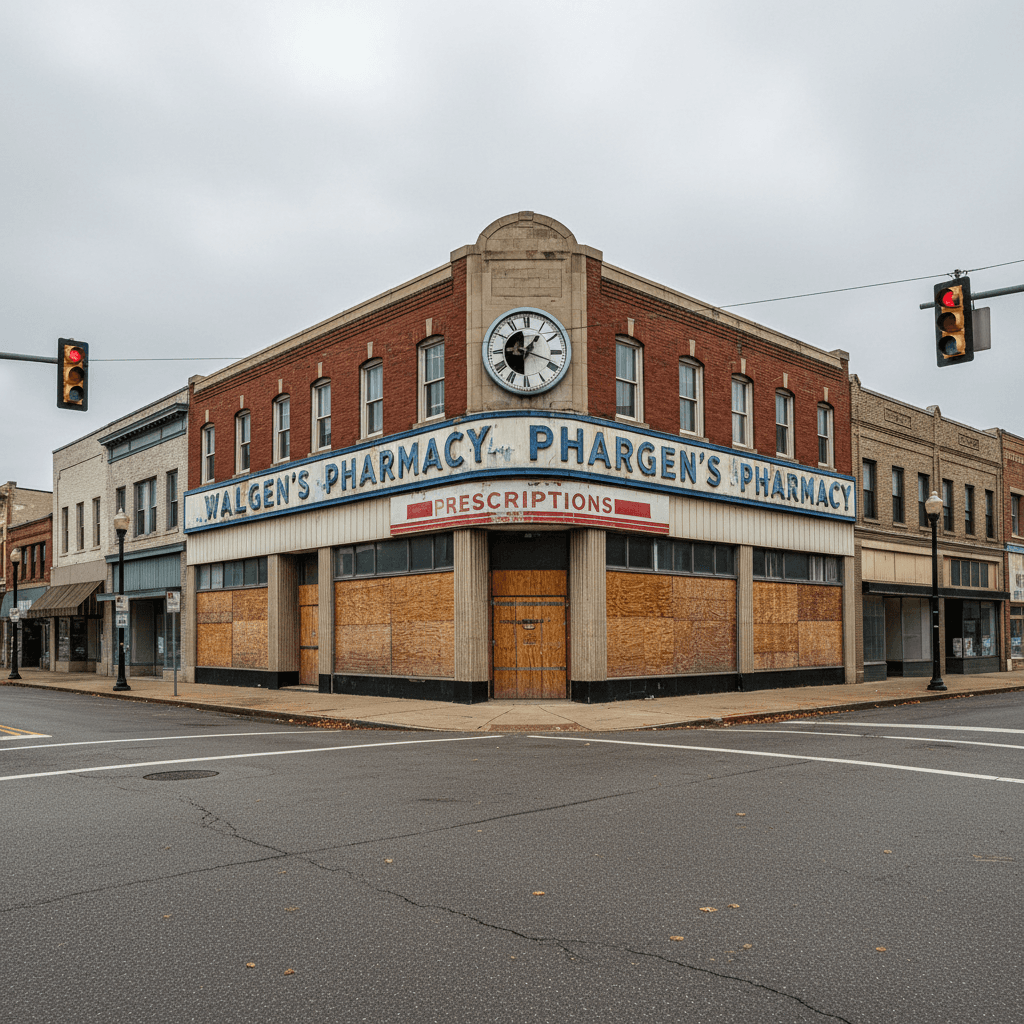
Why Pharmacies and Dispensaries End Up at Tax Deed Auctions
Retail pharmacies, compounding labs, and state-licensed medical or adult-use dispensaries can fall behind on property taxes for the same reasons any business does: the operating company collapses, a lease expires, a franchise agreement dissolves, or a regulatory action suspends the license and kills revenue overnight. When the property owner—whether the operator or a landlord—stops paying taxes, the county's collection machinery starts running. Eventually the parcel ends up at a tax deed or tax lien foreclosure sale.
What makes these properties unusual is that the physical space is purpose-built around a highly regulated use. Drop ceilings, pharmaceutical-grade HVAC, vault rooms, Class V or Class VI controlled-substance storage, security camera infrastructure, and specialized plumbing may dominate the floor plan. That build-out is worth something to the right buyer—but only if the regulatory environment allows it to be used. Without that alignment, you own an expensive shell whose conversion costs can dwarf the auction price.
- Pharmacy chain closures following corporate restructuring or bankruptcy
- Standalone compounding pharmacies shut down by state boards of pharmacy
- Cannabis dispensaries whose state licenses lapsed due to ownership changes or compliance failures
- Former methadone clinics or opioid treatment programs that lost DEA registration
DEA Registration and the Federal Layer Every Bidder Must Understand
The Drug Enforcement Administration issues registrations to specific legal entities at specific addresses, authorizing the handling of controlled substances. That registration does not attach to the building; it attaches to the registrant. When you acquire a tax deed and the former pharmacy or dispensary operator is gone, the DEA registration is gone with them—or in the process of being revoked, surrendered, or allowed to lapse.
The practical consequence is that any controlled substances remaining on the premises become an immediate federal liability for whoever holds title. DEA regulations require registrants to handle the lawful disposal of controlled substances, but if the registrant has disappeared—as often happens in a tax-default scenario—the property owner of record can be the party the agency contacts. Before bidding, verify with the county and conduct independent research on whether the DEA or state board of pharmacy has executed a surrender, seizure, or inspection of the site. A site that still has product in a vault is a federal compliance emergency, not an investment opportunity.
Even if the property is clean of product, re-establishing a DEA registration for a new operator requires a fresh application, background investigation, and inspection. That process cannot begin until a qualified registrant applies in their own name, and approval timelines are entirely in the agency's hands. Any business plan that depends on a quick restart of pharmaceutical operations should be tested against that reality.
- Confirm whether a DEA Form 41 (destruction record) or Form 222 surrender has been filed for the site
- Check the DEA Diversion website and state pharmacy board disciplinary orders for the address
- Contact the county recorder for any lis pendens or state agency enforcement notices tied to the parcel
State Pharmacy Board Licensing and the Certificate of Occupancy Trap
Every state requires a separate pharmacy license issued by its board of pharmacy before a facility can dispense any drug. That license, like the DEA registration, is non-transferable. A new operator must apply from scratch, and many state boards scrutinize premises extensively before granting a new license—including physical inspections, proof of a licensed pharmacist-in-charge, and in some states a showing of community need or public interest.
The certificate-of-occupancy situation compounds this. Many pharmacy build-outs were permitted under a specific use classification. Trying to convert the space to a different commercial use—say, a general retail store or medical office—may require a new certificate of occupancy, which triggers a full code compliance review. If the building has been vacant during the tax delinquency period, deferred maintenance may mean that review is expensive. Code violations discovered during inspections of a tax deed property are typically the new owner's problem.
For cannabis dispensaries operating under a state-issued license, the layering is even more complex. The state license authorizes possession and sale of cannabis at a specific address. Many state cannabis regulatory agencies have change-of-ownership and change-of-location restrictions that make it difficult or impossible for a new real estate owner to simply install a new operator. Some states have issued a fixed number of licenses and do not permit easy relicensing of a closed site.
- State pharmacy license (non-transferable, requires new application)
- State cannabis or controlled-substance dispensary license (jurisdiction-specific rules apply)
- Local business permit and zoning use permit
- Certificate of occupancy for the specific use class
- Health department or fire marshal approvals for drug storage
Zoning, Proximity Rules, and Use Restrictions That Can Freeze Your Exit
Pharmacies and especially cannabis dispensaries are frequently subject to distance requirements imposed by local ordinances—minimum separations from schools, churches, residential zones, other dispensaries, or treatment facilities. These distance rules are measured from the property itself, not from the former operator's address. If you buy the tax deed and the jurisdiction has enacted or tightened its proximity ordinances since the original license was issued, the site may no longer qualify for a new dispensary license even if you find a qualified operator willing to apply.
Municipal moratoriums add another layer. After a dispensary closes, some cities place a temporary or permanent moratorium on relicensing at the same address. Verify the current zoning classification and any overlay districts with the municipal planning department before bidding. A quick call or online records search can reveal whether the parcel is in a zone where the prior use can legally continue or whether a variance would be required.
Investors who plan to redevelop the site rather than re-operate it face their own zoning risk. Pharmacy build-outs sometimes include drive-through lanes, vault rooms, and controlled-access entries that are not easily adaptable to alternative commercial uses without significant renovation. That renovation cost should inform your maximum bid at the auction—not be discovered afterward.
- Check local zoning code for dispensary or pharmacy distance requirements
- Request a zoning verification letter from the planning department
- Search for any active moratoriums or license cap ordinances
- Review any deed restrictions or CC&Rs that may prohibit pharmaceutical or cannabis-related uses
Environmental and Infrastructure Liability Specific to These Properties
Pharmaceutical compounding labs and some dispensary grow or processing operations use solvents, chemical reagents, and waste streams that can contaminate drains, floor surfaces, and HVAC systems. Unlike a standard retail vacancy, a former compounding pharmacy may have sink drains that carried trace pharmaceutical compounds, creating potential liability under state environmental regulations even when the contamination levels are well below Superfund thresholds. A Phase I Environmental Site Assessment is a baseline, but a Phase II with specific testing for pharmaceutical residues may be warranted if the prior use involved any synthesis, mixing, or solvent extraction.
Cannabis extraction facilities—which may occupy the same parcel as a dispensary—commonly use hydrocarbon or CO2 extraction equipment. Hydrocarbon extraction using butane or propane creates explosion risk and may require special fire code permits that lapse with the operator. If that equipment is still on-site at the time of the auction, determine who is legally responsible for its removal before you take title.
Refrigeration units used for temperature-sensitive medications or biological products may contain refrigerants subject to EPA Section 608 regulations. Abandoned refrigeration equipment is not just a maintenance item; improper handling of refrigerants can create environmental liability for whoever owns the property at the time of disposal.
- Phase I ESA as a minimum; consider Phase II with pharmaceutical-residue testing
- Inspect for abandoned extraction equipment, refrigeration units, or hazardous waste
- Verify that all prior waste manifests were properly closed out with the state environmental agency
How to Evaluate These Properties Before You Bid
The core discipline is the same as for any tax deed investment: understand what risks exist before you bid and price them into your maximum offer. For pharmacy and dispensary properties specifically, that means stacking together the federal DEA layer, the state licensing layer, the local zoning layer, and the physical condition layer—and asking whether the property has a viable path to productive use at the price you are considering.
Start with the county's online records and the state pharmacy board's public license database to determine the status of any active or recently revoked licenses associated with the address. Run the parcel through available DEA and state enforcement databases. Pull the full chain of title and look for any lis pendens, enforcement liens, or municipal code-violation notices attached to the property. A platform like TaxDeedIQ can surface aggregated risk signals—Safety Scores, lien alerts, and flag categories—that help you triage whether a property warrants deeper professional due diligence.
Once you identify a property that clears the first filter, engage a licensed commercial real estate attorney familiar with pharmaceutical or cannabis regulatory law in that state before you bid. The cost of that consultation is a fraction of the exposure you face if you acquire a site with an unresolved DEA compliance issue or a zoning prohibition on the intended use. Evaluate the risk before you bid—that principle applies everywhere in tax deed investing, but it carries particular weight when federal controlled-substance law is part of the equation.
- Search state pharmacy board public license database for the property address
- Review county recorder records for enforcement liens or municipal notices
- Use a tax deed risk platform to aggregate lien and hazard signals
- Consult a commercial real estate attorney with pharmaceutical or cannabis regulatory experience
- Price all remediation, relicensing timelines, and conversion costs into your maximum bid
Don't buy someone else's debt
See exactly what can survive a tax deed, before your money is on the block. Every auction, scored 0–100.
Score my first auction, freePharmacies and Medical Dispensaries at Tax Deed Auctions FAQ
Does a pharmacy or dispensary license transfer to the buyer of a tax deed?
No. Both DEA registrations and state pharmacy or dispensary licenses are issued to specific legal entities and are non-transferable. When you acquire the real estate through a tax deed, you acquire the building and land only. Any new operator must apply for fresh federal and state licenses under their own name, subject to full review and inspection. This can take months and is not guaranteed.
What happens if controlled substances are still on the premises when I take title?
This is a serious federal compliance issue. DEA regulations govern the lawful disposal of controlled substances and assign responsibility to the registrant. If the prior registrant has abandoned the site, the DEA or state agency may contact the new property owner of record. Before bidding on any former pharmacy or dispensary property, verify that a formal surrender, inspection, or DEA Form 41 destruction process has been completed for the site. If you cannot confirm this, factor the cost and legal exposure of coordinating with federal and state agencies into your risk assessment, and consult a licensed attorney before proceeding.
Can I convert a former pharmacy building to a different commercial use after buying the tax deed?
Possibly, but conversion is not automatic. The existing certificate of occupancy may be tied to a specific use classification, so a change in use typically triggers a new CO application and a code compliance review. Pharmacy build-outs often have specialized infrastructure—vaults, reinforced rooms, security systems—that must be removed or repurposed, adding renovation cost. Additionally, any deferred maintenance accumulated during the tax-delinquency period will likely surface during the code review. Verify the zoning, the permitted use classifications, and the estimated conversion cost before you bid.
Are cannabis dispensary properties at tax deed auctions subject to the same federal risks as traditional pharmacies?
In some respects they are more complex. Cannabis remains a Schedule I controlled substance under federal law, meaning no DEA registration is issued for dispensaries. Instead, they operate under state-only licensing frameworks that vary significantly by jurisdiction. At the same time, buyers should be aware that financing a purchase or accepting proceeds from a cannabis-associated property can raise federal banking and money-transmission concerns. State cannabis regulatory agencies typically require change-of-ownership approval before a new operator can be licensed at a formerly licensed address, and many jurisdictions have moratoriums or license caps that could prevent relicensing entirely. Verify current state and local rules with a licensed attorney before bidding.
How does TaxDeedIQ help investors evaluate pharmacy or dispensary properties at auction?
TaxDeedIQ aggregates publicly available risk signals for tax deed and tax lien auction properties and assigns a 0-to-100 Safety Score that reflects factors such as surviving liens, environmental flags, flood zone designations, and other risk categories. For specialized commercial properties like pharmacies or dispensaries, the platform can surface lien alerts, municipal code violation notices, and other pre-bid warning flags that prompt investors to conduct deeper due diligence before placing a bid. It is a triage tool designed to help you identify which properties warrant professional investigation—not a substitute for legal, environmental, or regulatory counsel.
More guides
- Tax Deed vs Tax Lien: What's the Difference? (2026 Guide)
- Is Tax Deed Investing Safe? 6 Risks to Check Before You Bid
- Tax Deed Surplus Funds: How Overbid Recovery Works
- Redeemable Deed States Explained (Georgia, Texas & More)
- Tattoo Parlors and Body Art Studios at Tax Deed Auctions: Health Code Liability, Equipment Liens, and the Risks Every Investor Must Evaluate Before Bidding
- Vehicle Auction Lots and Used Car Dealerships at Tax Deed Auctions: Floor Plan Liens, Franchise Termination, and the Risks Every Investor Must Evaluate Before Bidding
Informational only, not legal or investment advice. Confirm rules with the county and consult a licensed professional before bidding.