Gas Stations at Tax Deed Auctions: Underground Tanks, Franchise Termination, and the Risks Every Investor Must Evaluate Before Bidding
A gas station appearing at a tax deed auction can look like a bargain — a commercial property with existing infrastructure, high-traffic frontage, and cash-flow potential. But beneath that asphalt sits a web of environmental, regulatory, and contractual risks that can convert a low bid into a six-figure liability. Before you raise your paddle, you need to understand exactly what you are buying — and what the previous owner may have left behind.
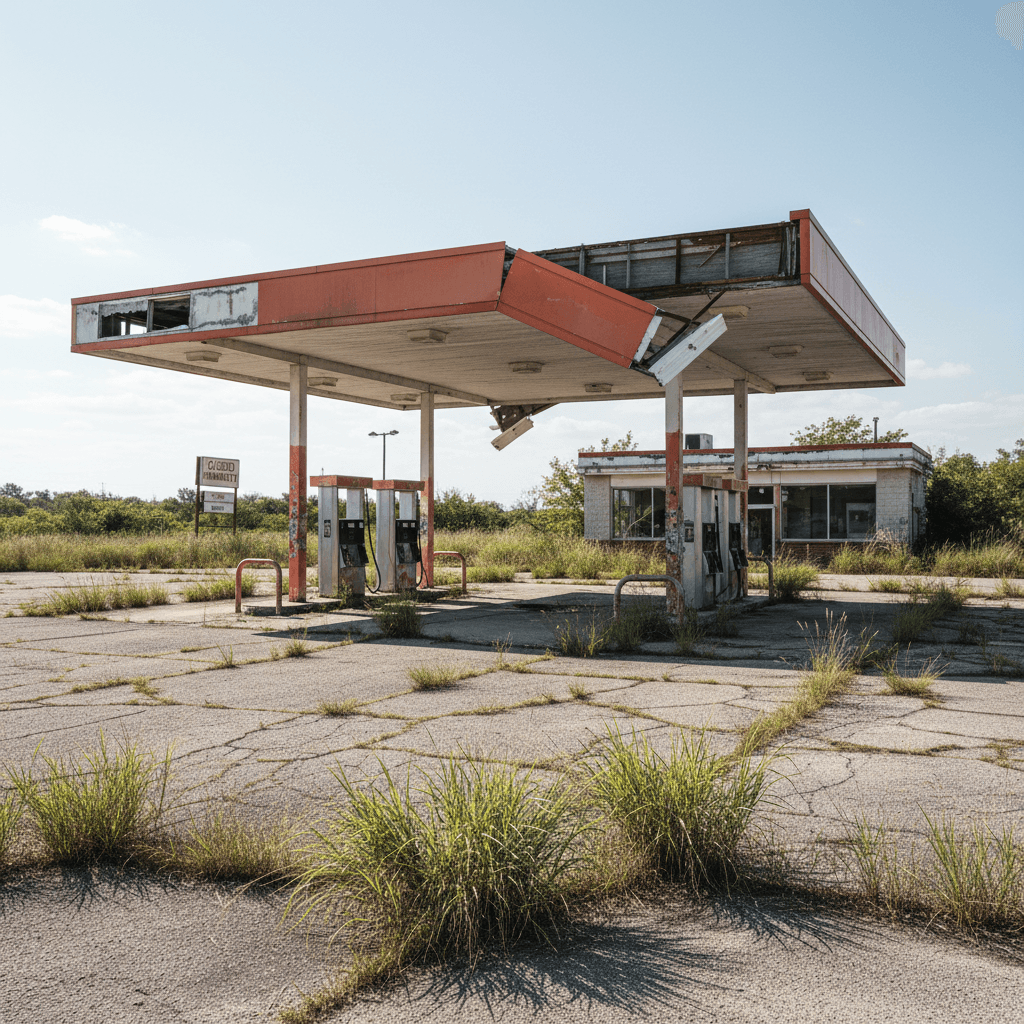
Why Gas Stations End Up at Tax Deed Auctions
Service station properties become tax-delinquent for reasons that are rarely coincidental. Margin compression, rising compliance costs for underground storage tank upgrades, brand deflagging, and environmental remediation orders are among the most common pressures that push an operator into insolvency or abandonment. When a property owner stops paying taxes, the county eventually moves to collect through the tax deed or tax lien foreclosure process — but the underlying problems that caused the delinquency usually follow the deed to the new owner.
Investors should treat a gas station's appearance at auction as a potential warning signal, not just an opportunity. Counties do not cure contamination, cancel franchise agreements, or resolve UST compliance orders before placing a property on the auction block. What the winning bidder receives is the property as-is, with every pre-existing condition still attached.
- Owner insolvency from remediation costs
- Brand deflagging after franchise termination
- Regulatory shutdown orders creating non-operating status
- Environmental liens already recorded against the parcel
Underground Storage Tanks: The Single Largest Risk
Underground storage tanks are the defining liability of any gas station acquisition. Federal law under the Resource Conservation and Recovery Act, and parallel state programs administered by environmental agencies, impose strict requirements on UST owners — including the entity that acquires the property through any transfer, including a tax deed sale. In many states, acquiring title to a property with a UST makes you a responsible party for that tank system regardless of who installed it or when any release occurred.
Tanks may be actively leaking, may have leaked in the past with incomplete remediation, or may be abandoned in place without proper closure documentation. A petroleum release can contaminate soil and groundwater under the station, migrate to neighboring parcels, and reach municipal water supplies. Remediation costs can range from modest soil excavation to multi-year groundwater treatment programs — the scale depends on the geology, the volume of the release, and regulatory requirements in that jurisdiction. None of this will be disclosed in the auction notice.
Before bidding, investors should search the state environmental agency's UST database. Most states maintain publicly accessible registries showing tank registration status, compliance history, open incident reports, and whether a site is enrolled in a state remediation program. An open incident on that registry means contamination has already been confirmed — and the new owner steps into the middle of an active regulatory matter.
- Check state UST registry for open incidents before auction
- Request Phase I and Phase II ESA reports if available through county records
- Confirm whether tanks are registered, closed, or abandoned in place
- Identify whether the site is enrolled in a state leaking UST fund or remediation program
- Determine if neighboring properties have filed contamination claims
Franchise Agreements and Brand Deflagging
Many gas stations operate under a branded supply agreement with a major petroleum company — arrangements that give the operator the right to display the brand's canopy colors and logos in exchange for purchasing fuel through that supplier. These franchise or jobber agreements are personal contracts between the brand and the operator. A tax deed sale does not transfer them.
When the original operator's interest is extinguished by the tax deed process, the franchise agreement is typically already terminated or will not survive to the new owner. The brand retains all signage, canopy covers, point-of-sale equipment, and sometimes underground equipment that it owns under the agreement. A new owner can find themselves with a debranded station, stripped canopy frames, and no fuel supply contract in place.
Securing a new brand agreement or operating as an unbranded independent requires capital, a business entity with a compliance track record, and sometimes facility upgrades that meet current branding standards. Investors who assume they can simply reopen under an existing brand without executing new agreements are frequently surprised by the speed with which brand representatives move to remove their equipment after a change of ownership is recorded.
- Verify franchise or supply agreement status with the brand's dealer relations department
- Confirm ownership of all above-ground equipment before bidding
- Assess whether the facility meets current brand upgrade standards
- Determine fuel supply options if the property must operate as unbranded
Environmental Liens, Regulatory Orders, and Title Complications
Environmental agencies at the state and federal level can file liens against contaminated properties to secure the cost of government-funded cleanup. Unlike many common law liens, environmental liens in some jurisdictions have superpriority characteristics or are governed by statutes that allow them to survive a tax deed sale. The specific survival rules depend on the state, the type of lien, and the sequence of recording — none of which will be obvious from the auction listing.
Separately, a gas station may have outstanding compliance orders from the state fire marshal, environmental agency, or local fire department relating to UST upgrades, spill containment, vapor recovery systems, or leak detection equipment. These orders run with the property and can require the new owner to complete expensive upgrades before the station can legally operate. Operating a non-compliant UST system exposes the owner to daily penalties under both state and federal programs.
A thorough lien search must go beyond the standard property records search. Investors should check environmental agency databases, state fire marshal records, and any recorded notices of violation or administrative orders associated with the parcel's address and the tank registration number.
- Search for recorded environmental liens at the county and state level
- Review state fire marshal compliance orders associated with the UST permit
- Check for EPA or state agency administrative orders on consent
- Identify any deed restrictions imposed as a condition of prior remediation
Operational Liabilities: Permits, Licenses, and Zoning
A gas station is a highly regulated use. Operating one requires a constellation of permits: a business license, a state fuel dealer license, a UST operating permit, a vapor recovery certification in certain states, a food service permit if there is a convenience store component, and potentially a conditional use permit from the local zoning authority. None of these transfer with a tax deed.
Zoning is a separate but equally important concern. Many gas stations operate under grandfathered nonconforming use status — they were built under zoning rules that have since changed, and they are permitted to continue only as long as they are not abandoned. If the property has been vacant and non-operating for a defined period — often six months to two years depending on the municipality — nonconforming use status may already be extinguished. A new owner who attempts to reopen the station could find that the current zoning does not permit a fuel sales operation, forcing either a rezoning process or a conversion to another use.
Investors should pull the zoning file from the local planning department, confirm the current use classification and any conditions attached to the prior operating permit, and specifically ask whether the station's nonconforming use status is still active. This single question can determine whether the property is worth bidding on at all.
- Verify current zoning classification and permitted uses
- Confirm nonconforming use status has not lapsed due to vacancy
- Identify all permits required to resume fuel operations
- Check convenience store licensing if the C-store component is part of the value thesis
Evaluating the Risk Before You Bid
Gas stations demand a higher standard of pre-auction due diligence than almost any other property type. The combination of environmental liability, franchise complexity, permit requirements, and potential surviving liens means that underbidding the cleanup cost is not the only way to lose money — you can win at a price that seems low and still acquire a net liability.
Tools that aggregate publicly available risk data — environmental database searches, lien records, zoning records, and title chain analysis — can help investors build a pre-bid risk profile without physically accessing a property. On a property type with this level of complexity, every layer of information you gather before the auction reduces the probability of a costly surprise after the deed is recorded. Verify findings with the county assessor, the state environmental agency, and a licensed environmental professional before committing capital.
Score every auction before you bid
TaxDeedIQ gives every US tax deed & tax lien auction a 0–100 safety score, surviving liens, IRS redemption, flood, homestead.
Start my free trialGas Stations at Tax Deed Auctions FAQ
Does a tax deed sale wipe out environmental liens on a gas station?
Not reliably. Environmental liens filed by state or federal agencies often have statutory protections that may allow them to survive a tax deed sale, depending on the state and the priority rules that apply. Investors should search environmental agency databases and county records for any recorded environmental liens before bidding and consult a title attorney familiar with the state's lien priority rules.
Am I responsible for underground storage tank contamination if I buy a gas station at a tax deed auction?
In many states, acquiring title to a property with a registered or abandoned UST makes you a responsible party under state and potentially federal environmental law, regardless of who caused the release. The mechanism is property-based liability, not fault-based — which means the tax deed sale does not reset your obligations. Confirm the site's status in the state UST registry and consult an environmental attorney before bidding.
Can I reopen a gas station I buy at a tax deed auction under the previous brand?
Generally no. Franchise and brand supply agreements are personal contracts between the brand and the prior operator. They do not transfer through a tax deed sale. You would need to negotiate a new agreement with the brand or a fuel supplier, meet any current facility standards required for branding, and obtain all required operating permits independently.
What is nonconforming use status and why does it matter for gas stations?
Nonconforming use status allows a property to continue an otherwise prohibited use because that use predates a zoning change. For gas stations, this status can lapse if the property is vacant or non-operating for a specified period. If the station has been closed long enough, you may not be able to resume fuel operations under current zoning, fundamentally changing the property's value and your exit options.
How do I check whether a gas station has an open environmental incident before bidding?
Most states maintain a publicly searchable UST database through the state environmental agency — often the Department of Environmental Quality or equivalent. Search by address and tank registration number to see compliance history, open incident reports, and remediation status. Enrollment in a state leaking UST program is a strong indicator that a confirmed release has occurred. Always verify findings with a licensed environmental professional.
More guides
- Tax Deed vs Tax Lien: What's the Difference? (2026 Guide)
- Is Tax Deed Investing Safe? 6 Risks to Check Before You Bid
- Tax Deed Surplus Funds: How Overbid Recovery Works
- Redeemable Deed States Explained (Georgia, Texas & More)
- Tattoo Parlors and Body Art Studios at Tax Deed Auctions: Health Code Liability, Equipment Liens, and the Risks Every Investor Must Evaluate Before Bidding
- Vehicle Auction Lots and Used Car Dealerships at Tax Deed Auctions: Floor Plan Liens, Franchise Termination, and the Risks Every Investor Must Evaluate Before Bidding
Informational only, not legal or investment advice. Confirm rules with the county and consult a licensed professional before bidding.