Beauty Salons, Barbershops, and Nail Salons at Tax Deed Auctions: Equipment Liens, Licensing Gaps, and the Risks Every Investor Must Evaluate Before Bidding
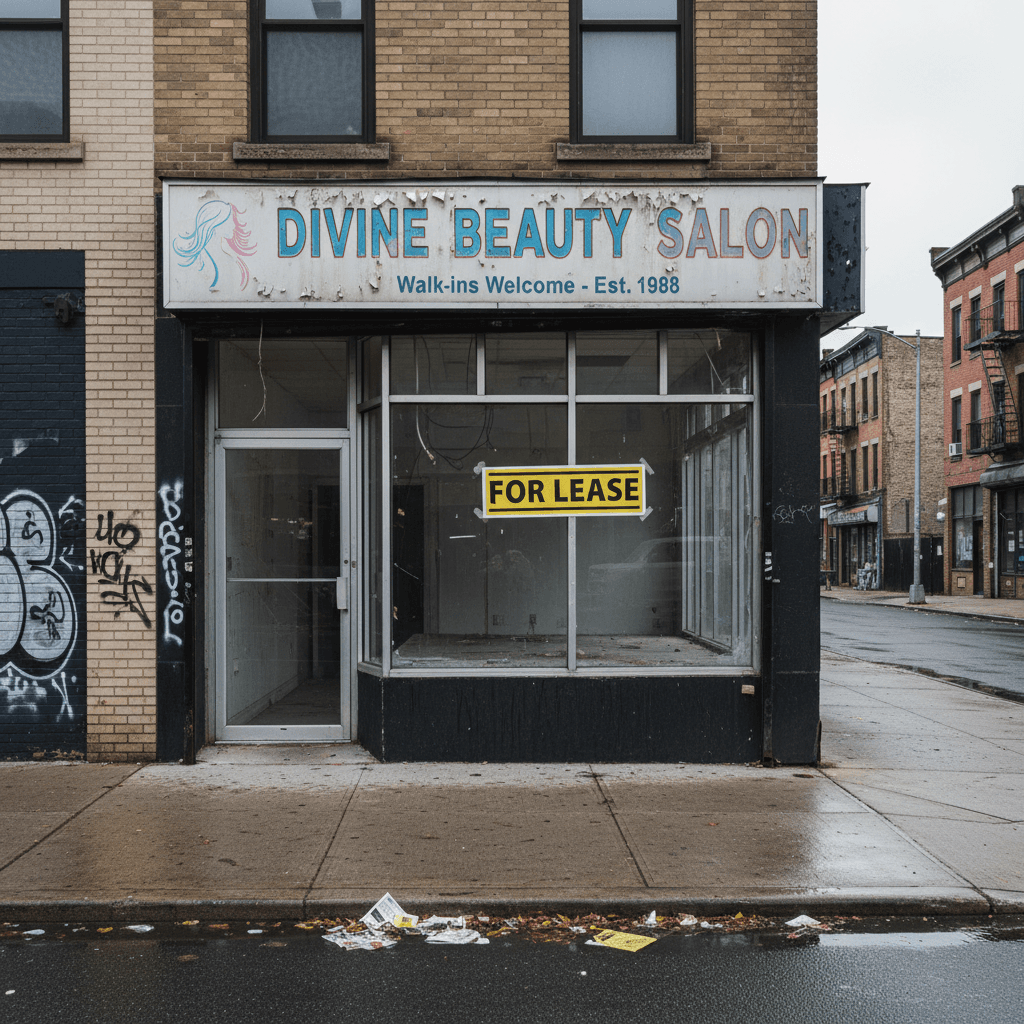
Beauty salons, barbershops, and nail salons look like straightforward commercial properties at first glance — small footprint, simple layout, and a seemingly easy path to re-tenanting or redevelopment. But behind the reception desk and styling chairs, these personal service properties carry a surprisingly dense layer of risk that can trap even experienced tax deed investors. Understanding what survives the auction, what liens attach to equipment versus real estate, and what environmental obligations follow the deed is essential before you place a single bid.
Why Personal Service Properties Appear at Tax Deed Auctions
Beauty salons, barbershops, and nail salons end up on the tax delinquency rolls for many of the same reasons other small commercial properties do: an owner retires without a succession plan, a business closes and the real estate lingers in an estate, or the property was purchased as an investment and cash flow dried up. In smaller markets, these properties may sit vacant for years while delinquent taxes accumulate, meaning the winning bid must absorb not just the opening minimum but the carrying costs of a property that has not generated income in some time.
What sets personal service properties apart from generic retail is the specialized infrastructure they often contain. Plumbing modifications for shampoo bowls and pedicure stations, ventilation systems designed to handle chemical fumes, and electrical upgrades for styling equipment all represent improvements that may have required permits — or may not have. When those improvements were done without permits, the new owner inherits open code violations that can trigger mandatory remediation orders from the local building department.
- Delinquent taxes compounding on vacant commercial property
- Specialized plumbing and ventilation modifications
- Unpermitted improvements triggering code enforcement
- Estate or succession gaps leaving no active owner to manage tax obligations
Equipment Liens: What Is Attached to the Building and What Is Not
One of the most consequential distinctions in any personal service property purchase is whether the equipment inside is a fixture — legally attached to the real estate — or personal property subject to separate liens. A shampoo bowl that has been plumbed into the building's water supply and bolted to the floor can arguably be treated as a fixture and pass with the deed. A freestanding nail dryer, a portable sterilization unit, or a point-of-sale terminal almost certainly does not.
The practical risk is this: a prior business owner who financed equipment through a vendor or equipment lender will have granted a security interest under Article 9 of the Uniform Commercial Code. That UCC financing statement is filed at the state level and does not appear in the county real property records where most investors conduct their title search. If you win the deed and later discover that a leasing company has a perfected security interest in the hydraulic styling chairs bolted to your floor, you may face a demand for return of that equipment or payment of the outstanding balance. Verifying the UCC index at the secretary of state's office for the prior business entity — not just searching the property address — is a step that most investors skip entirely.
Even equipment that is unambiguously a fixture can create complications if a mechanic's lien was filed by a contractor who installed it and was never paid. Mechanic's liens in many states attach to the real property and may survive a tax deed sale depending on how the county structured the foreclosure and whether proper notice was given to all lienholders of record.
- UCC Article 9 financing statements filed at the state level, not in county land records
- Leased equipment including styling chairs, pedicure tubs, and autoclave units
- Vendor purchase-money security interests on salon furniture
- Contractor mechanic's liens for unpermitted or uninspected installation work
Chemical Storage, Waste Disposal, and Environmental Exposure
Nail salons in particular work with a category of chemicals — acetone, toluene, formaldehyde-releasing hardeners, methyl methacrylate-based products, and various disinfectants — that are regulated at both the federal and state level. While a single nail salon is unlikely to generate the volume of hazardous waste that triggers Superfund-level liability, it can absolutely generate enough to create an environmental code violation that follows the property.
Many states classify certain nail salon chemicals as hazardous waste under state environmental regulations, requiring licensed disposal rather than ordinary trash disposal. When a salon closes abruptly — which is precisely when tax delinquency tends to escalate — chemical inventory is often left behind. A new owner who inherits a storeroom full of improperly stored chemicals may face a mandatory remediation order from the state environmental agency before the property can be re-occupied or re-leased. The cost of properly characterizing and disposing of chemical waste is not trivial, and it is typically not disclosed in the auction listing.
Hair salons that use chemical relaxers, permanent wave solutions, and certain bleaching agents face a narrower but similar issue. Drain deposits from years of chemical use can create localized contamination of the building's plumbing system or, in older properties, the surrounding soil if floor drains were connected to dry wells rather than the municipal sewer. A Phase I Environmental Site Assessment is not standard procedure at tax deed auctions, but it is a legitimate precaution for any personal service property with a long operating history.
- Abandoned chemical inventory including acetone, acrylics, and disinfectants
- State hazardous waste disposal obligations that transfer with the property
- Floor drain configurations that may have discharged to dry wells or soil
- Phase I ESA as a pre-bid due diligence step for older properties
Licensing, Zoning, and Operational Continuity Gaps
A cosmetology license, barbershop license, or nail technician permit is issued to a person or business entity — not to real estate. Buying the building at a tax deed auction does not transfer any license, and in most states those licenses expire with the original licensee or business registration. This matters most if your exit strategy involves re-leasing the space to another operator who expects the property to already be set up and licensed for personal services.
More consequential is the question of whether the property's zoning designation still permits personal service use. In older urban areas, the original certificate of occupancy may have been issued under a zoning classification that has since changed, or the current use may have been grandfathered under a prior owner's continuous operation. When a property sits vacant for the years it takes a tax delinquency to reach auction, that grandfather status can lapse. Confirming the current zoning classification, any conditional use permits attached to the parcel, and whether the prior use remains permitted is due diligence that must happen before the auction, not after.
Health department compliance is a separate layer. Pedicure stations in nail salons are regulated under state cosmetology board rules that specify plumbing standards, disinfection protocols, and inspection requirements. A property that last passed a health department inspection years ago under a prior operator may require significant physical modifications to pass a new inspection before a new licensee can operate.
- Cosmetology, barbershop, and nail salon licenses do not convey with the deed
- Grandfathered zoning use can lapse during vacancy
- Conditional use permits may require renewal application
- Health department plumbing and disinfection standards for pedicure stations
How to Evaluate a Personal Service Property Before You Bid
The layered risk in beauty salons, barbershops, and nail salons calls for a methodical pre-bid process. Start with the county recorder's office to pull the full chain of title, any recorded liens, and any notice of pending code enforcement actions. Then expand your search to the state UCC index to identify any financing statements filed against the prior business entity — you will need the exact legal name of the former business to run this search accurately.
Contact the local building department directly to request the permit history for the parcel. Ask specifically whether any open permits, failed inspections, or outstanding correction orders exist. Even a single open electrical permit from a styling chair installation can hold up your ability to get a new certificate of occupancy. The same building department visit should confirm whether the property's current certificate of occupancy reflects the actual use.
Visit the parcel in person if at all possible before bidding. Note the condition of ventilation systems, the presence of plumbing fixtures associated with cosmetology use, and any visual evidence of chemical storage. If the property has been vacant for more than a year, engage a licensed contractor to give you a rough estimate of what it would cost to bring the space into compliance with current health and building codes before it can be re-tenanted. That number belongs in your maximum bid calculation.
A platform that assigns risk scores to individual tax deed auction parcels — flagging issues like open code violations, environmental flags, and IRS redemption risk — can give you a structured starting point before you commit to deeper due diligence. But no automated score replaces direct verification with the county, the state UCC registry, and a licensed professional who knows the local regulatory environment.
- County recorder title search including recorded code enforcement notices
- State UCC index search by prior business entity name
- Building department permit history and open correction orders
- In-person property inspection with contractor cost estimate
- Verification of current zoning and certificate of occupancy status
It's the 3% that bankrupts beginners
95% of tax liens get paid. TaxDeedIQ finds the risky ones, the junk land, the surviving IRS lien, before you bid.
Try it free for 7 daysBeauty Salons, Barbershops, and Nail Salons at Tax Deed Auctions FAQ
Do equipment liens from a prior salon owner survive a tax deed sale?
It depends on whether the equipment qualifies as a fixture attached to the real property or as personal property subject to a UCC Article 9 security interest. UCC financing statements are filed at the state level and are generally not extinguished by a county tax deed foreclosure. If the prior owner financed styling chairs, pedicure tubs, or other salon equipment through a lender or leasing company, that creditor may still have an enforceable claim against the equipment even after you acquire the deed. Always run a UCC search at the secretary of state under the prior business entity's exact legal name before bidding on any personal service property.
Can I reopen a beauty salon or nail salon immediately after acquiring a tax deed?
Not automatically. The cosmetology, barbershop, or nail salon license belongs to the prior operator and does not transfer with the real estate. Before a new operator can run a licensed personal service business from the property, they will need to obtain their own license, pass a health department inspection of the physical space, and ensure the property meets current plumbing and ventilation standards under the applicable cosmetology board rules. If the property has been vacant for an extended period, there is also a risk that grandfathered zoning status has lapsed, which could require a new conditional use permit or variance before personal service use is permitted again.
What environmental risks should I research before bidding on a nail salon property?
Nail salons work with chemicals that some states classify as hazardous waste, including certain solvents, acrylics, and disinfectants. If the prior operator abandoned chemical inventory when the business closed, the new property owner may face a mandatory cleanup order from the state environmental agency before the space can be re-occupied. Additionally, floor drains in older properties may have discharged to dry wells rather than the municipal sewer, creating potential soil contamination. For properties with long operating histories, a Phase I Environmental Site Assessment before bidding is a reasonable precaution. Confirm the drain configuration and any state environmental agency records for the address as part of your pre-bid due diligence.
What happens if the building has unpermitted plumbing or ventilation work installed by a prior salon owner?
Unpermitted improvements typically create open code violations that attach to the property and do not disappear when ownership changes at auction. The new owner may receive a correction notice from the local building department requiring the work to be properly permitted, inspected, and potentially redone to current code standards. This can be a significant expense for specialized plumbing like shampoo bowls or ventilation systems designed for chemical fumes. Always request the full permit history from the local building department before bidding, and ask specifically about any failed inspections or outstanding correction orders on the parcel.
More guides
- Tax Deed vs Tax Lien: What's the Difference? (2026 Guide)
- Is Tax Deed Investing Safe? 6 Risks to Check Before You Bid
- Tax Deed Surplus Funds: How Overbid Recovery Works
- Redeemable Deed States Explained (Georgia, Texas & More)
- Tattoo Parlors and Body Art Studios at Tax Deed Auctions: Health Code Liability, Equipment Liens, and the Risks Every Investor Must Evaluate Before Bidding
- Vehicle Auction Lots and Used Car Dealerships at Tax Deed Auctions: Floor Plan Liens, Franchise Termination, and the Risks Every Investor Must Evaluate Before Bidding
Informational only, not legal or investment advice. Confirm rules with the county and consult a licensed professional before bidding.