Car Washes at Tax Deed Auctions: Equipment Liens, Environmental Liability, and the Risks Every Investor Must Evaluate Before Bidding
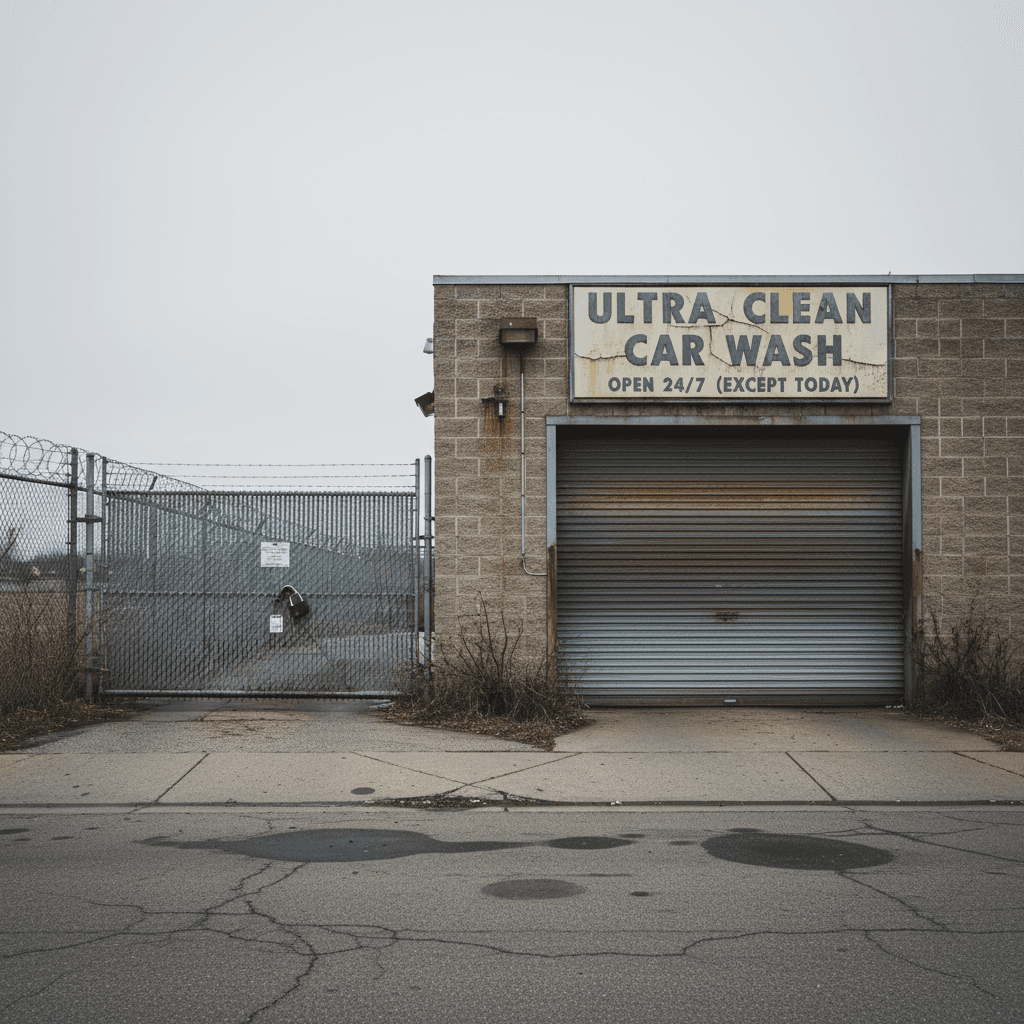
A car wash at a tax deed auction can look like a turnkey income property at a steep discount — but beneath the surface lie equipment financing claims, wastewater discharge permits, and environmental exposures that can turn a winning bid into an expensive liability. Unlike a vacant lot or a single-family home, a car wash is an operating business wrapped inside real property, and the two don't always separate cleanly at the auction block. Before you bid, you need to understand every layer of risk that the deed itself will not resolve.
Why Car Washes Attract Investors — and Why That Excitement Can Be Dangerous
Car washes generate relatively predictable cash flow, have low labor requirements compared to many retail businesses, and often sit on well-located parcels along high-traffic corridors. When one falls into tax delinquency, investors see an opportunity to acquire both real estate and an income-generating operation for a fraction of what a willing-seller transaction would cost. That framing is not wrong, but it is dangerously incomplete.
The problem is that tax deed auctions transfer ownership of the real property — the land and the structure — but they do not automatically transfer the business licenses, the water-use permits, the equipment, or the contracts that make the car wash operate. Worse, some of the financial obligations attached to the equipment and the site can survive the tax deed and attach to you as the new owner. Evaluating the real estate without evaluating the operational and regulatory overlay is one of the most common — and most costly — mistakes buyers make at these sales.
Equipment Financing Liens: What Survives and What Doesn't
Car washes are equipment-intensive. Tunnel systems, spot-free rinse units, chemical injection systems, vacuum stations, and point-of-sale kiosks are frequently financed separately from the real property. A lender who finances that equipment may file a UCC-1 financing statement, which is a personal property lien recorded through the secretary of state's office rather than the county property records. A UCC lien does not automatically survive a tax deed sale the way certain real property liens do — but the equipment itself may be subject to repossession if the underlying debt is unpaid.
The distinction matters enormously. When you take title to the real property through a tax deed, you may find that the prior owner's equipment lender has a perfected security interest in the tunnel conveyor, the chemical dispensing system, or the dryers. That lender has no obligation to leave the equipment in place simply because you now own the land underneath it. In a worst-case scenario, the equipment walks out the door and you own a building shell with concrete trenches and disconnected plumbing. Conduct a UCC search through the secretary of state before bidding, and cross-reference it against what physical equipment is actually on site.
- Run a UCC-1 search against the prior owner's entity name and the property address before the auction
- Identify whether equipment is permanently affixed to the real property (fixtures) or remains personal property under the financing agreement
- Inspect the site to confirm equipment is present and operational, not already removed
- Consult with a commercial attorney on whether specific items have become fixtures under state law
Water Use, Discharge Permits, and Environmental Exposure
Car washes are among the most water-intensive small commercial operations, and that water use is regulated. Depending on the jurisdiction, the facility may hold a stormwater discharge permit, an industrial wastewater discharge permit, or a connection agreement with the local municipal utility. These permits are typically issued to the business owner or the operating entity, not to the land. When ownership changes via tax deed, those permits do not automatically transfer — and operating without them can expose you to regulatory enforcement, fines, and even mandatory closure.
Beyond permitting, car washes generate wastewater that contains detergents, heavy metals from vehicle undercarriages, and petroleum residues. If the prior operator failed to maintain their oil-water separator or discharged improperly, there may be soil or groundwater contamination on the property. Environmental liens filed by a state environmental agency or the EPA can survive a tax deed sale in many jurisdictions, and cleanup costs can dwarf the purchase price. Request a Phase I Environmental Site Assessment before bidding on any car wash property. If the Phase I identifies recognized environmental conditions, a Phase II investigation involving soil sampling may be warranted.
- Contact the local water utility and state environmental agency to identify all active permits tied to the property
- Determine whether the oil-water separator is intact, properly sized, and compliant with current discharge standards
- Check for any notices of violation, consent orders, or open enforcement actions in the state environmental agency's public records
- Order a Phase I ESA before bidding; budget for a Phase II if contamination indicators are present
Business Licenses, Zoning, and the Operating Continuity Problem
Even if you inherit clean real estate and functioning equipment, you still cannot legally operate a car wash until you obtain the required business licenses, and in many states and municipalities those licenses are not assignable. You will need to apply as a new owner, which may trigger a current-code inspection of the facility. Car washes built decades ago often do not comply with current standards for water reclaim systems, handicapped accessibility, or stormwater management. A certificate of occupancy issued to a prior owner does not guarantee that a new owner can reopen without upgrades.
Zoning is equally important. A car wash is a permitted use in some commercial zones but a conditional use — requiring a special exception or variance — in others. If the prior owner operated under a conditional use permit that expired or was personal to the operator, you may need to re-apply. If the jurisdiction has updated its zoning code since the facility was built, the use may now be legally non-conforming. Non-conforming status typically prevents expansion and can sometimes prevent reconstruction if the building is substantially damaged. Verify the current zoning classification and any applicable conditions with the planning department before you commit capital.
Surviving Liens, Municipal Obligations, and the Tax Deed's Limits
A tax deed sale wipes out many junior liens in most states, but several categories of encumbrance can survive. Municipal utility balances — particularly water and sewer arrears — are common on car wash properties because water consumption is high and a delinquent owner may have run up a substantial unpaid balance before the property went to auction. In many jurisdictions, utility liens are co-equal with or senior to property tax liens, meaning the tax deed does not extinguish them. You could take title and immediately owe a water utility balance large enough to threaten the property's cash flow.
Code enforcement liens for prior violations — failing to maintain stormwater infrastructure, illegal signage, or unpermitted construction — may also survive the sale depending on how your state treats municipal liens. Contact the code enforcement office and the utility provider as part of your pre-auction due diligence to quantify any outstanding balances. Federal tax liens require special attention: if the IRS held a lien against the prior owner, it retains a 120-day right of redemption after the tax deed sale, during which it can buy the property from you at the price you paid plus interest. Confirm whether any federal tax liens appear in the title chain before bidding.
- Pull a full title search covering at least 40 years for the parcel, not just the most recent deed
- Contact the water and sewer utility for the outstanding balance prior to bidding
- Check the county code enforcement database for open violations and fines
- Search federal tax lien records through the county recorder and PACER for any IRS liens against the prior owner
How to Build Your Pre-Auction Risk Picture for a Car Wash Property
The due diligence process for a car wash at a tax deed auction is materially more complex than for a vacant lot or a single-family residence. You are simultaneously evaluating real property title risk, personal property and equipment status, environmental compliance, regulatory continuity, and the financial obligations of a prior business operation. No single document or database gives you the complete picture.
Start with a professional title search and a UCC search. Layer on a Phase I ESA and a conversation with the local planning and zoning department. Contact the utility provider and the code enforcement office. If the auction allows a pre-bid site visit — and many do not — walk the property and document the equipment present. Compile every piece of information into a written risk summary before you set your maximum bid. Tools that aggregate auction data and flag known risk categories can accelerate the initial screening process, but they supplement rather than replace hands-on county-level verification. The goal is to know, before the gavel falls, exactly what obligations you are buying alongside the deed.
- Obtain a professional title search and identify all recorded liens, judgments, and encumbrances
- Run a UCC search to identify personal property security interests filed against the prior owner
- Order a Phase I Environmental Site Assessment from a qualified environmental professional
- Verify zoning compliance and confirm whether the car wash use is permitted by right or requires a conditional use approval
- Contact all utilities and municipal departments to quantify any surviving balances or open violations
- Set a maximum bid that accounts for all estimated remediation, compliance, and carrying costs
Score every auction before you bid
TaxDeedIQ gives every US tax deed & tax lien auction a 0–100 safety score, surviving liens, IRS redemption, flood, homestead.
Start my free trialCar Washes at Tax Deed Auctions FAQ
Does a tax deed wipe out the equipment financing liens on a car wash?
Not necessarily. Equipment loans are typically secured by UCC-1 filings in the personal property records rather than the county real estate records. A tax deed sale extinguishes junior real property liens but generally does not affect personal property security interests. If the financed equipment has not legally become a fixture under state law, the lender may retain the right to repossess it even after you take title to the real estate. Always run a UCC search before bidding.
Can I reopen a car wash immediately after winning a tax deed auction?
Rarely without additional steps. Business licenses, water discharge permits, and operational certificates are typically issued to the prior owner or operating entity and do not transfer automatically with the deed. You will likely need to apply for new licenses, pass current-code inspections, and obtain a new certificate of occupancy before operating legally. Budget time and money for this process when modeling your purchase.
What environmental risks are specific to car wash properties at tax deed auctions?
Car washes generate wastewater containing detergents, petroleum residues, and heavy metals. Improper discharge or a failed oil-water separator can result in soil and groundwater contamination. Environmental agency liens for cleanup costs can survive a tax deed sale in many states. A Phase I Environmental Site Assessment is strongly recommended before bidding, and a Phase II investigation may be warranted if the Phase I identifies recognized environmental conditions. Consult a qualified environmental professional and verify the property's compliance history with the relevant state agency.
What is the IRS 120-day redemption right and does it apply to car wash properties?
If a federal tax lien was recorded against the prior owner, the IRS retains a statutory right to redeem the property within 120 days after a tax deed sale by paying the purchase price plus interest. This right applies regardless of property type — residential or commercial — so a car wash is fully subject to it. Search federal tax lien records before bidding to determine whether this risk exists on a specific property.
How does TaxDeedIQ help investors evaluate a car wash before bidding?
TaxDeedIQ assigns each auctioned property a 0–100 Safety Score that aggregates known risk signals — surviving liens, federal tax lien flags, flood zone exposure, homestead status, and more — into a single pre-bid indicator. The platform's risk flags are designed to surface the issues that most commonly destroy value after an auction, giving investors a starting point for deeper county-level due diligence rather than a substitute for it.
More guides
- Tax Deed vs Tax Lien: What's the Difference? (2026 Guide)
- Is Tax Deed Investing Safe? 6 Risks to Check Before You Bid
- Tax Deed Surplus Funds: How Overbid Recovery Works
- Redeemable Deed States Explained (Georgia, Texas & More)
- Pawn Shops and Secondhand Stores at Tax Deed Auctions: Inventory Liens, License Gaps, and the Risks Every Investor Must Evaluate Before Bidding
- Funeral Parlors and Embalming Facilities at Tax Deed Auctions: Biohazard Liability, Deed Restrictions, and the Risks Every Investor Must Evaluate Before Bidding
Informational only, not legal or investment advice. Confirm rules with the county and consult a licensed professional before bidding.