Cannabis Dispensaries and Grow Facilities at Tax Deed Auctions: Licensing Gaps, Federal Conflicts, and the Risks Every Investor Must Evaluate Before Bidding
Cannabis dispensaries and commercial grow facilities have begun appearing at tax deed auctions across states where marijuana is legal, and many investors treat them like ordinary commercial properties — a costly mistake. The intersection of state-legal cannabis operations, federal Schedule I classification, and specialized local licensing creates a risk stack unlike almost anything else you will encounter at a county auction. Evaluating every layer of that stack before you bid is not optional; it is the only way to avoid acquiring a property you cannot legally use, finance, or sell.
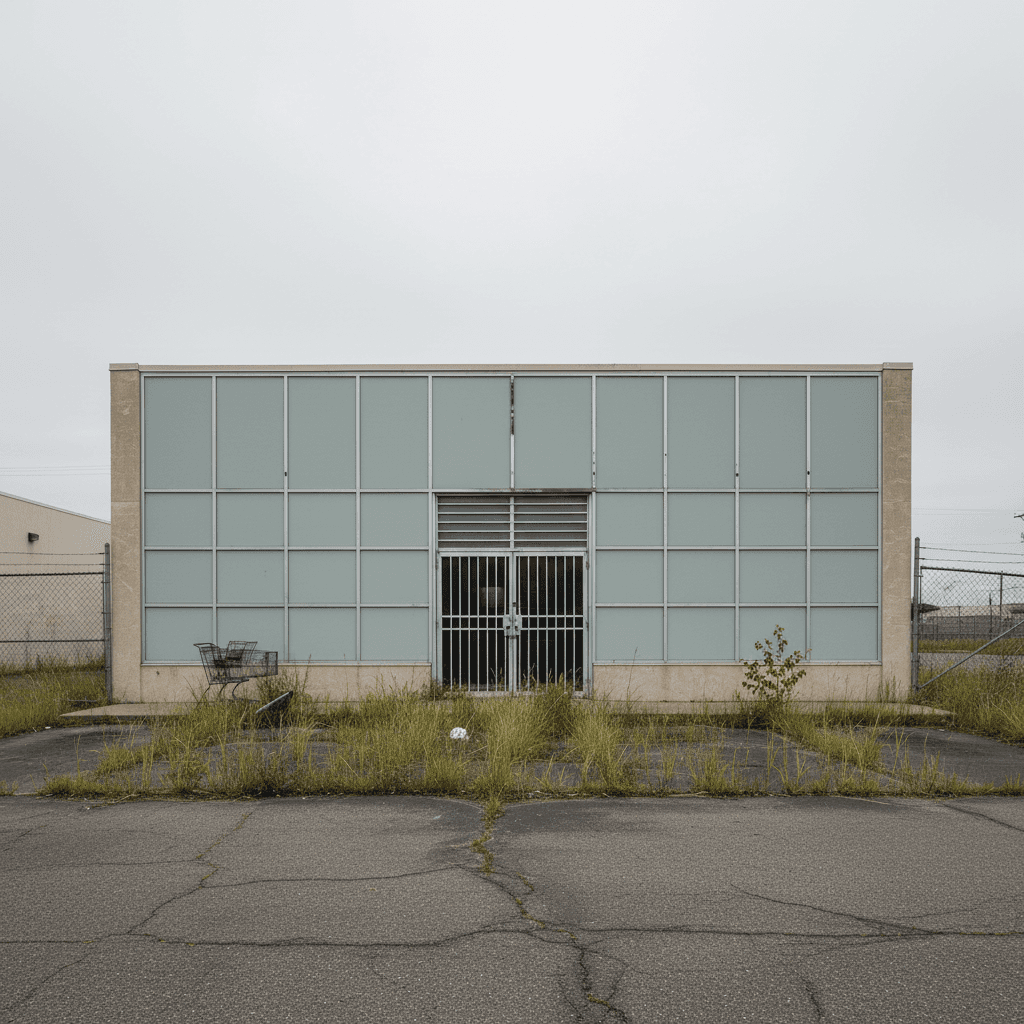
Why Cannabis Properties End Up at Tax Deed Auctions
Cannabis businesses fail at a high rate. Thin margins, intense competition from licensed neighbors, banking restrictions rooted in federal law, and unpredictable state regulatory changes all contribute. When an operator falls behind on property taxes, the county moves through the same delinquency and notice process it uses for any other parcel — but the property that lands at auction carries a residue of regulatory and physical complexity that the tax deed process does nothing to clean up.
Grow facilities in particular burn through capital on HVAC, electrical upgrades, water systems, and specialized lighting. When the business collapses, vendors and equipment lenders are often left unpaid. That debt does not disappear with the tax deed. The building itself may still smell, have modified electrical panels, or contain infrastructure that code enforcement has flagged but never resolved. Understanding why the property is at auction matters because it usually signals what problems you are inheriting.
- Operator insolvency driven by over-leveraged buildouts
- Equipment financing defaults leaving UCC liens on fixtures
- License revocations that triggered lease or mortgage acceleration
- State regulatory audits that exposed code violations or permit deficiencies
The Federal Classification Problem and What It Means for Title and Financing
Marijuana remains a Schedule I controlled substance under federal law regardless of state legalization. That classification creates direct friction for tax deed investors in several ways. First, any lender with federal ties — which includes virtually every FDIC-insured bank and credit union — will refuse to finance a purchase or refinance of a property whose highest and best use is cannabis-related. If your exit strategy depends on conventional financing, you may find yourself holding an asset that only cash buyers will touch.
Second, federal tax liens filed by the IRS survive a tax deed sale in most circumstances unless the federal redemption process has been properly followed. Cannabis businesses that accepted cash-only revenue and operated on the edge of federal tax compliance may have accumulated IRS liabilities. A title search must look not just at county records but at the federal lien register maintained by the IRS Centralized Lien Unit. The 120-day federal redemption right applies when a federal tax lien exists, meaning the government could redeem the property out from under you well after you have taken possession. Always run a federal lien search before bidding on any commercial property, and cannabis properties make this step especially urgent.
Third, if the prior owner was ever subject to a federal civil asset forfeiture action — not uncommon for businesses operating in a federal gray zone — there may be a forfeiture lis pendens or claim that attached to the real property itself. These claims do not vanish at a tax sale.
- No conventional mortgage financing for active cannabis-use properties
- IRS liens survive if federal notice requirements were not met
- Federal forfeiture claims can attach to real property, not just personal property
- Cash-buyer-only market severely narrows your resale pool
State and Local Cannabis Licensing: The Gap That Kills Deals
A cannabis license is not transferable in the same way a business license for a dry cleaner or restaurant might be. Most state cannabis regulatory frameworks require new owners to apply for new licenses and pass a suitability review that can take months. Some states prohibit license transfers entirely and require the new owner to start the application process from scratch. During that gap, the property legally cannot be operated as a cannabis facility — even if you own the real estate outright.
When you buy at a tax deed auction, you are buying the land and structure, not the business or the license. The prior operator's dispensary permit, cultivation license, or processing certificate dies with their ownership or business entity. What you are left with is a commercial building that is zoned for cannabis use but cannot be operated as one until you — or a tenant you bring in — clears the full licensing process. That process involves background checks, proof of capitalization, local approval, and in many jurisdictions a merit review against a capped number of available licenses. There is no guarantee a new license will be granted even if the prior business had one.
Local zoning approvals compound the issue. Many municipalities have adopted overlay districts or use permits specific to cannabis. Even if your state license application is approved, the local conditional use permit may lapse with the prior business entity, requiring a new application with public hearings, neighbor notification, and discretionary approval from a planning commission. If the community has become hostile to cannabis operations in the interim, that approval may be denied.
- Cannabis licenses are not conveyed by a tax deed
- State licensing timelines can extend well beyond your carry cost projections
- Local conditional use permits may lapse and require a new public hearing
- Merit-based license caps may mean no new license is available in that jurisdiction
Equipment Liens, Fixture Disputes, and the Buildout Trap
Commercial grow facilities require substantial capital improvements: industrial HVAC systems to manage temperature and humidity, high-amperage electrical service, CO2 injection systems, water filtration and irrigation systems, specialized lighting rigs, and security infrastructure mandated by state law. Many of these improvements were financed under UCC Article 9 security agreements or equipment leases. When the operator defaulted, the secured creditor's lien on those items did not simply expire.
The critical question is whether a given item is a fixture — legally attached to the real property — or personal property that the creditor can repossess. A UCC fixture filing recorded in the real property records before the tax deed was issued may give the equipment lender a superior claim to those items even after you take title. If a creditor arrives with a valid fixture filing and removes the HVAC system or lighting infrastructure, what remains is a shell building with custom electrical and plumbing that serves no general commercial purpose and may actually be non-compliant with standard building codes.
Always pull UCC fixture filings from both the Secretary of State and the county recorder's office as part of your pre-auction due diligence. Confirm whether the county's tax deed statute specifically addresses fixture lien extinguishment — many do not, and courts in several states have ruled that properly perfected fixture liens survive a tax deed.
- UCC fixture filings may survive a tax deed in many states
- Specialized equipment has little value to non-cannabis buyers if it cannot be repossessed
- Electrical and HVAC modifications may fail standard building code inspections
- Environmental controls designed for cannabis may need costly removal or recertification
Zoning Reversion, Adaptive Reuse, and Your Exit Strategy
Even if you have no interest in operating a cannabis business yourself, you may assume a cannabis-zoned commercial building is easy to repurpose. That assumption deserves scrutiny. Some jurisdictions have created cannabis-specific zoning overlays that restrict the use of the parcel to cannabis operations and do not automatically permit general commercial activity. Repurposing the property may require a formal rezoning or variance, which involves public hearings and is never guaranteed.
The physical footprint of a grow facility — sealed rooms, blackout windows, modified HVAC penetrations, reinforced security doors, and altered electrical panels — is expensive to reverse. Contractors must bring the building back to general commercial standards before most tenants or buyers will consider it. That remediation cost is a real line item in your acquisition underwriting, not a rounding error.
Dispensary retail spaces, by contrast, are closer to standard commercial buildouts and somewhat easier to repurpose, but they carry their own stigma in some markets. Banks may flag the prior use, title insurers may note it, and certain buyers may walk. Run a realistic comparable analysis on what the building is worth as general commercial space before you calculate your maximum bid, and stress-test that number against the worst-case scenario where licensing delays and adaptive reuse costs eat into your margin.
- Cannabis-specific zoning overlays may prohibit non-cannabis commercial use without rezoning
- Grow facility interior modifications are expensive to reverse
- Title insurers may add exceptions or exclusions tied to prior cannabis use
- Dispensary locations may carry reputational challenges in certain markets
Don't buy someone else's debt
See exactly what can survive a tax deed, before your money is on the block. Every auction, scored 0–100.
Score my first auction, freeCannabis Dispensaries and Grow Facilities at Tax Deed Auctions FAQ
Does a tax deed wipe out a cannabis operator's state license obligations or regulatory violations?
No. A tax deed conveys the real property only. It does not transfer, extinguish, or satisfy any obligations the prior operator had with the state cannabis regulatory agency, including outstanding fines, remediation orders, or license conditions. As the new owner you take the building, not the license, and you are responsible for ensuring any subsequent use complies with current state and local cannabis regulations from scratch.
Can I get a mortgage to buy a cannabis property at a tax deed auction?
In most cases, no. Federally insured lenders are legally restricted from financing properties whose primary use involves a federally controlled substance. You would typically need to pay cash or arrange seller financing, private lending, or a hard-money loan from a lender specifically comfortable with cannabis-adjacent real estate. This financing constraint also affects your exit, since most future buyers will face the same limitation.
How do I find out if there are IRS tax liens on a cannabis property before I bid?
Run a federal tax lien search through the IRS Centralized Lien Unit as well as the county recorder's office where the property is located. Federal liens are recorded in the county where the property sits. Because cannabis businesses often operate on a cash basis and may have complex federal tax histories, an IRS lien is a realistic possibility. If a valid federal lien exists and proper notice to the IRS was not given during the tax deed foreclosure process, the government retains a 120-day right to redeem the property after the sale.
What happens to the dispensary equipment inside the building after a tax deed sale?
Equipment that qualifies as personal property — not legally affixed to the real estate — belongs to the prior owner or their secured creditors and can be removed after the sale. Equipment covered by a UCC fixture filing recorded against the real property may also be claimed by the secured creditor depending on how your state's law treats fixture liens in a tax deed context. You should assume that specialized cannabis equipment may not remain in the building and not assign value to it in your bid calculation unless you have confirmed otherwise with an attorney.
How can TaxDeedIQ help me evaluate a cannabis property before I bid?
TaxDeedIQ assigns each auction parcel a Safety Score that aggregates publicly available risk signals including surviving lien indicators, flood zone status, homestead flags, and IRS redemption risk. For any commercial property, including cannabis-adjacent ones, that score gives you a fast first-pass triage. You should then layer in property-specific due diligence — federal lien searches, UCC fixture searches, zoning verification, and a conversation with a local real estate attorney — before committing to a bid.
More guides
- Tax Deed vs Tax Lien: What's the Difference? (2026 Guide)
- Is Tax Deed Investing Safe? 6 Risks to Check Before You Bid
- Tax Deed Surplus Funds: How Overbid Recovery Works
- Redeemable Deed States Explained (Georgia, Texas & More)
- Tattoo Parlors and Body Art Studios at Tax Deed Auctions: Health Code Liability, Equipment Liens, and the Risks Every Investor Must Evaluate Before Bidding
- Vehicle Auction Lots and Used Car Dealerships at Tax Deed Auctions: Floor Plan Liens, Franchise Termination, and the Risks Every Investor Must Evaluate Before Bidding
Informational only, not legal or investment advice. Confirm rules with the county and consult a licensed professional before bidding.