Bowling Alleys and Entertainment Venues at Tax Deed Auctions: Equipment Liens, Liquor Permits, and the Risks Every Investor Must Evaluate Before Bidding
Bowling alleys, skating rinks, arcades, and similar entertainment venues look attractive on paper — large footprints, potential cash flow, and distressed pricing at auction. But before you place a single bid, you need to understand that these properties carry a layered stack of risks that simply don't exist with a vacant residential lot: equipment liens that may survive the tax deed sale, operating permits tied to the prior owner, environmental concerns from decades of commercial use, and code compliance burdens that can dwarf your purchase price. Evaluating risk before you bid is not optional here — it is the only way to avoid buying a liability disguised as an asset.
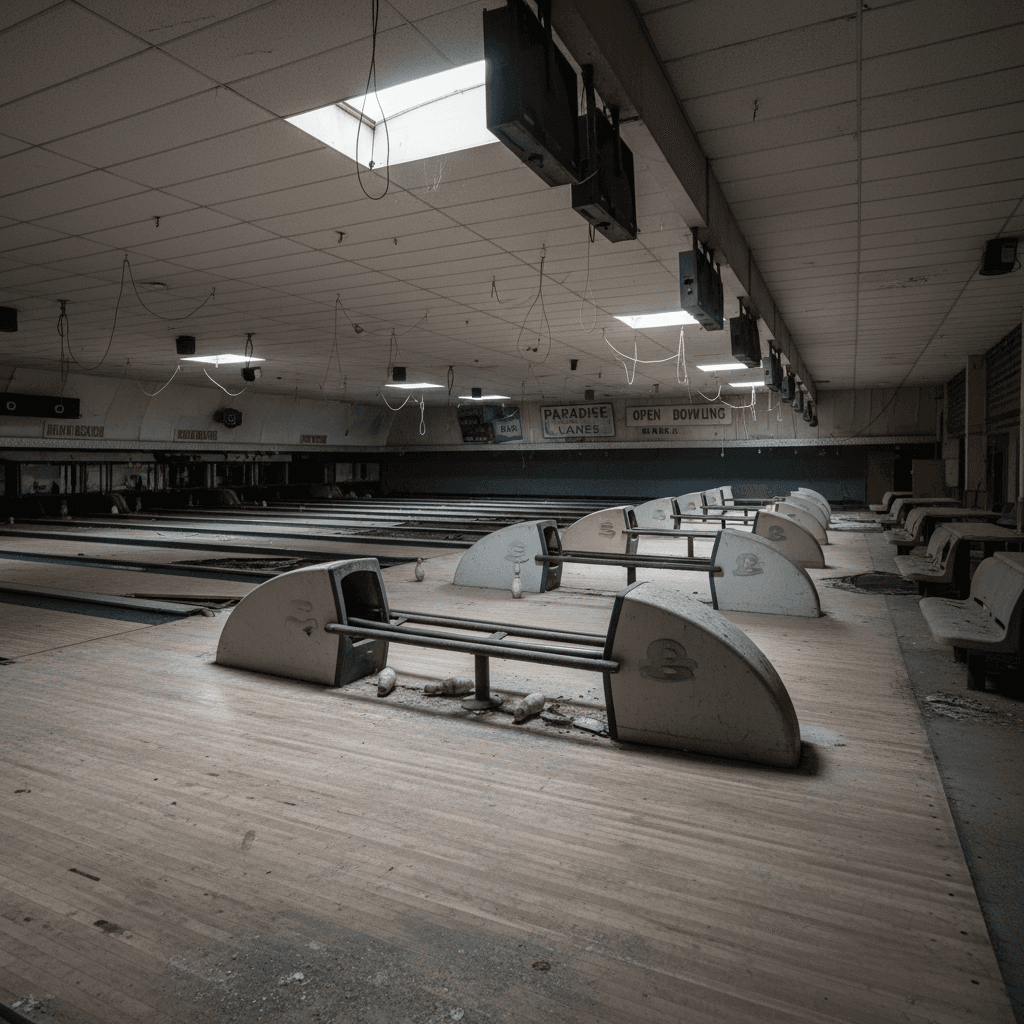
Why Entertainment Venues End Up at Tax Deed Auctions
Specialized commercial properties like bowling alleys and entertainment centers are capital-intensive businesses. When the business model fails — whether from changing demographics, deferred maintenance, or an abrupt market shift — the owner often stops paying property taxes long before they stop occupying the building. Tax delinquency can accumulate for multiple years before the county initiates foreclosure, meaning you may be acquiring a property that has been functionally neglected for a significant period while taxes, penalties, and interest have compounded on the books.
Understanding why the property failed matters as much as understanding what you are buying. A venue that closed because of structural problems, a revoked liquor license, or a health department shutdown carries forward-looking liabilities that no auction gavel can erase. The county is selling the property to recover delinquent taxes — it is not warranting the property's condition, its permits, or its legal status. Every assumption you make about the property's usability should be verified independently before bidding.
- Tax delinquency often signals years of deferred maintenance and operational neglect
- Counties sell as-is with no warranty of condition, title cleanliness, or permit status
- Prior business failures may reflect structural, regulatory, or environmental problems that persist after the sale
Equipment Liens: The Debt That May Follow the Property
One of the most misunderstood risks in commercial tax deed investing is the treatment of equipment liens — also called chattel liens or UCC fixture filings — attached to specialized equipment installed in entertainment venues. Pinsetters, lane conditioning machines, refrigeration units, HVAC systems, commercial kitchen equipment, arcade game platforms, and scoring systems are often financed separately from the real property itself. When a lender finances that equipment and properly files a UCC-1 financing statement or a fixture filing in the county land records, that lien may attach to the real property as a fixture.
The key legal question is whether the equipment has been sufficiently annexed to the real property to be treated as a fixture under state law. If a court later determines the equipment is a fixture, a properly recorded fixture filing could create a claim that competes with — or in some circumstances survives — the tax deed conveyance. Even if the equipment is considered personal property and not a fixture, the creditor may arrive after closing and attempt to repossess items that are physically embedded in the building. Either scenario is expensive and disruptive. Before bidding, run both a title search in the county land records and a UCC search in the Secretary of State's office under the prior owner's name to identify any open financing statements covering equipment at the property address.
- Search UCC-1 filings in both the county recorder and the state Secretary of State's office
- Identify all financed equipment: lane machines, HVAC, refrigeration, kitchen systems, scoring tech
- Fixture filing disputes can produce competing ownership claims after you take title
- Creditors may attempt physical repossession of embedded equipment post-closing
Liquor Licenses, Amusement Permits, and the Non-Transferability Problem
Many entertainment venues derive a substantial portion of their revenue from alcohol sales, video gaming terminals, or amusement devices — all of which require state and local permits that are issued to specific persons or entities, not to the real property. When you acquire a property through a tax deed, you are buying real estate. You are not buying the prior owner's liquor license, gaming license, or food service certificate. Those permits expire, lapse, or are revoked when the business closes or changes hands, and in most jurisdictions they cannot be transferred automatically to a new owner.
The practical consequence is that you cannot simply reopen the venue and begin serving alcohol or operating gaming machines. You will need to apply for new permits from scratch, which typically involves background checks, local governing body approval, zoning confirmation, building inspections, and sometimes a public hearing process. In some municipalities, the number of liquor licenses is capped by population, meaning a new license may not be available at all in that market. If your business plan for the property depends on alcohol or gaming revenue, you must verify permit availability before bidding — not after.
Amusement facility permits, occupancy certificates, and food handler certifications carry similar non-transferability issues. A lapsed certificate of occupancy means the building cannot legally be used until it passes a current inspection, which may require significant upgrades to meet current fire, ADA, electrical, and structural codes.
- Liquor and gaming licenses are issued to individuals or entities, not to the real property
- New applications require background checks, zoning confirmation, and often public approval
- License caps may mean no new license is available in that jurisdiction
- Lapsed certificates of occupancy require passing current code inspections before reopening
Environmental and ADA Compliance Burdens in Large Commercial Footprints
Bowling alleys and similar venues are typically large, older buildings — often constructed in the mid-20th century during the peak of suburban entertainment culture. That vintage creates a predictable set of environmental and code compliance risks. Buildings from this era frequently contain asbestos in floor tile, ceiling tile, pipe insulation, and roofing materials. They may contain lead-based paint in walls and surfaces. Older HVAC systems may have used refrigerants that are now regulated or banned. Underground fuel storage tanks for backup generators are another potential contamination source.
Under federal and many state environmental laws, the party that owns the property at the time contamination is discovered can face cleanup liability regardless of who caused the contamination. Acquiring a property through a tax deed does not insulate you from environmental liability under CERCLA or comparable state statutes. Before bidding on any large commercial property of this vintage, a Phase I Environmental Site Assessment — and potentially a Phase II if the Phase I reveals concerns — is a worthwhile pre-bid investment compared to the potential cost of a mandated remediation.
ADA compliance is a separate but equally serious concern. Large public accommodation facilities are subject to Title III of the Americans with Disabilities Act, which requires accessible entrances, restrooms, parking, seating, and pathways. Bringing a non-compliant facility up to ADA standards can require significant structural modifications. This is not a discretionary upgrade — it is a legal requirement before you can open the property to the public, and it should be factored into your total acquisition cost.
- Test for asbestos, lead paint, and regulated refrigerants in pre-1980 buildings
- Investigate any underground storage tanks for fuel or chemicals
- Phase I and Phase II environmental assessments should precede your bid, not follow it
- ADA compliance upgrades may be required before any public use resumes
Surviving Liens, IRS Redemption Rights, and Title Fragility
Even setting aside the property-specific risks above, entertainment venues are subject to the same lien-survival and title-fragility issues that affect every tax deed purchase. Federal tax liens filed by the IRS prior to the tax deed sale carry a statutory 120-day redemption right under federal law. If the prior owner or business entity had unpaid federal taxes — a common scenario when a business is financially distressed — the IRS can redeem the property within that window by paying the auction price plus interest. This is not a theoretical risk: it is a federal statutory right that applies regardless of state law and regardless of how the auction was conducted.
Judgment liens from creditors, unpaid contractor claims, and municipal code violation liens may also survive the tax deed sale in some states depending on lien priority rules and how the foreclosure was conducted. A quiet title action is typically required before any title insurance underwriter will issue a policy on a tax deed property, and for a specialized commercial property with a complex lien history, the quiet title process can be more time-consuming and expensive than for a simple residential parcel.
Redemption rights granted to the former owner under state law add another layer of uncertainty. In states with significant post-sale redemption periods, you may not be able to begin improvements or enter into binding leases until the redemption window closes. Verify the specific redemption period in the state and county where the property is located before building any timeline into your business plan.
- IRS holds a 120-day federal redemption right if a federal tax lien existed before the sale
- Judgment liens, contractor liens, and code violation liens may survive depending on state priority rules
- Quiet title is typically required before title insurance can be obtained
- State redemption periods can delay your ability to develop, lease, or sell the property
Score every auction before you bid
TaxDeedIQ gives every US tax deed & tax lien auction a 0–100 safety score, surviving liens, IRS redemption, flood, homestead.
Start my free trialBowling Alleys and Entertainment Venues at Tax Deed Auctions FAQ
Do equipment liens on bowling lane machines and arcade systems survive a tax deed sale?
It depends on whether the equipment was properly classified as a fixture under state law and whether the lender filed a fixture filing in the county land records. If a court determines the equipment is a fixture and the lien was properly perfected, it may survive the tax deed sale. Even if the equipment is treated as personal property, a creditor may attempt repossession after closing. Run a UCC search in the Secretary of State's office and a title search in the county recorder before bidding to identify any open filings.
Can I reopen a bowling alley or entertainment venue immediately after buying it at a tax deed auction?
Not necessarily. The prior owner's liquor license, gaming permits, and certificate of occupancy do not transfer with the real property. You will likely need to apply for new permits, pass current building code and fire safety inspections, and potentially complete ADA compliance upgrades before the facility can legally operate. In some jurisdictions, liquor license availability is capped and a new license may not be obtainable at all. Verify all permit requirements with the relevant state and local agencies before bidding.
How does TaxDeedIQ help investors evaluate entertainment venue properties before bidding?
TaxDeedIQ assigns every auctioned property a 0-to-100 Safety Score that flags documented risk layers including surviving liens, IRS redemption exposure, flood zone status, and homestead issues. For commercial properties, the platform surfaces lien and encumbrance data that helps investors identify which properties warrant deeper due diligence before committing to a bid. It is a starting point for risk evaluation, not a substitute for a professional title search, environmental assessment, or legal review specific to the property.
What is the IRS 120-day redemption right and does it apply to commercial properties?
Under federal law, when a property is sold through a tax deed or foreclosure sale and a federal tax lien existed against the prior owner, the IRS has 120 days from the sale date to redeem the property by paying the successful bidder the purchase price plus interest. This right applies to commercial properties just as it does to residential ones. If the prior owner of a bowling alley or entertainment venue had unpaid federal taxes, the IRS redemption window is a real risk you must account for before planning any improvements or resale.
Should I get an environmental assessment before bidding on an older entertainment venue?
Yes. Large commercial buildings constructed in the mid-20th century often contain asbestos, lead paint, and potentially underground storage tanks. Environmental liability can attach to the current property owner regardless of who caused the contamination. A Phase I Environmental Site Assessment — and a Phase II if Phase I reveals recognized environmental conditions — should be completed before you bid so the potential remediation cost can be factored into your maximum bid price. Bidding first and assessing afterward is a common and costly mistake in commercial tax deed investing.
More guides
- Tax Deed vs Tax Lien: What's the Difference? (2026 Guide)
- Is Tax Deed Investing Safe? 6 Risks to Check Before You Bid
- Tax Deed Surplus Funds: How Overbid Recovery Works
- Redeemable Deed States Explained (Georgia, Texas & More)
- Tattoo Parlors and Body Art Studios at Tax Deed Auctions: Health Code Liability, Equipment Liens, and the Risks Every Investor Must Evaluate Before Bidding
- Vehicle Auction Lots and Used Car Dealerships at Tax Deed Auctions: Floor Plan Liens, Franchise Termination, and the Risks Every Investor Must Evaluate Before Bidding
Informational only, not legal or investment advice. Confirm rules with the county and consult a licensed professional before bidding.