Auto Body, Paint, and Collision Repair Shops at Tax Deed Auctions: Hazmat Liability, Equipment Liens, and the Risks Every Investor Must Evaluate Before Bidding
Auto body, paint, and collision repair shops look like straightforward commercial properties on a tax deed auction list — four walls, a large bay, decent square footage, and sometimes a corner lot with good visibility. But beneath that plain exterior sits a dense web of environmental liability, equipment financing liens, occupational permits, and regulatory obligations that can quietly drain value long after the gavel falls. Evaluating every risk layer before you bid is not just smart investing — it may determine whether you end up with a profitable asset or an expensive liability.
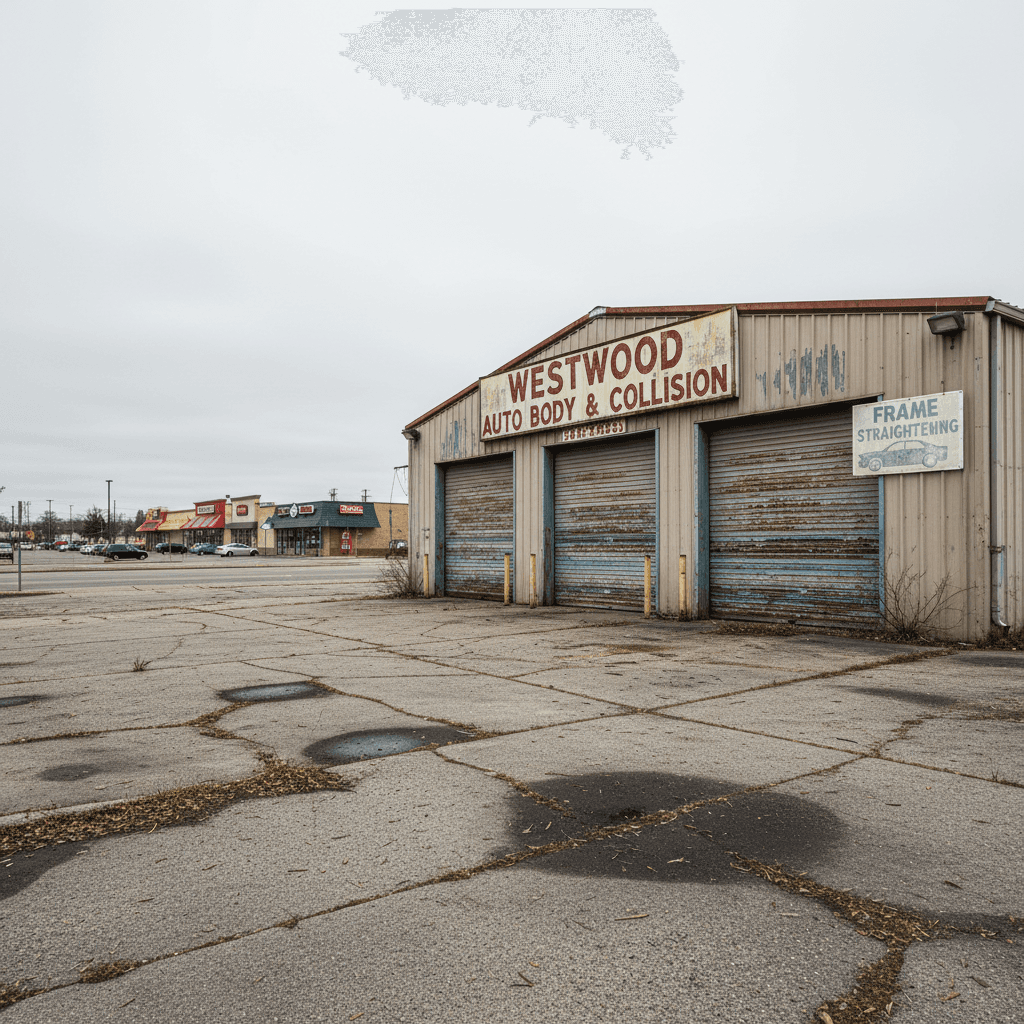
Why Auto Body Shops End Up at Tax Deed Auctions
Collision repair shops are operationally demanding businesses. Owners must manage costly equipment, shifting insurance reimbursement rates, fluctuating demand, and an expanding roster of environmental compliance requirements. When cash flow deteriorates, property taxes are often among the first obligations that slip. By the time a property reaches a tax deed auction, the business may have been closed for months or years, leaving behind equipment, chemical residue, and unresolved regulatory obligations with no one actively managing them.
That operational history is precisely what makes auto body properties dangerous for uninformed bidders. The prior use does not disappear at the auction — it transfers with the land. A buyer who fails to investigate what was stored, discharged, or left behind may inherit cleanup obligations that dwarf the purchase price.
- Delinquent property taxes often reflect deeper financial distress at the business level
- Closed shops may have abandoned chemicals, solvents, or paint waste on-site
- Equipment left behind may be subject to separate financing liens not extinguished by the tax deed
Environmental Liability: Solvents, VOCs, and Underground Contamination
Auto body and paint operations routinely use volatile organic compounds, chlorinated solvents, isocyanate-based paints, lacquer thinners, and rust inhibitors. Improper storage or disposal of these materials can result in soil and groundwater contamination that triggers state environmental agency involvement and, in more severe cases, EPA oversight under RCRA or Superfund provisions.
Critically, environmental cleanup obligations run with the land, not the former owner. A tax deed generally does not extinguish a state environmental lien or the underlying cleanup liability. If the former operator poured waste solvents into a floor drain, buried drums, or allowed paint sludge to accumulate, the new owner may be required to remediate — and may be named as a potentially responsible party even if they had nothing to do with the contamination. Before bidding, investors should obtain a Phase I Environmental Site Assessment at a minimum, and consider a Phase II if any recognized environmental conditions are identified. Confirm with the county and the state environmental agency whether any existing Notice of Violation, cleanup order, or brownfield designation is already attached to the parcel.
- Volatile organic compound (VOC) contamination in soil and groundwater
- Underground paint waste pits or improperly stored drum chemicals
- Wastewater from parts washing discharged through floor drains
- Spray booth filters and paint residue classified as hazardous waste
- State environmental liens that survive a tax deed sale
Equipment Liens and Fixture Financing: What Stays and Who Owns It
Auto body shops are equipment-intensive. Spray booths, frame straightening systems, paint mixing stations, alignment racks, and hydraulic lifts can represent substantial capital investment. Shop owners frequently finance this equipment through secured lenders who file UCC-1 financing statements. The critical legal question for a tax deed buyer is whether that equipment has been affixed to the real property as a fixture — and whether the lender's interest in it survives the tax deed.
If equipment qualifies as personal property under state law and the lender has a perfected security interest, the lender may have the right to repossess it even after you take title to the real estate. Conversely, if equipment has been permanently annexed to the structure — bolted-in spray booths, embedded lifts, built-in ventilation systems — a court may treat it as a fixture and part of the real property. The answer varies by state law and by the specific facts of annexation. A title search alone will not reveal UCC filings; investors must also run a UCC search through the secretary of state's office and evaluate which items may be subject to outstanding security interests before bidding.
- Spray booths permanently annexed to the building may be treated as fixtures
- Portable frame racks and lifts may be subject to equipment financing repossession
- UCC-1 filings against the business entity may reveal secured creditors with equipment claims
- Leased equipment (sandblasters, welding rigs) does not become yours at auction
Licensing, Permits, and Zoning Compliance
Operating an auto body or collision repair facility requires a layered set of permits that do not transfer automatically with the real estate. These typically include an air quality permit governing spray booth emissions, a hazardous waste generator registration, a business license, and often a stormwater discharge permit. If the former operator allowed any of these to lapse, the county or state agency may have flagged the property with open violations or compliance orders.
From a zoning standpoint, auto body use is typically conditional or special-use in many jurisdictions. If you intend to continue the auto body use, you may need to affirmatively demonstrate compliance with current code — including ventilation standards, stormwater management, and hazardous material storage requirements. If you intend to convert the property to a different use, verify that the zoning allows your intended use and that there are no deed restrictions or conditional use approvals that limit the parcel to automotive purposes. Some properties near residential zones may face significant barriers to any use other than the existing auto-related classification, limiting your exit strategy options.
- Air quality permits for spray booths — not transferable, must be reapplied
- Hazardous waste generator status may require immediate cleanup obligations on transfer
- Stormwater permit non-compliance can generate municipal liens
- Zoning conditional use approvals may restrict future use to automotive only
Title Gaps and Surviving Liens Specific to Auto Body Properties
Beyond environmental and equipment issues, auto body shop parcels can carry the same title risks found across any commercial tax deed purchase — plus a few that are more common in this sector. Mechanics' liens and materialman's liens from unpaid contractors or parts suppliers may have attached to the real property. Municipal code enforcement liens for violations like improper chemical storage, abandoned vehicles on the lot, or structural deficiencies in the shop building can survive a tax deed in many states and jurisdictions.
IRS federal tax liens deserve particular attention. If the former business owner had outstanding federal tax obligations, an IRS lien may have attached to the real property. The IRS retains a 120-day right of redemption after a tax deed sale, giving the agency the ability to step in and reclaim the property by paying the winning bid price plus interest. This risk is especially relevant in distressed commercial sales where business owners often have multiple layers of unresolved federal obligations. Verifying IRS lien status through a federal tax lien search before bidding is an essential step, not an optional one.
A platform like TaxDeedIQ can help investors surface these known risk factors — environmental flags, lien layers, federal tax lien indicators, flood zone status — and assign a Safety Score that reflects the complexity of the title picture before you bid. That kind of pre-bid risk mapping is exactly the kind of due diligence that separates disciplined investors from bidders who discover the problems only after they own the property.
- Mechanics' and materialman's liens from unpaid contractors or parts vendors
- Municipal code enforcement liens for abandoned vehicles or storage violations
- IRS federal tax lien and 120-day redemption right on business-owner parcels
- HOA or business improvement district assessments in some commercial corridors
- Deferred property tax installments that may not all be satisfied by the auction
Building Condition and Conversion Feasibility
Auto body buildings are purpose-built structures — wide-span, high-bay, concrete-floored, with oversized doors and ventilation infrastructure designed for spray operations. These features can be assets or liabilities depending on your exit plan. If you intend to redevelop or convert the building, assess whether the structure can economically be adapted to a new use. Contaminated concrete floors may require removal and replacement. Spray booth enclosures built into the structure may need to be decommissioned according to environmental regulations before they can be demolished.
Fire suppression systems, electrical panels, and HVAC configurations sized for automotive use may not meet code for a retail, office, or light-industrial conversion without significant capital expenditure. And because tax deed purchases are typically as-is, with no seller disclosures and no right to inspect the interior in many auction formats, investors often cannot fully assess building condition until after they own it. Budgeting conservatively for remediation, decommissioning, and structural upgrades — and verifying those estimates against your maximum bid price — is essential before you raise your paddle.
Don't buy someone else's debt
See exactly what can survive a tax deed, before your money is on the block. Every auction, scored 0–100.
Score my first auction, freeAuto Body, Paint, and Collision Repair Shops at Tax Deed Auctions FAQ
Does a tax deed extinguish environmental cleanup liability at an auto body shop?
No. Environmental cleanup obligations are attached to the land itself, not the prior owner. A tax deed conveys the real property but does not wipe out the underlying contamination or any state environmental lien or cleanup order that has been recorded. A buyer can inherit responsibility for remediation even if they did not cause the contamination. Always obtain a Phase I ESA and check with the state environmental agency before bidding on any former auto body or paint facility.
Can an equipment lender repossess spray booths or lifts after I buy the property at a tax deed sale?
Potentially, yes — if the equipment is classified as personal property under state law and the lender holds a perfected UCC security interest. Whether a specific piece of equipment is personal property or a fixture depends on how permanently it was annexed to the building and on state law. Run a UCC search through the secretary of state's office alongside your title search, and consult a licensed attorney familiar with fixture law in your state before bidding on any property with significant installed equipment.
What permits do I need to continue operating an auto body shop I bought at a tax deed auction?
You typically cannot simply inherit the prior operator's permits. Air quality permits for spray booths, hazardous waste generator registrations, and stormwater discharge permits are issued to specific operators and generally require a new application when ownership changes. You will also need to verify local business licensing and confirm the property is in compliance with current zoning and fire code requirements. Contact the relevant county, state environmental agency, and local fire marshal before assuming any operations can resume without fresh permitting.
What is the IRS 120-day redemption right and does it apply to commercial properties like auto body shops?
If a former owner had an IRS federal tax lien attached to the property, the IRS has the right to redeem the property within 120 days of a tax deed sale by paying the winning bid price plus interest. This right applies regardless of property type — residential or commercial. It is especially relevant for distressed business properties where the owner may have had unresolved federal tax obligations. Conduct a federal tax lien search before bidding and factor the redemption risk into your strategy.
How can I evaluate auto body shop tax deed risks before bidding?
Start with a thorough title search to identify surviving liens, then run a UCC search for equipment financing claims. Order a Phase I Environmental Site Assessment to identify recognized environmental conditions. Check county records for open code violations or municipal liens. Search IRS and federal court records for federal tax liens. Review the parcel's zoning to confirm your intended use is permitted. Tools like TaxDeedIQ can help you identify risk flags and assess a property's overall Safety Score as a starting point for deeper due diligence — but always verify findings with the county and a licensed professional before bidding.
More guides
- Tax Deed vs Tax Lien: What's the Difference? (2026 Guide)
- Is Tax Deed Investing Safe? 6 Risks to Check Before You Bid
- Tax Deed Surplus Funds: How Overbid Recovery Works
- Redeemable Deed States Explained (Georgia, Texas & More)
- Tattoo Parlors and Body Art Studios at Tax Deed Auctions: Health Code Liability, Equipment Liens, and the Risks Every Investor Must Evaluate Before Bidding
- Vehicle Auction Lots and Used Car Dealerships at Tax Deed Auctions: Floor Plan Liens, Franchise Termination, and the Risks Every Investor Must Evaluate Before Bidding
Informational only, not legal or investment advice. Confirm rules with the county and consult a licensed professional before bidding.